Fostering Infant Development: Creating Stimulating and Nurturing Environments

Every infant is born with an innate curiosity, eagerly absorbing and making sense of their environment. Parents and caregivers’ choices early on—especially when it comes to creating spaces that foster learning and emotional security—form the foundation for a lifetime of growth. Offering a thoughtfully designed setting, alongside interactions and care that are both responsive and nurturing, can set infants on the right path. For those seeking expert guidance or modern programs, specialized infant care services can be invaluable in supporting and enhancing a child’s development during these crucial years.
Infant growth is not just about milestones but how everyday surroundings and routines help them learn to trust, explore, play, and connect with others. When an environment is stimulating and safe, infants gain confidence to move, reach out to new textures, and engage with the world—a foundation for developing cognitive, emotional, and physical skills with lifelong impact.
Designing a Safe and Engaging Space
The first step in supporting infant development is to create an environment that encourages safe, independent exploration. Open floor areas allow infants room to move, roll, and stretch, while ensuring the space is uncluttered and hazard-free. Age-appropriate toys—like soft blocks and textured balls—encourage active participation and promote gross and fine motor skills.
Natural light is another essential element. Sunlit spaces are inviting and aid in regulating sleep-wake cycles, vital for healthy development. Equally necessary are safety precautions: anchor heavy furniture, cover sharp edges and electrical outlets, and remove small objects that could pose choking risks.
Incorporating Sensory-Rich Materials
Infants crave multisensory exploration. A blend of tactile, visual, and auditory experiences is key to enhanced brain maturation and skill building. Soft blankets and crinkly toys provide tactile stimulation, while musical toys and gentle lullabies build auditory awareness and early appreciation for patterns and rhythms. High-contrast objects like bold patterned books or mobiles attract visual attention and spark curiosity.
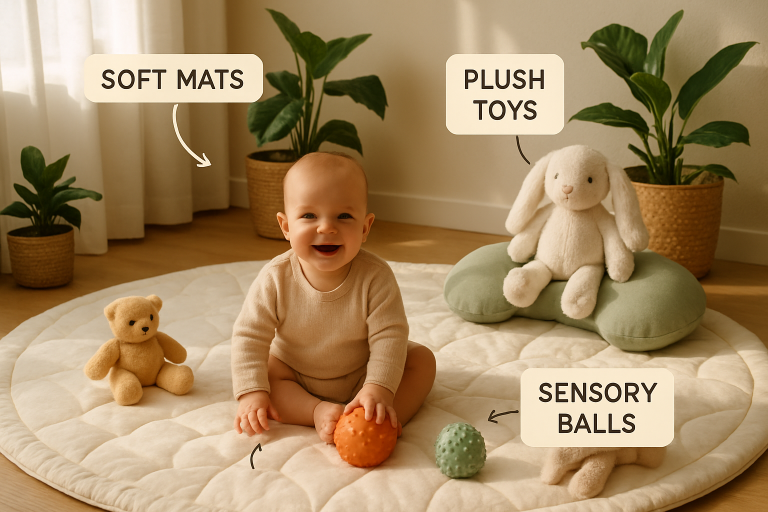
Engaging multiple senses naturally increases attention span and supports the brain’s complex development processes. For additional insights on the impact of sensory play, the Montessori National Curriculum Online offers further reading and resources.
Establishing Structured Routines
Routine is the framework that helps infants distinguish between day and night, play and rest, mealtime and nap time. Establishing gentle but consistent patterns for feeding, sleeping, and active play provides much-needed security, making transitions less stressful for infants and caregivers. These predictable routines help anchor emotional stability, encourage healthy sleep patterns, and make day-to-day life more manageable for everyone involved.
- Maintain regular feeding times in tune with hunger cues.
- Design a calming bedtime ritual, such as a warm bath or a quiet story, to support restful sleep.
- Schedule daily play sessions, with routines that encourage face-to-face communication and discovery.
Encouraging Responsive Caregiving
Responsive caregiving—meaning timely, empathetic attention to an infant’s cues—builds trust and a sense of safety. Attending to cries, gestures, and the need for comfort reassures the infant and supports healthy emotional development. Frequent eye contact, gentle conversation, and affectionate touch are critical components in developing infant brains, especially areas responsible for language and social connections.
The effects of responsive care extend far beyond infancy, fostering resilience, positive emotional regulation, and social confidence as children grow. The Zero to Three Foundation’s guide to early brain development highlights the importance of this type of engagement.
Integrating Natural Elements
Nature-based experiences remarkably influence mood and cognition, even among the youngest children. Indoor plants freshen the air and offer visual interest, while natural materials like wooden toys and soft cottons provide unique, calming textures. Supervised outdoor play introduces infants to a diverse world of smells, colors, and sounds—stimulating curiosity, improving mood, and strengthening the immune system.
Providing Opportunities for Social Interaction
Early social experiences—and positive, interactive exchanges—are some of the best predictors of future communication skills and emotional intelligence. From peek-a-boo games with a caregiver to supervised group activities involving peers, these moments nurture turn-taking, empathy, and language. Encouraging family involvement strengthens bonds and helps infants learn by example, watching, and modeling behaviors and emotional responses.
Monitoring and Adapting to Developmental Milestones
Infants develop at their own pace, so tracking milestones (such as first words, first steps, and new motor skills) is essential without comparison or pressure. Flexible environments and activities that “grow” with the child—with new challenges and age-appropriate toys—help keep development on track. Observant caregivers adjust routines, play, and engagement as infants master new skills. If ever in doubt about development, consulting a pediatrician or child development specialist ensures the best support at every stage.
Conclusion
Developing enriching, safe spaces filled with responsive care, structured routines, and sensory and social exploration opportunities is key to nurturing well-rounded, resilient infants. Through careful adaptation and continuous observation, caregivers can lay the groundwork for lifelong learning, confidence, and well-being in the children entrusted to their care.