Practical Fixes for Typical Tankless Water Heater Problems

Tankless water heaters have revolutionized how households access hot water, providing an efficient, on-demand alternative to traditional tank water heaters. However, these modern systems are not immune to problems, and understanding how to diagnose and resolve these common issues can save time, money, and unnecessary frustration. If you’re experiencing performance drops, odd sounds, or inconsistent hot water, locating water heater repair near me can bring professional support to your home quickly and effectively. From routine maintenance to troubleshooting sudden malfunctions, knowing the most frequent tankless water heater issues and practical solutions will help you enjoy steady performance year-round. Proactive steps, regular cleaning, and correct usage are essential for optimal operation and a longer unit lifespan. While these tankless water heater issues can seem intimidating, most are manageable with the right guidance and periodic care. Whether you’re dealing with a dip in hot water pressure, irregular temperatures, or a sudden shutdown, identifying the root cause is the first step toward a fix. Many problems can be handled without professional intervention, but knowing when to call a technician is crucial for your safety and your system’s longevity.
Cold Water Sandwich Effect
One of the most common quirks of tankless water heaters is a brief burst of cold water between rounds of hot water, known as the cold-water sandwich effect. This happens when residual hot water from a previous use lingers in the pipes, but the water heater hasn’t yet heated new water. To reduce this uncomfortable surprise, installing a recirculation pump or simply running the tap briefly before showering helps maintain a predictable flow. This problem is especially noticeable in households with frequent, sequential hot water demand, such as multiple morning showers.
Low Water Pressure
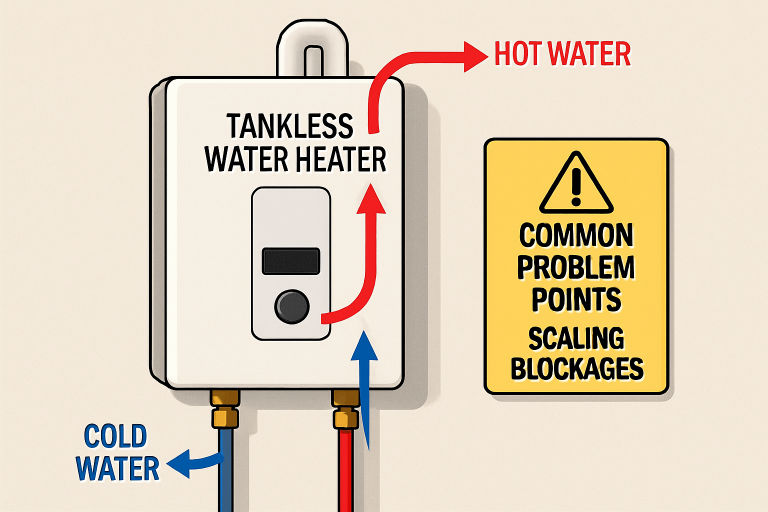
Reduced water pressure from a tankless unit can be traced to a few culprits: clogged inlet filters, mineral buildup within the system, or external plumbing restrictions. Modern tankless heaters include fine mesh screens to capture debris; regular inspection and cleaning of these filters are necessary for strong water flow. Likewise, in regions with hard water, descaling the system at least once a year keeps calcium and limescale from impeding performance. If simple cleaning doesn’t resolve low pressure, consult your local water utility about broader supply issues or seek help from a certified plumber.
System Overload
If a tankless water heater is asked to supply hot water to too many appliances simultaneously, users may experience tepid water or an abrupt cold shower. This system overload occurs when demand exceeds the unit’s capacity, especially with small-capacity models. Managing usage—such as staggering dishwashing, laundry, and shower times, or upgrading to a more powerful heater are straightforward fixes.
Mineral Buildup
Mineral deposits, often from hard water, can significantly reduce a tankless water heater’s efficiency and even cause permanent damage to heating elements. Scaling can reduce flow and trigger error codes or cause the system to overheat. Homeowners should flush their tankless heater yearly, using a manufacturer-approved descaling solution. For those in areas with persistently hard water, investing in a whole-house water softener can prevent long-term issues and extend heater longevity. Involving a professional in your maintenance routine ensures that descaling is done thoroughly and correctly.
Ignition Failure
A heater that fails to ignite might indicate a tripped circuit breaker, inadequate gas pressure, or a problem with the ignition electrodes. Before calling a repair technician, confirm that the system has power, that the gas lines are open, and that all settings are correct. Check the display for any error codes, and refer to your model’s manual for specific troubleshooting steps. If these checks don’t restore function, a qualified service professional should inspect for more complex issues, such as a faulty ignitor or control board.
Blocked Exhaust or Air Supply
Tankless water heaters require unobstructed airflow and exhaust paths to operate safely and efficiently. Dirt, nests, or debris can block vents, causing the system to shut down as a safety measure. Periodic inspection and cleaning of all intake and exhaust points are necessary, particularly in outdoor installations or homes near trees. Be vigilant for error messages indicating restricted airflow and clear away any visible obstructions. If you notice persistent issues, consult with a certified HVAC specialist to assess the entire venting system.
Fluctuating Water Temperatures
Rapid changes between hot and cold water during use often stem from system overload, mineral buildup, or incorrect thermostat settings. Start by checking your water heater’s set temperature. If the issue persists, flush the system to remove limescale and adjust hot-water habits to regulate demand. Modern tankless models feature advanced sensors to help mitigate temperature swings, but if fluctuations persist, they may indicate a deeper mechanical problem that requires professional evaluation.
No Hot Water
Complete loss of hot water typically signals power supply interruptions, closed gas valves, or more severe internal malfunctions. After ensuring the unit is connected to both gas and electrical sources and that the display shows no obvious error, reset the unit as per the manufacturer’s instructions. If the problem remains unresolved, essential components such as the heat exchanger or the control panel may fail. Seek diagnosis and repair from a trained professional as soon as possible to avoid further damage.
Preventive Maintenance
Routine care is the cornerstone of long-lasting tankless water heater performance. Key tasks include annual descaling, regular filter and vent cleaning, and checking for any leaks or corrosion. These basic steps not only prevent the majority of issues listed above but also enhance energy efficiency and lower overall running costs. Consult your owner’s manual and schedule professional servicing as recommended for your specific make and model. Regular maintenance and timely intervention ensure your tankless water heater delivers reliable, efficient hot water in the long term. By understanding how to address and prevent common issues, you can maintain high comfort and keep maintenance costs low.