How Universities Can Achieve Sustainable Enrollment Growth in a Competitive Market

The world of higher education is constantly shifting. Today, universities face significant challenges. There are fewer students in some areas. Digital tools are transforming the way students select schools. And student expectations are higher than ever.
To truly succeed, institutions must find new ways to connect with learners. We need strategies that are effective in the long term. This means understanding the modern student’s journey. It also involves utilizing powerful tools such as digital marketing and public relations.
We will show you how to steer this new landscape. We will explore how leveraging every aspect of your PR part, from online reputation to targeted outreach, can lead to success. Our goal is to help you build strong relationships with prospective students. This will help achieve sustainable online enrollment growth. We will cover topics from the digital-first student journey to building an effective marketing funnel.
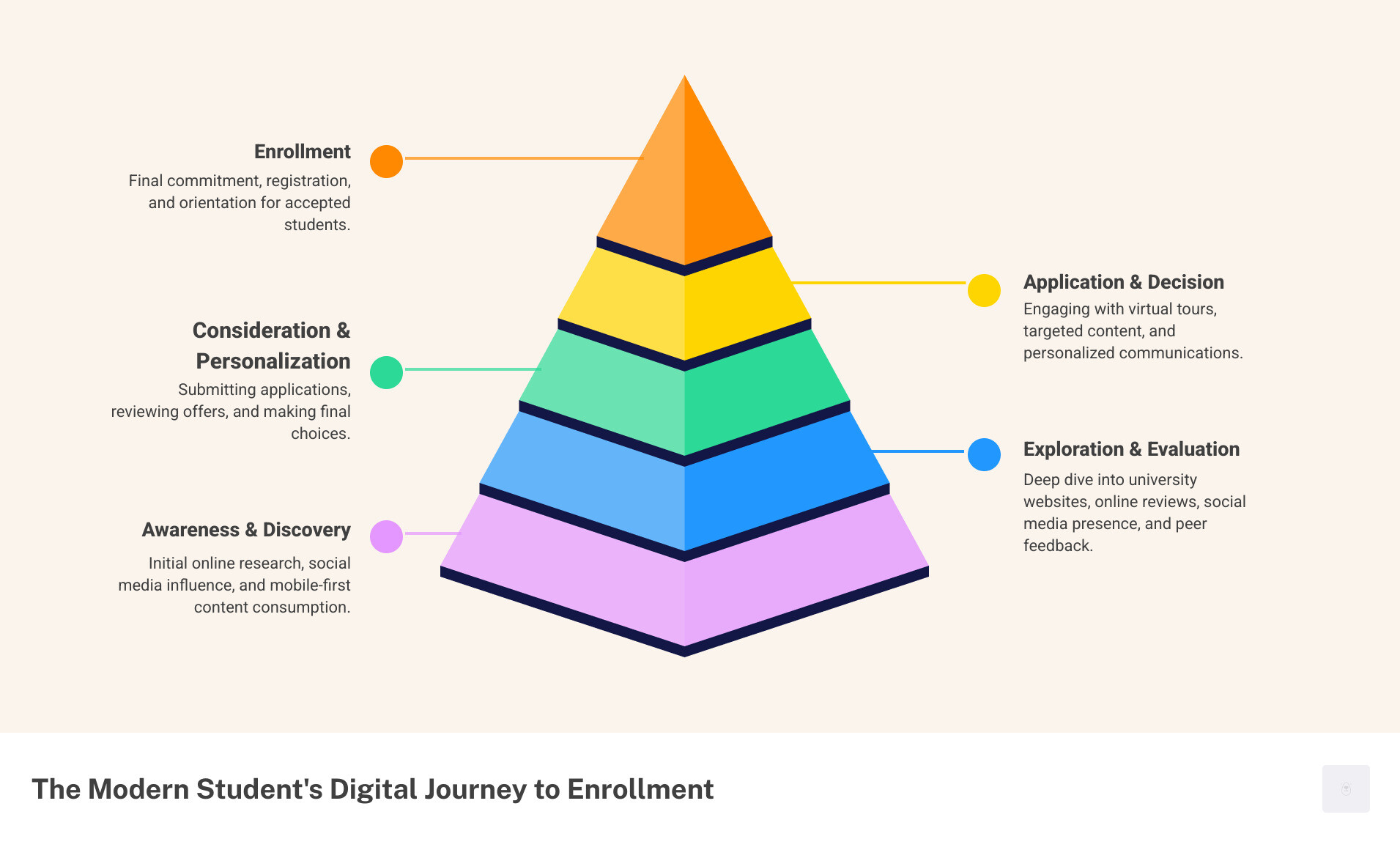
Understanding the Modern Student’s Digital-First Journey
The contemporary student, particularly those from Generation Z and Alpha, is inherently digital-native. Their decision-making process for higher education is deeply embedded in online research, social media engagement, and mobile-first experiences. Gone are the days when a glossy brochure or a college fair was the primary touchpoint. Today’s prospective students embark on an extensive online journey, vetting institutions long before they consider applying.
This digital-first approach means that higher education marketing must evolve to meet students where they are, in their digital spaces. University websites serve as the central hub of information, acting as a virtual campus that must be intuitive, engaging, and comprehensive. A mobile-optimized experience is not just a luxury; it’s a necessity, as many students conduct initial research and interact with content primarily through their smartphones. Social media platforms are not merely for entertainment; they are potent tools for finding, connecting, and social validation. Students seek authentic content, peer reviews, and direct engagement with institutions and current students. Understanding these behaviors is fundamental to crafting an effective enrollment strategy.
The Role of Online Reputation and Social Proof
In this digital ecosystem, online reputation and social proof hold immense sway. Prospective students are not just looking at official university statements; they are actively seeking out the experiences and opinions of others. Online reviews on platforms like Niche, Cappex, or Google, alongside student testimonials, provide invaluable insights into campus culture, academic quality, and post-graduation outcomes. These unvarnished perspectives often carry more weight than carefully curated marketing messages.
Social media engagement further amplifies this phenomenon. A university’s presence on platforms like Instagram, TikTok, and YouTube allows prospective students to glimpse daily life, connect with student ambassadors, and gauge the institution’s responsiveness and values. Influencer marketing, whether through collaborations with alumni or current students who have a strong online presence, can extend a university’s reach and foster genuine connections with target audiences. This peer-to-peer communication and digital word-of-mouth are critical components of building trust and credibility, shaping perceptions in ways that traditional advertising cannot. Institutions must actively monitor and manage their online presence, encouraging positive feedback and addressing concerns transparently to cultivate a robust and favorable digital reputation.
Personalization in University Communications
Generic, one-size-fits-all communication strategies are increasingly ineffective in capturing the attention of modern learners. Today’s students expect and demand personalization. They want to feel seen, understood, and valued as individuals with unique aspirations and concerns. This necessitates a shift towards highly targeted and customized content delivery across all communication channels.
Personalized emails, for instance, should go beyond simply inserting a student’s name; they should also incorporate relevant information about the student. They should reference specific programs of interest, highlight relevant campus events, or address common questions pertinent to their academic background or geographic location. Targeted advertising leverages data analytics to display ads for programs or campus features to prospective students that align with their expressed interests or online behavior. Customized content, such as virtual campus tours custom to specific majors or interactive quizzes that recommend suitable programs, can significantly improve engagement. AI-powered chatbots on university websites can provide instant, personalized responses to inquiries, guiding students through complex information and improving their overall experience. Embracing personalization is about creating a dialogue, not a monologue, and fostering a sense of belonging even before a student sets foot on campus.
Here are some effective personalization tactics for prospective students:
- Dynamic Website Content: Display content blocks relevant to a visitor’s location, interests, or previous interactions.
- Personalized Email Journeys: Segment email lists based on academic interests, inquiry stage, or demographic data, delivering custom information.
- Customized Virtual Tours: Offer virtual tours that highlight facilities and faculty specific to a student’s chosen major.
- AI-Powered Chatbots: Provide instant, relevant answers to FAQs and guide students through the admissions process.
- Targeted Social Media Ads: Use demographic and interest-based targeting to show ads for specific programs or events.
- Personalized Landing Pages: Create landing pages that reflect the content of the ad or email that led a student there.
- Individualized Outreach from Admissions Counselors: Assign counselors based on geographic region or academic interest for more relevant conversations.
- Event Recommendations: Suggest webinars or campus visit days based on a student’s profile.

Leveraging Digital Public Relations for University Enrollment Growth
In the competitive landscape of higher education, digital public relations (PR) plays a crucial role in shaping perceptions, fostering trust, and ultimately driving growth in university enrollment. Unlike paid advertising, PR focuses on earning media coverage and public attention, which inherently carries more credibility. It’s about strategically managing the narrative surrounding your institution, enhancing brand building, and carefully overseeing reputation management. Effective digital PR ensures that your university’s story is told authentically, reaching prospective students and their families through trusted channels. This encompasses everything from proactive media relations and establishing faculty as thought leaders to fostering strong community engagement and skillfully navigating crisis communication.
Digital PR for universities extends beyond traditional press releases. It involves cultivating relationships with online journalists, bloggers, and educational influencers. It means ensuring that positive news, groundbreaking research, and inspiring student success stories are not just published but widely shared and discussed across digital platforms. This earned visibility helps differentiate your institution, reinforcing its value proposition and attracting students who resonate with its mission and achievements.
Developing a Content-Driven PR Strategy
A robust digital PR strategy for universities is inherently content-driven. The goal is to generate compelling narratives that showcase the institution’s strengths, innovations, and impact. This requires identifying and amplifying the voices of faculty experts, whose research and insights can provide valuable commentary on current events or industry trends. Featuring a university professor being interviewed for a news segment, for example, not only highlights their expertise but also lifts the institution’s academic standing.

University research, notably that which addresses societal challenges or makes significant advancements, offers rich material for press releases, feature articles, and blog content. These stories can be repackaged for various platforms, from detailed reports on the university website to engaging video marketing clips shared on social media. Student success stories, alumni achievements, and impactful community initiatives are powerful testimonials that humanize the institution and demonstrate its tangible value in the real world. By consistently creating and distributing high-quality, relevant content, universities can secure earned media, establish a strong online presence, and cultivate a positive public perception that directly supports their enrollment objectives.
Measuring the Impact of Digital PR on Enrollment
Measuring the return on investment (ROI) for digital PR efforts is crucial for refining strategies and demonstrating the value of these efforts. While traditional PR often focuses on media impressions, digital PR enables more granular and actionable metrics directly tied to enrollment goals. We can track how earned media translates into website traffic, specifically looking at referral traffic from news outlets or blogs. Monitoring media mentions across various platforms, along with sentiment analysis, helps gauge the quality and tone of coverage, providing insights into brand perception.
Furthermore, digital PR can directly contribute to lead generation. By embedding calls-to-action within earned media content (e.g., “Learn more about our programs here”), we can track inquiries and downloads of informational materials. The most significant measure is the impact on application numbers and matriculation rates. By correlating PR campaigns with spikes in interest or applications for specific programs, institutions can understand the direct influence of their efforts. This data-driven approach ensures that PR is not just about visibility, but about tangible contributions to enrollment success.
Metric Type Traditional PR Metrics Digital PR Metrics (for Universities) Visibility Media Impressions Website Referral Traffic, Social Media Reach, Mentions Across Platforms Engagement Clip Count Social Media Engagement Rate, Content Shares, Comments, Backlinks Sentiment Tone of Coverage Sentiment Analysis (Positive/Negative/Neutral) of Online Mentions Impact Ad Value Equivalency (AVE) Lead Generation, Application Starts/Completions, Inquiries, SEO Impact (Keyword Rankings, Domain Authority) Audience Target Media Placement Audience Demographics Reached, Influencer Mentions, Geographic Reach
Building a Sustainable Digital Marketing Funnel
To achieve consistent enrollment growth, universities must construct and continuously optimize a sustainable digital marketing funnel. This funnel guides prospective students through various stages, from initial awareness to final application and matriculation. The foundation of this approach lies in inbound marketing, where institutions attract students naturally through valuable content and engaging experiences, rather than solely relying on outbound interruptions.
Search Engine Optimization (SEO) for higher education is paramount, ensuring that when students search for programs, scholarships, or career outcomes, your university appears prominently. Paid advertising (PPC) campaigns, managed strategically, can provide immediate visibility and target specific demographics with precision. Content marketing, encompassing blogs, videos, infographics, and downloadable guides, serves to educate and nurture leads, positioning your institution as a trusted resource. Ultimately, robust email nurturing campaigns ensure consistent communication, advancing prospects further down the funnel with personalized and timely information. This integrated approach ensures a steady flow of qualified leads and a higher conversion rate.
Key Strategies for University Enrollment Growth Through Digital Marketing
Developing effective digital marketing strategies requires a blend of creativity, data analysis, and an unwavering focus on the student journey. For universities aiming to thrive in this competitive environment, several key strategies are particularly noteworthy.
Firstly, Search Engine Optimization (SEO) is non-negotiable. This involves comprehensive keyword research to understand what prospective students are searching for (e.g., “best nursing programs in [city]”, “online MBA requirements”). Optimizing website content, implementing technical SEO, and establishing high-quality backlinks will help ensure your institution ranks high in search results.
Secondly, Social Media Advertising offers unparalleled targeting capabilities. Platforms like Facebook, Instagram, LinkedIn, and TikTok allow for precise audience segmentation based on demographics, interests, and even academic intent. Crafting engaging ad creatives and compelling calls to action can drive significant traffic and inquiries.
Thirdly, Virtual Recruitment Events have become a cornerstone of modern admissions. From online open houses and faculty Q&As to virtual campus tours and student panels, these events remove geographical barriers, providing accessible and interactive experiences. Promoting these widely through digital channels is essential.
Finally, Content Offers play a crucial role in lead capture and nurturing. Providing valuable resources such as “A Guide to Financial Aid for College,” “Career Paths for [Major] Graduates,” or “Tips for a Successful College Application” in exchange for contact information allows institutions to build their prospective student database and initiate personalized communication journeys. These strategies, when executed cohesively, form a powerful engine for university enrollment growth.
Optimizing the Conversion Path from Inquiry to Application
Attracting prospective students is only half the battle; the other half is converting their interest into completed applications. This requires a meticulous focus on optimizing the conversion path, ensuring a seamless and encouraging experience from the moment an inquiry is made to the final submission of an application.
Landing page optimization is critical. Each landing page, whether for a specific program, an event, or a content offer, must be clear, concise, and persuasive. It should immediately convey value, address the student’s needs, and feature prominent, clear calls to action (CTAs). These CTAs should be unambiguous (e.g., “Apply Now,” “Request Information,” “Download Guide”) and strategically placed.
Simplified application forms are another essential element. Long, complex forms with unnecessary fields can be a significant deterrent. Institutions should strive for brevity and clarity, potentially breaking down the application into multiple, manageable steps. Pre-filling known information can also significantly reduce friction.
Retargeting campaigns are highly effective for re-engaging students who have shown interest but haven’t completed a desired action. By displaying targeted ads to these individuals across various platforms, universities can remind them of their interest and provide gentle nudges to encourage them to continue their journey.
Finally, A/B testing should be a continuous process. Experimenting with different headlines, images, CTA button colors, form layouts, and content variations can provide invaluable insights into what resonates most effectively with your audience, leading to incremental improvements in conversion rates over time. By focusing on these optimization techniques, universities can more efficiently transform initial interest into successful applications.
Frequently Asked Questions about University Enrollment Strategy
Here, we address some common questions universities face when developing their enrollment strategies in today’s dynamic environment.
How can smaller universities compete with larger institutions for students?
Smaller universities possess unique advantages that can be effectively leveraged to compete with larger institutions. Instead of trying to mimic the breadth of offerings, they should focus on niche marketing by highlighting specialized programs, unique research opportunities, or distinct pedagogical approaches. Program-specific promotion enables them to target students seeking a particular academic experience, where a smaller institution might offer a more intimate learning environment or direct access to faculty. Emphasizing a unique value proposition, such as a strong community focus, personalized mentorship, or exceptional career placement in specific fields, can resonate deeply with prospective students seeking a custom educational journey. Personalized outreach is also key; smaller institutions can often provide a more individualized admissions experience, making students feel genuinely valued and connected.
What are the most important metrics for tracking enrollment marketing success?
Tracking the proper metrics is essential for understanding the effectiveness of enrollment marketing efforts and making data-driven decisions. Beyond raw application numbers, key performance indicators include:
- Cost per application (CPA): Measures the efficiency of marketing spend in generating applications.
- Application completion rate: Indicates how many started applications are actually submitted, highlighting potential friction points in the application process.
- Enrollment yield rate: The percentage of accepted students who ultimately enroll, reflecting the attractiveness and competitiveness of your offers.
- Student lifetime value (SLTV): Although more complex, this metric considers the long-term financial contribution of a student, including tuition, fees, and alumni donations, which helps justify acquisition costs.
- Return on investment (ROI): The overall financial gain from marketing expenditures, demonstrating the profitability of enrollment strategies.
How has the pandemic changed university recruitment and enrollment?
The COVID-19 pandemic accelerated many existing trends in higher education recruitment and enrollment, fundamentally altering how institutions connect with prospective students. The rise of virtual tours and online information sessions became a necessity, and they are now an expected component of the recruitment process, offering accessibility and convenience. The importance of online learning options has significantly increased, with many students now prioritizing institutions that offer flexible, high-quality digital education. This shift also led to an increased focus on digital communication across all stages of the enrollment funnel, from initial inquiry to virtual orientation. Furthermore, many institutions adopted more flexible admissions policies, such as test-optional approaches, to accommodate students facing unprecedented challenges. These changes have cemented the digital-first, student-centric approach as the new standard for successful enrollment strategies.
Conclusion: The Future of University Growth is Digital and Student-Centric
The landscape of higher education is undeniably complex, marked by shifting demographics, evolving student expectations, and rapid technological advancements. However, within these challenges lie immense opportunities for universities willing to adapt and innovate. As we’ve explored, the path to sustainable enrollment growth is paved with a deep understanding of the modern student’s digital-first journey, a strategic acceptance of digital public relations, and the meticulous construction of an optimized digital marketing funnel.
The future of university growth is inherently digital and student-centric. It demands that institutions move beyond traditional recruitment methods, prioritizing authentic online engagement, personalized communication, and transparent reputation management. By leveraging every aspect of their PR outreach, from thought leadership to social proof, and by continuously refining their digital marketing funnels, universities can build lasting connections with prospective students. This requires a long-term vision, a commitment to continuous improvement, and an unwavering focus on meeting students where they are, both digitally and personally. Those who adapt will not only thrive but will also shape the future of higher education for generations to come.