How Regular and Advanced K9 Training Protects Communities
The inclusion of K9 units in law enforcement agencies has changed the landscape of public safety across the United States. Their unique combination of acute senses and disciplined training enables these skilled canine officers to extend their handlers’ capabilities and address challenges that traditional policing methods often cannot. These dedicated animals help uncover contraband, provide crowd control, and most importantly, save lives. For example, the Mold Dog program exemplifies how versatile and vital working dogs can be in diverse areas of public welfare and hazard detection.
As law enforcement faces new and evolving threats, K9 teams continue to demonstrate that their presence provides not just advanced detection skills but also a significant psychological deterrent for potential offenders. From urban neighborhoods to high-profile events, K9 officers and their handlers are at the front lines of maintaining community trust and safety.
The effectiveness of each K9 unit hinges on specialized and continuous instruction that hones their innate abilities. These trainings not only enhance public safety but also strengthen the trust communities place in their local law enforcement. Rigorous regimens and specialized drills allow police dogs to perform accurately under stress, ensuring positive outcomes during high-stakes incidents.
Furthermore, K9S fosters relationships within their communities by participating in public events, demonstrations, and support programs. This visibility educates citizens on the crucial work of K9 teams while building bridges between law enforcement and the neighborhoods they serve.
Roles of K9 Units in Public Safety
K9 units are essential resources in modern policing, valued for their ability to enforce laws and protect citizens in ways that humans alone cannot. Canine officers are trained in narcotics and explosives detection, evidence recovery, search and rescue, and even crowd control. These tasks utilize their remarkable sense of smell and agility, which far exceed the capabilities of their human counterparts.
One notable example is found in Helena, Montana, where K9 Billy, a Belgian Malinois, plays a critical role in responding to local incidents. With training focused on suspect apprehension and explosive detection, Billy and his handler serve as an indispensable team on patrols and at emergency scenes. Their efforts not only lead to busts and recoveries but also bolster everyday public confidence in law enforcement practices.
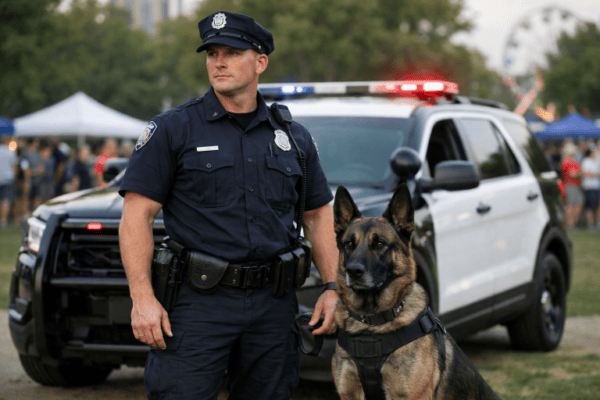
The strategic use of K9 teams extends beyond specialized assignments to include crisis scenarios. Whether tracking missing persons or assisting SWAT teams, these dogs save time and lives by quickly locating threats or evidence that may otherwise go unnoticed. Their ability to function in darkness, cramped spaces, and hazardous conditions multiplies the effectiveness of larger police operations.
Importance of Regular Training
The extraordinary performance of police dogs is made possible through rigorous, continuous training. Regular physical and mental exercises keep K9 units sharp and responsive to the unpredictable nature of police work. For example, the Helena Police Department requires a minimum of 16 hours of K9 training every month, with many teams choosing to surpass this threshold to reach peak readiness.
This structured training not only reinforces obedience and discipline but also simulates real-life scenarios teams may encounter, from drug searches in crowded urban settings to quick-response drills during active crime scenes. The consistency of these training sessions ensures that both the handler and the dog are in sync, can communicate fluently during emergency responses, and are prepared to adapt to any environmental challenge.
Moreover, regular instruction helps to identify weaknesses and reinforce strengths, making each K9 better equipped for their next assignment. It enables agencies to sustain a high level of operational effectiveness while minimizing mistakes that could impact public safety.
Advanced Tactical Training
In addition to routine drills, advanced tactical training equips K9 units for some of the most demanding and hazardous law enforcement operations. These specialized sessions bring together experts from different jurisdictions and provide a platform for K9 teams to exchange best practices and learn from high-intensity, real-world scenarios.
For instance, Finneytown, Ohio, has hosted special programs that focus on the safe apprehension of dangerous suspects and the tactical deployment of police dogs alongside armed responders. The techniques learned in these courses help prevent injuries to officers, suspects, and the dogs themselves during fast-paced or volatile incidents.
Advanced training often covers obedience under fire, building searches, and bite-and-release protocols, all intended to give handlers precise control over their K9 partners. Such preparation maximizes safety while preserving evidence and ensuring legal compliance in rapidly unfolding situations.
Community Engagement and Support
The success of any K9 program hinges on its integration into the community it serves. Maintaining strong ties through outreach initiatives, demonstrations, and public safety seminars is critical for building trust and support. Departments in Bowie and Hyattsville, Maryland, have collaborated with groups such as the Chesapeake K9 Fund, providing advanced resources and training opportunities for their teams while fostering transparency and cooperation with residents.
Community engagement also plays a direct role in funding, sustaining, and expanding these programs. Citizen donations, local business sponsorships, and involvement in public events help police departments afford the ongoing costs of K9 care and training. This shared investment pays dividends in stronger community-police relations and an elevated sense of safety across neighborhoods.
By establishing themselves as approachable and reliable partners, K9 teams invite community members to become active participants in crime prevention and public welfare. Public understanding and appreciation of K9 capabilities are essential for continued program success and societal support.
Conclusion
Comprehensive K9 training is a cornerstone of effective modern law enforcement, ensuring that canine teams remain invaluable to the safety and stability of communities nationwide. Through dedicated training regimens, advanced tactical preparation, and thoughtful community engagement, these teams not only solve crimes and avert dangers but also offer an enduring example of human-animal partnership in service to the public good.