A First-Time Commercial Property Owner’s Guide to the Roof Over Your Investment
Buying your first rental or commercial building is a real milestone. But the roof is the one part most new owners never think about, right up until it introduces itself through the ceiling.
A little attention now saves you a lot of money and stress later.
Start With the Roof in Your First Month
Here’s the good news: you don’t need to be an expert. You just need a few basics written down early.
The first month is the perfect time because all the paperwork from the sale is still fresh and easy to find.
Pull whatever roof records you can find from the closing documents, the previous owner, or the property condition report. Jot down the install date and grab any warranty paperwork while you’re at it.
While you’re in those documents, check whether the manufacturer’s warranty actually transfers to you. Some do automatically, and others require paperwork to be filed within a set window after the sale.
You already ran the numbers on whether you could afford the property. The roof is just one more number worth knowing early, before it surprises you.
3 Things to Find Out Fast
Age, type, and condition. Get a handle on these three, and you understand your roof better than most owners ever do.
Age: How Many Years Are Left
Every roof has a rough lifespan, and the install date is your starting clock.
Just don’t assume a “20-year roof” automatically has the full 20 years. Weather, wear, and how well it was cared for all move that number.
Type: Know What You’re Looking At
You don’t need the lingo. You just need to recognize what’s up there. Here’s a quick cheat sheet.
| Roof Type | What It Looks Like | Typical Lifespan |
| Single-ply (TPO or rubber) | Flat, smooth membrane | 20 to 30 years |
| Modified bitumen | Flat, layered asphalt sheets | 15 to 25 years |
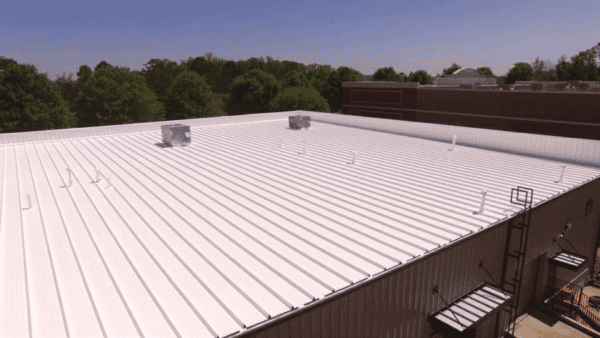
| Metal | Panels or seams, often sloped | 40 to 70 years |
| Built-up (“tar and gravel”) | Flat, gravel on top | 20 to 30 years |
Treat these as planning ranges, not promises. The National Roofing Contractors Association puts real numbers on how much the right maintenance can extend a roof’s life.
Notice the tradeoff too. Metal costs the most upfront but lasts the longest, while flat systems are cheaper to install and require replacement more often. Neither is wrong; they just shape your savings plan differently.
Condition: What the Roof Is Telling You
You can spot a lot from the ground or a quick walk-through. Watch for water that pools and won’t drain, soft or spongy spots, water stains on interior ceilings, and clogged drains.
If anything looks off, don’t guess. Have a pro take a real look and set you up with a simple maintenance plan.
Duratec Roofing can assess what you’ve got and tell you honestly how many good years are left, which is exactly the kind of clarity a new owner needs.
Catching a small problem early is the whole game. A minor repair handled now is pocket change next to a soaked interior and a replacement you weren’t saving for.
Set Aside Money Before There’s a Problem
This is the part that fits a frugal mindset perfectly: the cheapest roof is the one you saved for slowly.
There are really only two ways to pay for a roof, and they cost very different amounts. It comes down to the same smart money thinking you’d use for any big expense.
The Two Ways to Pay
The planned way is to tuck away a small amount each month. Boring, manageable, and quietly building in the background.
The forced way is an emergency replacement when the roof fails first. That one costs more, because the timing is the contractor’s, not yours. Then add any interior water damage and loan interest on top.
What the Numbers Look Like
Say a replacement will run $60,000 in ten years. Saved ahead, that’s about $500 a month.
Hit all at once, it’s a panic.
Make It Automatic
The easiest fix is an automatic monthly transfer into a separate account, the same trick behind these budgeting tips for busy moms. You set it once and forget about it.
Start Small
Give the account a name, even make a game of it the way you would with any fun budgeting goal. A modest monthly amount still beats starting from zero the day water comes through.
This is just an emergency fund with a very specific job.
Get to Know a Roofer Before You Need One
The worst time to find a contractor is mid-leak, with a bucket in one hand and your phone in the other.
A little relationship now pays off later. One inspection gets a roofer familiar with your building. You get a real local price for an eventual replacement instead of a national-average guess.
Ask for a short written condition report while they’re there. That single page becomes your baseline, and it’s gold when you eventually sell, and a buyer’s inspector starts asking questions.
And when something does go wrong, you’re calling a name you already trust, not rolling the dice on a search result.
It isn’t a big commitment. It’s just a smart first move, the same kind of planning ahead that makes any budget work.
The Roof Is Part of the Investment Too
The roof will cost what it costs. The only real question is whether you’re ready when the bill comes.
Learn the basics early, save a little at a time, and know a roofer before you need one. In the future, you will be so glad you did.