5 Benefits of Digital X-rays in General Dentistry Practices

You might be feeling a mix of things about dental X-rays. Maybe you remember holding heavy film in your mouth and waiting for what felt like forever while your Edmonton dentist disappeared from the room. Maybe you worry about radiation, or you wonder if all these images are really necessary, especially when money and time already feel tight.
Because of that tension, hearing that your dentist now uses digital X-rays can bring new questions. Is this safer? Is it just more expensive technology? Does it actually help you, or is it mainly for the office’s convenience?
The short answer is that digital X-rays were created to make your care safer, clearer, and more comfortable. They use significantly less radiation than traditional film; they give your dentist sharper images in seconds, and they make it easier to spot small problems before they become big and painful ones. When used thoughtfully, digital dental radiographs are one of the quiet tools that protect your teeth, your time, and your wallet.
So where does that leave you as a patient who just wants to stay healthy without overdoing it? It helps to understand what is actually changing and how it affects your experience in the chair.
Why do digital X-rays matter so much in everyday general dentistry?
Think about a common situation. Your tooth has been a little sensitive for weeks. Nothing dramatic. You chew on the other side, you avoid ice water, and you tell yourself you will call the dentist “when you have a break.” By the time you finally go in, the cavity that started as a tiny dark spot in between teeth has quietly grown into something that needs a root canal.
This is where X-rays matter. Many dental problems start in places that your dentist simply cannot see with the naked eye. Between teeth. Under old fillings. Around the roots. Beneath the gums. The American Dental Association explains that these images are an important part of safe and effective care, because they reveal decay, bone loss, infections, and developmental issues that would otherwise be missed. You can read more about that in the ADA’s overview of dental X-rays and radiographs.
Now add the emotional layer. You might be worried about radiation and long-term health. You might be afraid of “surprise” treatment plans that seem to appear after an X-ray. You might have had a bad experience where you felt rushed or not fully informed. Those worries are understandable. Dental imaging should never feel mysterious or automatic. It should feel purposeful and explained.
Digital X-rays help ease some of that tension. They use modern sensors instead of film, which means less radiation, faster results, and clearer images. That does not erase the need for judgment and good communication, but it gives your dentist better tools to care for you thoughtfully.
What specific problems do digital X-rays help solve for patients?
When you look at the shift from film to digital, five practical benefits matter to you as a patient in a general dentist’s office.
1. Lower radiation exposure
Radiation is often the first concern that comes to mind. Digital X-rays typically use much less radiation than traditional film. Exact numbers vary by system and settings, but research shows significant dose reductions. The U.S. Food and Drug Administration, working with dental experts, has published guidance on using the lowest dose needed and choosing patients carefully for each exam. You can see those recommendations in their resource on the selection of patients for dental radiographic examinations.
What this means for you is simple. When your dentist uses digital sensors and follows “as low as reasonably achievable” principles, you get the information needed to protect your teeth with a fraction of the exposure older systems required.
2. Faster, clearer images and fewer retakes
With film, you might remember the waiting. The assistant took the X-ray, left the room, developed the film, then returned with tiny images that sometimes came out too light or too dark. If something went wrong, they had to repeat the whole process.
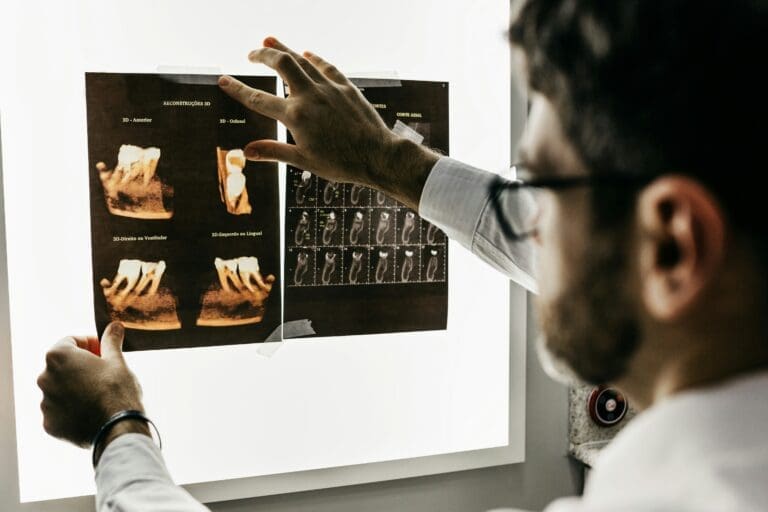
Digital X-rays show up on a computer screen in seconds. Your dentist can zoom in, adjust contrast, and enhance details without exposing you again. This reduces the chance of retakes and shortens your time in the chair. It also makes it easier for you to actually see what your dentist is talking about, instead of squinting at a small piece of film.
3. Better early detection of hidden problems
Digital systems provide high-resolution images that can reveal tiny changes in bone or enamel. That means earlier detection of cavities between teeth, small fractures, or the first signs of gum disease around roots.
Early detection usually means simpler treatment. A small cavity can be treated with a modest filling. Left alone, it can turn into a cracked tooth, a deep infection, or even tooth loss. Early intervention is almost always less painful and less expensive.
A 2020 review in the National Library of Medicine looked at medical uses of digital radiology and highlighted how digital imaging supports more precise diagnosis and easier sharing of information among providers. The same principles apply in dentistry. You can see that discussion in this article on digital radiology and medical imaging.
4. Easier sharing, second opinions, and long-term tracking
Because digital X-rays are electronic files, your general dentist can securely share them with specialists if you ever need an orthodontist, periodontist, or oral surgeon. That means less repeating of images and more coordinated care.
Digital records also make it simpler to compare images over time. Your dentist can pull up X-rays from five years ago side by side with today’s. You can see whether bone levels are stable, whether a root canal is holding up, or whether a wisdom tooth has shifted. This long view is one of the quiet strengths of digital dental imaging.
5. Less discomfort and more patient involvement
Many digital sensors are thinner and shaped differently than old film packets. This can make the process more comfortable, especially for people with a strong gag reflex or small mouths. It is not perfect for everyone, but many patients notice the difference.
Just as important, you can sit next to your dentist and look at the images together on a screen. You can ask, “Where is the cavity. What are you seeing that worries you? What happens if we wait?” When you can actually see the problem, decisions about treatment feel less like guesswork and more like a shared plan.
How do digital and traditional X-rays compare in general dentistry?
It can help to see the differences side by side, especially when you are trying to weigh the benefits and risks of digital X-rays in general dentistry.
| ASPECT | TRADITIONAL FILM X-RAYS | DIGITAL X-RAYS |
| Radiation dose | Higher exposure for similar images | Lower exposure for similar or better detail |
| Image availability | Several minutes, film must be developed | Visible in seconds on a computer screen |
| Image quality | Fixed contrast and size, harder to enhance | Can zoom, adjust contrast, and enhance detail |
| Retakes | More common if film is over or under exposed | Less common, exposure settings are more precise |
| Sharing with other providers | Requires physical copies or scanning | Simple secure electronic sharing |
| Environmental impact | Uses chemical developers and physical storage | No film chemicals, digital storage |
Seeing these differences, it becomes clearer why many general dental practices have moved to digital imaging. It is not about having shiny tools. It is about having clearer information with less burden on your body and your schedule.
What can you do right now to feel safer and more informed about digital X-rays?
Even with all these benefits, your comfort matters. You have every right to understand why any X-ray is being recommended and how it affects you. There are a few simple steps you can take to feel more in control.
1. Ask “why this image, why now” before you agree
Before any X-ray, you can calmly ask your dentist or hygienist to explain the reason. For example, they might say, “We are taking bitewing X-rays today to check for cavities between your back teeth, because it has been two years since your last set.” A clear reason tied to your history and current symptoms is a good sign.
If something is not clear, ask follow-up questions. “What happens if we wait? Are there other ways to check this area? How often do I personally need X-rays based on my risk?” A thoughtful general dentist will welcome these questions and answer them directly.
2. Talk openly about your radiation and cost concerns
If radiation worries you, say so. You can ask what kind of digital system they use and how they keep exposure low. You can also ask how often they recommend images for someone with your oral health and medical history.
If money is tight, ask for a breakdown of which images are essential today and which can safely wait. Sometimes an office can space out certain types of images or coordinate them with preventive visits, so you are not surprised by a large bill.
3. Use the images as a tool to make shared decisions
When your X-rays appear on the screen, do not hesitate to ask your dentist to walk you through them. Ask to see the area of concern. Ask what your options are. For example, “If we fill this now, what does that prevent. If we watch it, what signs should I look for?”
This turns digital X-rays from something that is “done to you” into something you use together to protect your health. It can also help you feel more confident about saying yes to treatment that truly makes sense for you, and no to anything that feels unnecessary or poorly explained.
Moving forward with more clarity and less fear
You do not have to become a radiology expert to make good choices about your care. You only need a basic understanding of how digital X-rays support your general dentist, and the confidence to ask clear questions about why they are being used.
Digital imaging brings real benefits. Lower radiation. Faster and clearer images. Earlier detection of hidden problems. Easier sharing and tracking over time. More comfortable visits and better conversations about what is actually happening in your mouth.
The next time your dentist recommends X-rays, you can pause, breathe, and ask for a simple explanation of the purpose and timing. From there, you and your dentist can decide together what makes sense for your health, your peace of mind, and your budget.