Why Some Roofs Age Faster Than Others in the Same Neighborhood
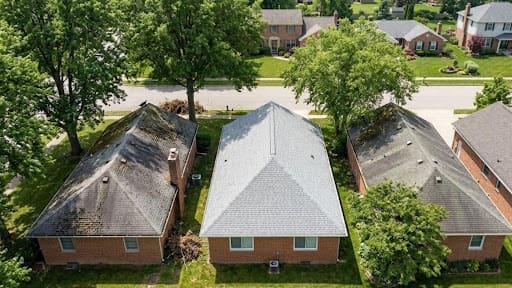
If you walk down a street and observe the roofs, you can see a curious phenomenon. Two houses that are built with the same materials, are built at the same time, and are next door to each other can have very different roofs. You can observe a very clean and solid roof on one side and a roof that is showing signs of curling shingles, dark patches, and with the beginnings of moss on the entire roof on the other side.
Many homeowners tend to neglect their roofs unless they suffer some form of damage. At that time, the damage has been inflicted over time. Things that go unnoticed, such as the growth around a home can play a major role in how quickly a roof deteriorates. While safe roof cleaning in Liberty Lake can be very helpful, it can be more helpful to understand and consider the entire framework concerning a home.
Two Houses, Same Street — Very Different Stories
It genuinely surprises people when they find out their roof is in worse shape than their neighbor’s even though both were installed at the same time. No two roofs live the exact same life, even when they look identical from the street. Small differences in orientation, tree cover, attic airflow, and maintenance habits stack up year after year until the gap becomes impossible to ignore.
Sun Exposure and the Direction Your Roof Faces
Roofs that face south or west take the full force of the sun throughout the day, especially during summer when UV levels are at their highest. That constant heat breaks down shingle granules, dries out the asphalt underneath, and causes shingles to expand and contract with every temperature change.
- South and west facing slopes fade faster and lose their protective granules years ahead of schedule
- North facing slopes stay cooler and look newer — but stay damp longer and attract moss and algae
What Trees and Vegetation Are Actually Doing to Your Roof
Trees provide shade that can slow down sun damage, but overhanging branches bring a whole different set of problems that most homeowners do not notice until damage is already done. Branches drop leaves and debris that pile up and hold moisture against shingles for days after rain
Shaded sections dry out slowly, creating perfect conditions for moss, algae, and lichen to take hold. Tree sap and pollen stick to shingles and lock in dirt and moisture, speeding up surface degradation
Poor Ventilation Is Aging Your Roof From the Inside Out
Most people think roof damage only happens from the outside. But when a home does not have proper ventilation, heat and moisture build up under the roof deck. It slowly cooks the shingles from below even when everything looks fine on the surface.
What a Balanced Ventilation System Actually Looks Like
A roof that breathes properly needs both intake and exhaust working together:
- Soffit or eave vents pull cool fresh air into the bottom of the attic
- Ridge vents let hot trapped air escape at the top
- Even airflow across the whole attic space stops moisture building up in any one area
Roof Pitch and How Water Moves Off Your Home
The angle of your roof matters more than most people realise. A steeper pitch sheds rain and snow quickly, so water does not sit on the surface long enough to cause damage. A shallow or low-slope roof is a completely different story.
Low-slope sections hold water after rain, let debris pile up, and give moisture a much longer window to work its way under shingles. Valleys and areas around chimneys or dormers collect water and debris and almost always show wear before the rest of the roof does.
Maintenance Habits Make or Break Long-Term Roof Health
Two identical roofs on the same street will age at completely different rates depending on how much attention each homeowner pays to them. One person clears gutters twice a year and trims trees before storm season.
Small Habits That Slow Down Aging Significantly
- Clear gutters and downspouts at least twice a year so water does not back up along the eaves
- Trim overhanging branches back before spring storm season gets going
- Make sure moss, algae, and debris do not sit on the surface for months at a time
- Book a professional roof inspection once a year or after any major storm
Conclusion
The difference between a roof that is in good condition and in need of replacement in 25 years, and a roof that is in need of replacement in 15 years, is not a huge, complex, or difficult to understand one. It can be the careful and systematic maintenance of the roof, ventilation of the roof, and breathing of the roof. Taking a walk can help you identify a roof that deteriorates very quickly because it is not in proper condition or because it is not observed properly. Dealing with the damage caused by saying roof can be a very expensive and costly thing.