Why Family Dentistry Is The Key To Building Lifelong Healthy Habits

You might be feeling a little guilty every time you remind your child to brush, then realize you have not seen your own Marietta dentist in a couple of years. Maybe there is a drawer full of floss you meant to use, a child who melts down at the thought of a dental visit, or a partner who only goes when something hurts. It can feel like you are always reacting to problems instead of staying ahead of them.end
Because of this, you might wonder if you are already behind, or if it is too late to help your family build better habits. The good news is that you are not behind. You are simply at the point where most families start to realize that “we will get to it later” is not working anymore.
Here is the short version. Family dentistry is not just about cleanings and fillings. It is about having one trusted home for your family’s oral health, where children grow up seeing checkups as normal, where parents feel supported instead of judged, and where small habits slowly turn into lifelong routines. With the right family dentist, you can move from dental emergencies and last-minute appointments to calm, predictable care that protects your family’s teeth for decades.
Why do healthy oral habits feel so hard to build and keep?
Think about a typical week. Work runs late. Homework piles up. Someone forgets their sports gear. In the middle of all that, remembering fluoride toothpaste, floss, and scheduling checkups can feel like one more thing on an already heavy list.
On top of the daily noise, there are deeper worries. You might have grown up with painful dental visits and now carry that fear into adulthood. Maybe money is tight, and you are torn between dental care and other bills. Or your child has sensory issues, and even brushing at home can trigger tears. None of this means you are a bad parent or careless adult. It just means life is complicated.
So, where does that leave you? Usually, in one of these patterns.
You wait until something hurts. A toothache, a chipped tooth, bleeding gums. Then you scramble to find any dentist with a fast opening. This often costs more, hurts more, and scares children more. Over time, “the dentist” becomes linked with pain and panic. That is a hard association to break.
Or you try to manage everything on your own. You watch videos, buy different toothbrushes, and do your best, but you are never quite sure if it is enough. You might feel a quiet worry that one day a dentist will “find something” and you will be blamed for missing it.
Because of this tension, many families start to feel stuck. They know oral health matters, yet they do not have a simple, steady way to care for it.
How does a family dentist change the story for you and your kids?
This is where family dental care for lifelong habits becomes so powerful. A family dentist sees toddlers, teens, adults, and grandparents. That continuity creates a kind of rhythm. You are not starting from scratch every time you need care. You are building on what your family already knows and trusts.
Here is what that looks like in real life.
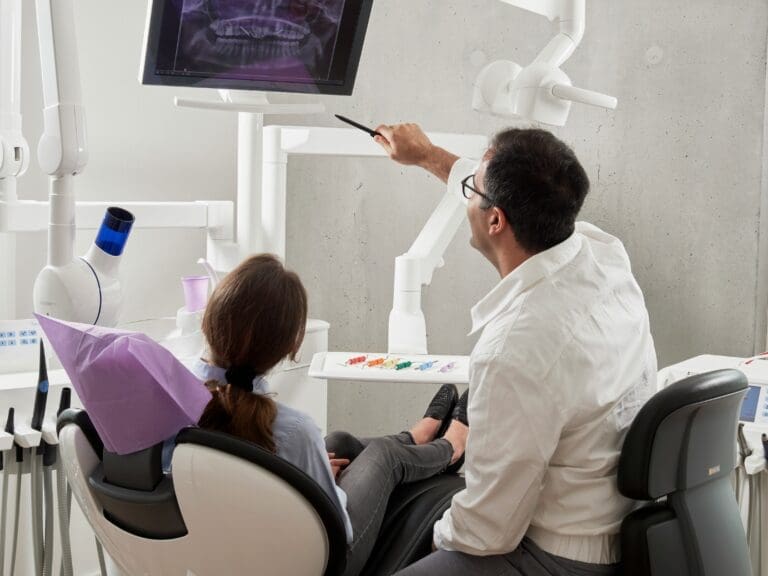
For your children, every routine visit becomes a tiny lesson. The dentist counts teeth, shows plaque with a mirror, praises good brushing, and gently corrects what needs work. Over time, kids learn that brushing twice a day and visiting every six months is just “what we do.” The Centers for Disease Control and Prevention outlines how daily habits like brushing with fluoride and limiting sugary drinks help protect kids’ teeth, and a family dentist reinforces those same messages in a calm, consistent way. You can read more about these basic habits in the CDC’s guidance on oral health tips for children.
For you as a parent, the relationship looks different. You have someone who knows your history, your fears, and your financial limits. You can ask questions without feeling ashamed. You can talk about thumb sucking, pacifiers, sports mouthguards, braces, or tooth grinding and get clear, kind answers tailored to your family, not someone else’s.
There is also the long view. The National Institute of Dental and Craniofacial Research shares that early childhood habits and early exposure to regular dental care can reduce cavities and other issues later in life. Their resources for parents make it clear that starting early matters, especially for babies and toddlers. You can explore their guidance on keeping your baby’s mouth healthy to see how early these patterns begin.
In a family practice, your dentist is thinking about your child’s baby teeth today and their adult smile ten or twenty years from now. They are thinking about how your own gum health might affect your overall health, which the CDC highlights in its broader overview of oral health and general well-being . This bigger picture means fewer surprises, fewer emergencies, and more gentle course corrections along the way.
Family dentist vs “as needed” care. What truly supports lifelong habits?
It can help to compare your options side by side, so you can see what really supports long-term oral health for your family.
| Approach | What it looks like | Short term impact | Long term impact on habits |
|---|---|---|---|
| “As needed” emergency care | Only go when there is pain or a broken tooth | Problem is fixed, but usually with more cost and discomfort | Kids link the dentist with fear. Problems are caught late. Habits stay weak and inconsistent. |
| DIY at home only | Brushing and flossing, little or no professional checkups | Some prevention, but hidden issues can grow quietly | Good intentions, but no expert guidance. Risk of cavities, gum disease, and missed problems. |
| Ongoing care with a family dentist | Regular checkups for everyone with the same trusted team | Smaller, less painful treatments. Early support for fearful kids. | Habits become routine. Children grow up seeing dental care as normal. Fewer emergencies and more confidence. |
Research from organizations like the National Institute of Dental and Craniofacial Research supports this steady, preventive approach. They provide age-based guidance for children’s oral health, from baby teeth to the teenage years, so families can stay ahead instead of falling behind.
So, where does that leave you today, with the reality and budget you have right now?
Three simple steps to start building lifelong dental habits now
1. Choose one “non-negotiable” daily habit for the whole family
Do not try to fix everything at once. Pick one small action everyone can commit to. For many families, that is brushing for two minutes before bed, every single night, no exceptions. Make it visible and shared. Brush together when you can. Use a timer or a song. Young kids often copy what they see, and even teens notice more than they admit.
If you want extra guidance on what good daily care looks like, the CDC’s general overview of children’s oral health tips offers straightforward, science-based advice that you can adapt for your situation.
2. Set up a simple schedule with a family dentist and treat it like any other health appointment
If you do not already have a family dentist for healthy habits, choose one who sees both children and adults. Start by booking checkups for the family members who are most overdue, then work toward a routine where everyone is seen about every six months.
To make it easier, put the appointments on a shared calendar. Arrange them around school breaks or quieter work periods. Remind your children that this is not a punishment. It is something your family does to stay strong and healthy, just like regular physicals or eye exams.
3. Use each visit as a coaching session, not just a “fix it” moment
When you are in the chair, ask specific questions. “Where are we missing with brushing,” or “How is my child doing compared to last time?” Invite your child to ask their own questions, even if they feel small. A good family dentist will welcome this. They can show you and your child better brushing positions, point out early warning signs, and help you adjust habits before they turn into larger problems.
Over time, this turns dental visits into something more like a check-in and less like a crisis. That shift is what slowly builds a lifetime of healthier choices for everyone.
Moving from worry to confidence with family dentistry
You may not be able to change what has already happened with your own teeth, or erase every fear your child has about the dentist. What you can do is choose a different pattern from today forward.
By making family dentistry the foundation of lifelong oral health, you give your children a gift you probably wish you had received yourself. Regular, gentle care. Clear guidance. Fewer surprises. Less pain. Better habits that feel natural instead of forced.
Even if you feel behind, you are not too late. One small habit at home, one scheduled visit with a trusted family dentist, and one honest conversation about your goals can start to shift everything. Your future self, and your children’s future smiles, will thank you for the steady, quiet choices you make now.