What Size Mirror Cabinet Fits a Standard Bathroom
Mirror cabinet are playing an increasingly important role in modern bathroom design. They not only serve the basic function of a mirror but also provide hidden storage space, helping to keep countertops neat and organised. When purchasing a mirror cabinet, one of the most common questions people ask is: What size mirror cabinet is appropriate for a standard bathroom?
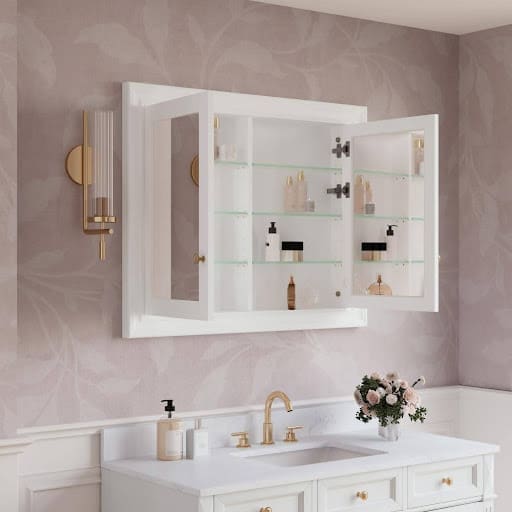
The answer is not absolute, as factors such as different floor plans, varying household needs, and differences in bathroom layout all influence the choice. However, this does not mean you are at a loss. This article will approach the topic from a consumer perspective, systematically outlining the key considerations for selecting mirror cabinet dimensions, analyzing common sizes, and providing practical recommendations for different installation environments, helping you find the ideal mirror cabinet size that is both aesthetically pleasing and functional.Ultimately, a well-chosen mirror cabinet balances storage efficiency and style, making it a smart upgrade for any modern bathroom.
1. Definition and Common Layouts of Standard Bathrooms
A “standard bathroom” typically refers to a space ranging from 35 to 75 square feet, commonly found in master bathrooms, secondary bathrooms, or apartment suites. It typically includes the following basic configurations:
Single or double sinks (18“ to 72” wide)
A single wall for installing a mirror cabinet
Approximately 24“ to 36” of vertical space reserved for installing a mirror or mirror cabinet
Based on these elements, we can explore the optimal installation range for mirror cabinets from a spatial structure perspective.
2. Common Mirror Cabinet Size Ranges
The mainstream mirror cabinet sizes available on the market can generally be categorized as follows:
Mirror Cabinet Width (inches) | Suitable Sink Width | Height (inches) | Depth (inches) |
|---|---|---|---|
| 16“ – 20” | 18“ – 24” | 24“ – 30” | 4“ – 5.5” |
| 24“ – 30” | 30“ – 36” | 24“ – 36” | 4.5“ – 6” |
| 36“ – 48” | 48“ – 60” | 30“ – 40” | 5“ – 6” |
| 60″ and above | 60“ – 72” | Double-door structure | 5.5“ – 7” |
Consumer Tip: The width of the mirror cabinet should generally not exceed the width of the sink, as this creates a more visually harmonious appearance.
3. How to Determine the Width of the Mirror Cabinet Based on the Sink?
When selecting a mirror cabinet, the first step is to confirm the actual width of the sink.
Example:
Sink width of 30 inches: Recommended mirror cabinet width is between 24“ and 28”.
Sink width of 60 inches (double basin): Recommended options include two 30“ mirror cabinets or one 60” large mirror cabinet.
Recommended clearance: Leave a 1“ to 2” gap on each side to ensure visual centering and avoid conflicts with walls or lighting fixtures.
4. What Should the Height of the Mirror Cabinet Be?

The height of the mirror cabinet typically ranges from 24“ to 40”. Factors influencing the height include:
Available wall space
Average height of household members
Coordination with countertop or mirror lights
Recommended range: For mirror cabinets between 30“ and 36” in height, the line of sight of most adults when standing is perfectly aligned with the center of the mirror surface.
5. Mirror Cabinet Depth Selection
Although mirror cabinets are not particularly thick, the depth design affects the user experience. The mainstream depth ranges from 4“ to 6”.
Under 4″: Suitable for extremely narrow spaces
5“ to 6”: Suitable for standard items like toothbrushes, razors
Over 6″: Ideal for shared family use with extra compartments
Note: The deeper the cabinet, the more likely the door will interfere with the user in compact spaces.For standard bathrooms, choosing a mirror cabinet with moderate depth ensures convenience without compromising capacity.
6. Consider Door Opening Mechanisms and Internal Compartmentalization
Common door designs:
Single-door: < 24″ width
Double-door: ? 36″ width
Triple-door or sliding: Large bathrooms
Internal features:
Adjustable shelves
Mirrored interior
USB ports or shaving outlets
Built-in LED lighting
Tip: Well-designed internal compartments maximize storage efficiency and minimize clutter.
7. Common Installation Types and Size Matching
1. Wall-mounted (Surface-Mounted)
Flexible installation
Adjustable height
Suitable for deeper models
2. Recessed
Requires pre-cut wall slot
Sleeker, built-in look
Typical wall cavity depth: ~3.5″
? Note: For renovations, verify the wall structure and cavity depth first.
8. Select the Appropriate Size Based on the Usage Scenario
| Usage Scenario | Recommended Size (W x H) | Description |
|---|---|---|
| Single-person master bathroom | 24“ x 30” | Compact but functional |
| Double-person master bathroom | 48“ x 36” or 2x 24″ | Ideal for dual-use and zoning |
| Guest bathroom | 16“ x 24” | Compact, basic functionality |
| Small bathroom | 20“ x 28” | Minimalist with storage |
| With LED lighting | 30“ x 36” | Enhanced lighting, for regular use |
9. Common Misconceptions When Selecting Mirror Cabinets
Ignoring wall structure: Some walls can’t support heavy cabinets
Exceeding sink width: May look bulky
Lighting conflict: Avoid installing lights that block cabinet doors
Height mismatch: Inconvenient for children or elderly
Advice: Measure ahead and consult installers or electricians for wiring and spacing.
10. Summary and Selection Recommendations
Selecting the right mirror cabinet impacts:
Usability
Visual aesthetics
Space efficiency
Key Points:
Measure precisely: Sink width, wall height, depth
Balance: Function + appearance = best value
Match design: Sink, tiles, lighting should harmonize
Final Tip: Choose cabinets with adjustable shelves, soft-close hinges, or built-in lighting for enhanced flexibility.
A clean and efficient bathroom starts with the right mirror cabinet.