Upgrading Your Home with Advanced Water Heating Systems
Southern California’s unique environment presents both opportunities and challenges for homeowners. While we enjoy abundant sunshine and a vibrant lifestyle, our region is also known for having particularly hard water. This high mineral content, primarily calcium and magnesium, profoundly impacts household appliances, especially water heaters. For advanced systems like tankless water heaters, this means they offer significant advantages but also require specific maintenance attention.
Tankless water heaters, by design, heat water on demand, eliminating the need for a bulky storage tank. This inherent efficiency reduces standby heat loss and can lead to lower utility bills. They also boast a longer lifespan compared to their traditional tank counterparts. With proper maintenance, a tankless unit can serve a household for 15 to 20 years, significantly outlasting the 10 to 15 years typically expected from a conventional tank model.
However, the very mechanism that makes tankless units efficient – rapidly heating water as it flows through a heat exchanger – also makes them vulnerable to hard water. The dissolved minerals in Southern California’s water tend to precipitate from the water and accumulate on these heat-exchange surfaces. This mineral buildup, often called “scale,” acts as an insulating barrier, forcing the unit to work harder to heat the water. This directly translates to reduced energy efficiency and increased wear and tear on critical components.
Understanding these regional factors is key to maximizing your investment. The energy savings and extended lifespan are only fully realized when the unit is properly maintained, directly addressing the challenges posed by local water quality.
To ensure your tankless water heater continues to deliver on its promise of efficiency and endless hot water, a proactive maintenance approach is non-negotiable. This isn’t just about preventing breakdowns; it’s about preserving the unit’s energy-saving capabilities, extending its service life, and safeguarding your manufacturer’s warranty.
The core of tankless water heater maintenance revolves around addressing the mineral buildup prevalent in hard-water regions like Southern California. This involves a process called descaling and flushing. Without regular descaling, calcium and magnesium deposits in the heat exchanger will gradually restrict water flow and impede heat transfer. This forces the unit to consume more energy to achieve the desired water temperature, negating its energy-efficient design. Over time, this stress can lead to premature component failure, costly repairs, and even complete system replacement.
Proper maintenance, including consistent flushing, is the single most important maintenance item for these advanced units. It helps prevent corrosion, maintains optimal water pressure, and ensures the unit operates within its designed parameters. By adhering to a recommended maintenance schedule, homeowners can protect their significant investment and enjoy reliable hot water for many years.

The Impact of Hard Water on Advanced Water Heating Systems
Southern California’s hard water is the primary antagonist for tankless water heaters. The dissolved minerals, while harmless for consumption, become problematic when heated. As water flows through the tankless unit’s heat exchanger, these minerals solidify and cling to the internal surfaces, forming scale. This scale acts as an insulator, creating a barrier between the heating elements and the water.
The consequences of this mineral buildup are far-reaching:
- Efficiency Loss: Even a thin layer of scale can drastically reduce heat transfer efficiency. Studies indicate that scale can reduce efficiency by up to 25%, meaning your unit has to work harder and longer, consuming more gas or electricity to heat the same amount of water. This leads to higher energy bills.
- Reduced Water Flow and Pressure: As scale accumulates, it narrows the heat exchanger’s internal passages, restricting water flow and reducing pressure. This can result in reduced hot water pressure at your fixtures and appliances.
- Thermal Stress and Component Damage: The insulating effect of scale causes localized overheating within the heat exchanger. This thermal stress can lead to cracks, leaks, and damage to other sensitive components, such as sensors and internal piping. Neglecting maintenance can shorten a unit’s lifespan by up to 40%.
- Nuisance Shutdowns and Error Codes: Modern tankless units are equipped with sophisticated sensors that detect issues like overheating or restricted flow. Mineral buildup can trigger these sensors, leading to error codes and unexpected shutdowns, leaving you without hot water. In hard water areas, up to 70% of tankless failures can be attributed to scale.
- Voided Warranties: Most manufacturers explicitly state that regular maintenance, particularly descaling, is required to keep the warranty valid. Failure to perform this essential upkeep can lead to costly out-of-pocket repairs that would otherwise be covered.
Given the prevalence of hard water throughout Southern California, from the coastal cities to the inland valleys, understanding and mitigating its effects through diligent maintenance is paramount for any tankless water heater owner.
Step-by-Step Descaling and Flushing Guide
Performing a DIY descale and flush can be a straightforward process for many homeowners, especially if your unit has easily accessible service ports or isolation valves. However, always consult your owner’s manual for specific instructions and warnings, as procedures can vary by manufacturer and model. For a deeper dive into region-specific considerations, we encourage you to explore resources like Southern California Advanced Tankless Maintenance.
Here’s a general step-by-step guide for descaling and flushing:
Tools and Supplies You’ll Need:
- A 5-gallon bucket
- Two washing machine hoses (or similar hoses with appropriate fittings)
- A small submersible pump (rated for circulating water)
- White vinegar (typically 2-3 gallons) or a commercial descaling solution approved by your manufacturer
- A pair of pliers or a wrench
- Safety glasses and gloves
Instructions:
- Safety First: Turn Off Power and Gas: Locate your tankless water heater’s power switch (for electric units) or gas shut-off valve (for gas units) and turn them off. This prevents the unit from firing up during the process.
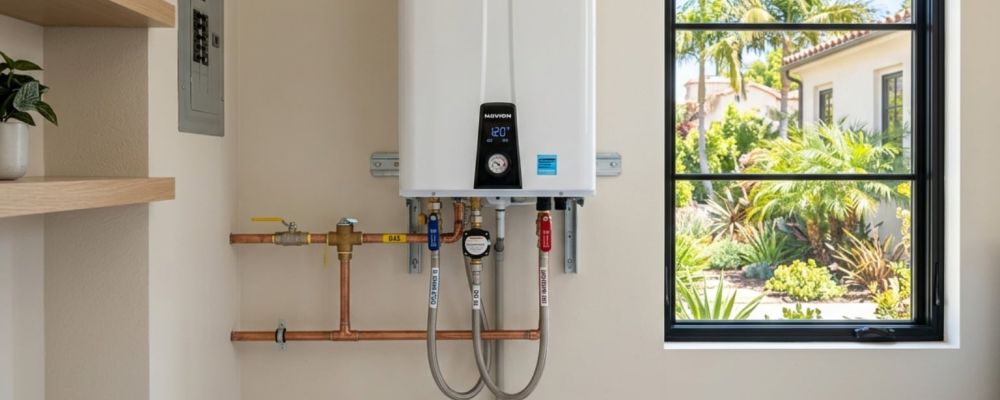
- Shut Off Water Supply: Close the cold-water inlet valve and the hot-water outlet valve on your tankless unit. If your unit has dedicated service ports (often marked with blue and red caps or handles), close the main water supply valves to the unit and open the service port valves.
- Connect Hoses: Connect one washing machine hose to the cold-water service port (inlet) of your tankless water heater. Place the other end of this hose into your 5-gallon bucket.
- Connect the second washing machine hose to the hot water service port (outlet) of your tankless water heater. Connect the other end of this hose to the output of your submersible pump.
- Place the submersible pump into the 5-gallon bucket. This creates a closed-loop circulation system.
- Prepare Descaling Solution: Fill the 5-gallon bucket with 2-3 gallons of white vinegar or the manufacturer-approved descaling solution. Ensure the submersible pump is fully submerged.
- Circulate the Solution: Turn on the submersible pump. The pump will draw the descaling solution from the bucket, push it through the hot water service port into your tankless unit, through the heat exchanger, out the cold water service port, and back into the bucket. Allow this solution to circulate for approximately 45 minutes to an hour. For homes in very hard water areas, you might extend this to 90 minutes. You may see cloudy water returning to the bucket, indicating that the scale is being dissolved.
- Flush with Fresh Water: After circulation, turn off the submersible pump. Disconnect the hose from the hot-water service port, then remove the pump from the bucket. Keep the hose from the cold water service port in the bucket.
- Slowly open the cold water inlet valve (the main supply valve to the unit). This will allow fresh water to flow through the unit, pushing the descaling solution out and into the bucket.
- Allow fresh water to flush through the unit for 5-10 minutes, or until the water running into the bucket is completely clear.
- Disconnect and Restore: Turn off the cold water inlet valve. Disconnect both hoses from the service ports. Close the service port valves and open the main hot water outlet valve.
- Restart the Unit: Slowly open the cold-water inlet valve fully. Check for any leaks around the service ports. Once confirmed, turn the power or gas supply back on to your tankless water heater.
- Test: Run a hot water faucet in your home for a few minutes to ensure proper operation and that no air is trapped in the lines.
While this DIY process can be effective, homeowners should exercise caution. Improper flushing or the use of unapproved chemicals can damage the unit and void warranties. If you’re unsure or uncomfortable, professional service is always recommended.
Key Components Requiring Regular Inspection
Beyond the essential descaling and flushing of the heat exchanger, several other components of your tankless water heater require regular inspection and cleaning to ensure optimal performance, safety, and longevity. Neglecting these seemingly minor parts can lead to reduced efficiency, error codes, and even system failures.
- Inlet Water Filter: Located at the cold water inlet, this filter screen traps sediment, rust, and other debris from your incoming water supply before it enters the sensitive heat exchanger. A clogged inlet filter restricts water flow, forcing the unit to work harder and potentially leading to overheating or inconsistent hot water.
- Air Intakes and Vents: For gas-fired tankless units, proper combustion requires a clean, unobstructed air supply. The air intake filter (if present) and the external venting system must be free of dust, lint, insects, and other debris. Blocked vents can lead to incomplete combustion, carbon monoxide buildup, and safety hazards.
- Pressure Relief Valve (TPR Valve): This crucial safety device is designed to release excess pressure or temperature from the unit, preventing dangerous conditions. It should be tested annually to ensure it’s not stuck and functions correctly.
- Condensate Neutralizer (for Condensing Units): Many high-efficiency tankless units are condensing models, which produce acidic condensate. This condensate is typically routed through a neutralizer to prevent it from damaging your plumbing system. The media inside the neutralizer needs to be inspected and replaced periodically to ensure it continues to neutralize the acid effectively.
Optimizing Advanced Water Heating Systems for Longevity
To truly extend the life and maintain peak performance of your tankless water heater, a comprehensive maintenance plan is vital. This goes beyond just addressing mineral buildup and includes regular checks of all system components.
Annual Inspections: We recommend scheduling a professional inspection at least once a year. During this inspection, a qualified technician will perform a thorough check of all critical components, including the heat exchanger, burners, igniter, sensors, wiring, and gas connections. They can identify potential issues before they escalate into costly repairs.
Professional Diagnostics: Modern tankless units are equipped with sophisticated diagnostic capabilities. Professionals have the tools and expertise to interpret error codes, assess system performance, and make precise adjustments, ensuring your unit operates at peak efficiency.
Warranty Compliance: As mentioned, many manufacturers require documented professional maintenance to keep your warranty valid. This protects your investment in case a major component fails. A professional service visit provides the necessary record-keeping.
System Calibration: Over time, settings can drift, or minor adjustments may be needed to optimize performance. A professional can calibrate your unit to ensure it’s heating water efficiently and safely, tailored to your household’s specific needs and local water conditions. For homeowners in Southern California, where water quality can vary significantly by municipality, this expert calibration is particularly beneficial.
Cleaning Water Filters and Air Intakes
Regular cleaning of your tankless water heater’s filters and air intakes is a simple yet effective way to prevent common issues and maintain efficiency. This is a task many homeowners can perform themselves between professional service visits.
Water Inlet Filter:
- Locate: The water inlet filter is typically located on the cold-water inlet pipe, often behind a small cap or housing.
- Shut Off Water: Turn off the cold water supply to the unit.
- Remove: Carefully unscrew the filter housing or cap. The filter screen will likely be a small mesh cylinder.
- Clean: Rinse the filter screen under running cold water to remove any trapped sediment or debris. A soft brush (like an old toothbrush) can help dislodge stubborn particles.
- Inspect: Check the filter for any tears or damage. If damaged, it should be replaced.
- Reinstall: Carefully reinsert the clean filter and screw the housing or cap back on, ensuring a snug fit to prevent leaks.
- Restore Water: Slowly turn the cold water supply back on and check for leaks.
Air Intakes (for Gas Units):
- Locate: The air intake is usually a vent or filter screen on the exterior casing of the unit.
- Clean: Use a soft brush, a cloth, or a vacuum cleaner with a brush attachment to gently remove dust, lint, pet hair, or insect nests that may be obstructing airflow.
- Inspect Vents: Periodically inspect the entire venting system (the pipes leading from the unit to the outside) for any blockages, damage, or disconnections. Proper airflow is critical for combustion safety and efficiency.
By keeping these components clean, you ensure unrestricted water flow and proper combustion, which are fundamental to your tankless water heater’s performance and safety.
Frequently Asked Questions About Tankless Maintenance
We often hear similar questions from homeowners regarding their tankless water heater maintenance. Here, we address some of the most common concerns to help you better understand your unit’s needs.
How often should a tankless water heater be flushed in Southern California?
The frequency of flushing and descaling your tankless water heater in Southern California is heavily influenced by our region’s hard water. While a general recommendation for tankless units is an annual flush, the high mineral content of Southern California’s water often requires more frequent flushing.
Based on water hardness levels:
- Soft Water (0-3.5 GPG – grains per gallon): Descaling might only be needed every 2-3 years.
- Moderately Hard Water (3.5-7 GPG): An annual flush is typically sufficient.
- Hard Water (7-10.5 GPG): We recommend flushing every 6-9 months.
- Very Hard Water (10.5+ GPG): In these areas, descaling every 3-6 months may be necessary to prevent significant buildup.
Many areas in Southern California fall into the “hard” to “very hard” categories. Therefore, for most homes in the region, a thorough descale and flush should occur every six months to a year, with the more frequent end of that spectrum being common. Regular flushing helps prevent mineral buildup that restricts water flow, reduces efficiency, and can shorten the life of the unit. It’s always a good practice to test your local water hardness or consult your water utility for precise information to tailor your maintenance schedule.
Can homeowners perform tankless descaling themselves?
Yes, homeowners can perform basic tankless descaling and maintenance tasks themselves, as outlined in our step-by-step guide. Many units are designed with service ports to facilitate this process. However, there are important considerations:
- Limited Scope for DIY: While flushing is often manageable, other maintenance tasks, such as inspecting burners, checking gas pressure, or diagnosing complex electrical issues, require specialized knowledge and tools. Homeowners are generally limited to simple filter cleaning and descaling.
- Warranty Protection: This is a critical point. While some manufacturers permit DIY descaling, many require certain maintenance tasks to be performed by a licensed professional to keep the warranty valid. Improper DIY work or the use of unapproved descaling solutions can void your warranty, leaving you responsible for costly repairs. Always check your owner’s manual for specific warranty requirements.
- Safety Precautions: Working with gas and electricity, as well as handling plumbing connections, carries inherent risks. If you are uncomfortable with any step of the process, it is always safer to call a professional.
- Learning Curve: For a first-time flush, having a professional perform the service can be invaluable. You can observe the process, ask questions, and gain confidence for future DIY attempts, if permitted by your warranty.
While some DIY maintenance is possible, we often recommend professional service for comprehensive maintenance, especially for the annual descaling, to ensure safety, optimal performance, and warranty compliance.
What are the signs that a tankless unit needs immediate professional service?
Your tankless water heater is designed to operate reliably, but like any appliance, it will give you clues when something is amiss. Recognizing these signs early can prevent minor issues from escalating into major, expensive repairs. If you notice any of the following, it’s time to call for professional service:
- Error Codes on the Display: Modern tankless units have digital displays that show error codes when a problem is detected. These codes are specific to your unit’s manufacturer and model and indicate issues ranging from ignition failures to flow restrictions or overheating. Consult your owner’s manual for immediate interpretation, but persistent error codes almost always require professional diagnosis.
- Fluctuating Water Temperature: If your hot water is inconsistent, cycling between hot and cold, or suddenly turning cold mid-shower (often called a “cold water sandwich”), it’s a strong indicator of scale buildup in the heat exchanger or a malfunctioning sensor.
- Reduced Hot Water Pressure: A noticeable drop in hot water pressure, especially if cold water pressure remains normal, often points to mineral buildup restricting flow through the unit’s internal components or a clogged inlet filter.
- Strange Noises: Popping, banging, gurgling, or whistling sounds coming from your unit can indicate sediment accumulation, air in the system, or other internal component issues. These noises are usually a sign that the unit is struggling to operate efficiently.
- Water Leaks: Any visible water leaking from or around your tankless unit is an immediate cause for concern. Leaks can indicate a damaged heat exchanger, loose connections, or a failing pressure relief valve. Do not ignore leaks, as they can lead to significant water damage.
- Discolored or Foul-Smelling Hot Water: While less common in tankless units than in tank models, discolored water (rusty, cloudy) or water with an unusual odor can indicate internal corrosion, bacterial growth, or issues with your water supply affecting the heater.
- Unit Not Firing Up or No Hot Water: If your unit fails to ignite or produce any hot water, despite receiving power and gas, it requires immediate professional troubleshooting.
Addressing these symptoms promptly can prevent more extensive damage and ensure your tankless water heater continues to provide efficient, reliable hot water for your Southern California home.
Conclusion
Investing in a tankless water heater for your Southern California home is a decision that promises energy efficiency, space savings, and the luxury of endless hot water. However, to truly unlock and sustain these benefits, a commitment to regular, diligent maintenance is indispensable. Our region’s hard water presents a unique challenge, making routine descaling and flushing not just a recommendation, but a necessity to prevent mineral buildup from compromising your unit’s performance and lifespan.
By understanding the impact of hard water, adhering to recommended flushing schedules (often every 6-12 months in Southern California), and performing basic homeowner tasks such as cleaning filters, you can significantly extend the life of your advanced water-heating system. Moreover, recognizing the signs that indicate a need for professional service and scheduling annual inspections ensures that complex issues are addressed promptly, maintaining warranty compliance and safeguarding your investment.
Proper maintenance is the key to enjoying reliable, efficient hot water for years to come. It’s a small effort that yields significant long-term rewards, ensuring your tankless water heater remains a high-performing asset in your Southern California home.