Rob Kern Leads The Hunting Consortium Into a New Era of Global Operations
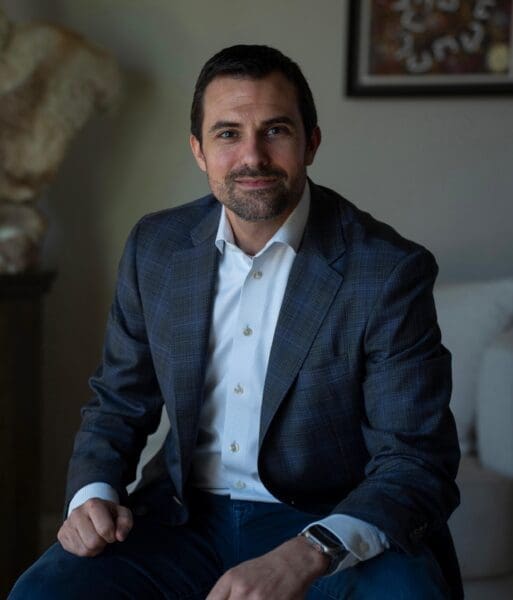
Robert K. “Rob” Kern works at the center of one of the most complex sides of international hunting: coordinating clients, outfitters, permits, logistics, and conservation realities across multiple continents. As Managing Director of The Hunting Consortium, President of the International Professional Hunters’ Association, and Co-Founder of Wild Strongholds, Kern’s work involves explaining how regulated hunting functions in remote regions where conservation funding is limited. Over the last two decades, Kern’s work has involved international logistics, client preparation, outfitter relationships, permitting, conservation communication, and the operational realities behind complex hunts. His goals include moving the hunting industry toward higher standards of transparency and accountability while adapting to changing expectations in conservation and digital communication.
Unlike many organizations that rely on third-party operators, The Hunting Consortium maintains a direct operational structure in several important regions. That structure, according to Kern, is important as international hunting operations grow more complicated.
“The Hunting Consortium has never operated as a traditional hunting consultancy. For decades, we have maintained our own regional managers and representatives in key regions, particularly in Central Asia, giving us direct involvement in how hunts are structured and executed on the ground,” Kern explains.
That operational presence has influenced the company’s reputation in countries across Asia, Africa, Europe, the Americas, and the South Pacific. More specifically, Kern oversees strategic planning, marketing, client advisory services, field coordination, and logistical systems that support international hunts in remote and highly regulated environments. His responsibilities often include permitting, outfitter coordination, travel preparation, trophy import logistics, and communication between clients and local operators.
The Hunting Consortium itself was created over years of international field experience by Kern’s parents. His father, Robert P. “Bob” Kern, spent time operating in regions like Romania and the Russian Far East, while his mother developed the administrative systems and client preparation processes that helped organize increasingly complicated international hunts. Kern later expanded on that foundation by integrating modern operational systems and more structured communication processes into the company’s global operations. His focus has been on reducing uncertainty for clients while improving consistency across hunts that involve remote terrain, government regulations, conservation quotas, and other difficult travel logistics.
During the early stages of his career, Kern spent time traveling through international hunting regions like Botswana and Central Asia, where he observed how wildlife management systems function under real-world conditions. Those experiences influence how he evaluates outfitters, conservation programs, and operational partnerships today. Instead of relying on reputation, Kern emphasizes direct observation. He has frequently noted that many assumptions about international hunting fail to reflect realities on the ground, especially in regions where wildlife conservation must compete with agricultural expansion, poaching, livestock pressure, and economic development.
That perspective also impacts his conservation communication efforts through Wild Strongholds, a media platform he co-founded in 2021 alongside Ed Hudson. The initiative addresses what Kern sees as a disconnect between public perception and the practical realities of sustainable-use conservation programs. More specifically, Wild Strongholds focuses on documenting wildlife management systems in regions that receive little international conservation funding or mainstream media attention. Using interviews and field reporting, the platform shows how regulated hunting intersects with habitat protection, anti-poaching efforts, and local community economics. According to Kern, the project was never intended as a marketing platform for hunting itself. Instead, it is made to provide context around conservation systems that are misunderstood or oversimplified in public discussions.
“Wild Strongholds is designed first as an educational and communication tool. If it also strengthens conservation storytelling, public understanding, and eventually policy influence, then it is doing exactly what it was built to do,” he says.
Through Wild Strongholds, Kern’s conservation argument is tied to documented systems rather than theory. In the Pakistan film The Juniper’s Shadow, the project documents one of the clearest mountain-wildlife recoveries most people have never heard of: Astor markhor, a rare spiral-horned mountain goat subspecies that had been severely depleted, increasing from roughly 700 animals in Gilgit-Baltistan in 1991 to more than 3,000 today. The film explains that this recovery was supported through regulated hunting programs where 80 percent of government hunting revenue returns to local communities, while 20 percent goes to the game department.
In the Tajikistan film Cathedral of Stone, Wild Strongholds documents the same principle with Bukharan markhor, another mountain goat subspecies, in a local conservancy where the population grew from roughly 40 animals to about 600 after 15 years of protection and regulated hunting. Many people know this kind of hunting by the phrase ‘trophy hunting,’ but Kern believes that term often misses the larger conservation mechanism: limited, regulated harvest can fund protection for entire wildlife populations and the landscapes they depend on. Tajikistan also gives the broader mountain-conservation story scale. Earlier scientific work cited estimates as low as 3,000 to 5,000 Marco Polo argali, the largest wild sheep of the Pamir Mountains of Central Asia, while current reports by the country’s Ministry of Environment estimate almost 29,000 argali and 7,000 markhor nationally.
The upcoming Ethiopia film, King of the Highlands, adds another example of the economic reality behind conservation for threatened wildlife. In that film, an Ethiopian wildlife official explains that national park revenue is under one million birr, approximately $18,000 based on 2023 exchange rates, while only 30 to 40 hunters generate about 30 million Ethiopian birr per year, approximately $550,000.
For Kern, the importance of these examples is the incentive most people never see: regulated hunting can give wildlife real value to the people living closest to it. When local communities benefit from wildlife, they have a reason to protect it, support anti-poaching work, and resist converting habitat to livestock, agriculture, or other uses.
Kern also argues that many people lack exposure to how regulated hunting programs actually function, particularly in remote regions where conservation financing options are limited. For him, better communication is not about marketing language. It is about making accurate information easier to find and understand.
“If people are going to search for information about hunting and conservation, I want them to find something accurate,” Kern says. “The industry has often done a poor job explaining itself, and that leaves room for misinformation about how these programs actually work.”
He also focuses on maintaining long-term partnerships with outfitters and regional operators who are known for their professionalism and consistency. In July, Kern will travel to New Zealand to finalize a new partnership with one of the country’s top outfitters at a premier red stag venue, securing exclusive peak-season dates for The Hunting Consortium. At the same time, Kern balances his leadership responsibilities with other industry involvement through the International Professional Hunters’ Association. His work there reflects conversations surrounding professional standards, ethical conduct, conservation policy, and the future of international hunting operations in a scrutinized global environment.
For Kern, the work comes down to preparation, communication, and execution. His goal is to make complex international hunts run better, explain the conservation reality more clearly, and help the industry meet a higher professional standard.
For more information, visit https://huntingconsortium.com/.