Identifying Barriers and Recognizing the Need for Change
Work-life balance coaching is a specialized form of personal and professional development that focuses specifically on helping individuals achieve a healthier, more sustainable relationship between their career demands and personal lives. While general life coaching might address a broad spectrum of goals, from relationships to personal growth, work-life balance coaching zeroes in on the often-conflicting pressures of work and non-work domains. It’s not just about time management; it’s about energy management, boundary-setting, value alignment, and intentional living.
Crucially, this type of coaching often moves beyond the traditional concept of “balance,” which can imply a rigid 50/50 split, towards “work-life integration” or “harmony.” As Scott Anthony Barlow from Happen to Your Career suggests, the idea of a perfect “balance” can be a myth. Instead, we should aim for integration, where our career choices fully align with our life’s priorities and values. This approach acknowledges that life doesn’t stop when we’re at work, and that genuine career happiness comes from building a professional path that integrates seamlessly with our personal aspirations. It’s about leveraging our signature strengths to find meaningful work that enhances, rather than detracts from, our holistic well-being. Much like a professional athlete cultivates a winning mindset for peak performance, work-life balance coaching helps individuals cultivate strategies for peak living.

How Tech Work-Life Balance Coaching Prevents Executive Burnout
The tech industry, renowned for its fast pace and demanding culture, often pushes professionals to their limits. This environment makes tech work-life balance coaching particularly vital, especially in preventing executive burnout. The statistics are stark: a Deloitte survey found that 77% of respondents experienced burnout, with that figure rising to 84% among millennials. Nearly half of those surveyed even left a job due to burnout, highlighting the critical need for effective strategies to improve employee retention and well-being.
High-achieving individuals, often perceived as “superwomen” or “supermen” externally, frequently grapple with emotional exhaustion and internal feelings of inadequacy. They might be juggling immense responsibilities at work and at home, fueled by unsustainable habits like excessive caffeine and quick meals. The constant pressure can lead to a pervasive sense of guilt, especially when personal priorities or self-care needs are neglected. Our research indicates that the thought of prioritizing oneself often adds to this guilt, making it difficult for these professionals to break free from the cycle of overwhelm.
Coaching provides a structured, supportive environment to address these deep-seated issues. It helps executives unpack overwhelming responsibilities, identify the root causes of their exhaustion, and ultimately escape the “treadmill of stress.” By validating their concerns and offering personalized strategies, coaching empowers these leaders to make sustainable changes, not just for their own health, but also for the long-term success and health of their teams and organizations.
Key Methodologies in Tech Work-Life Balance Coaching
Effective work-life balance coaching employs a range of proven methodologies to help clients achieve their goals. These frameworks are designed to foster self-awareness, clarify priorities, and build sustainable habits. Some of the most common and effective approaches include:
- Goal Setting (e.g., SMART Goals): Coaches guide clients in setting Specific, Measurable, Achievable, Relevant, and Time-bound goals. This structured approach ensures that objectives are clear and progress can be tracked, moving clients from vague aspirations to concrete action plans.
- Time Management Techniques (e.g., Time-Blocking, Time Theming): Beyond simply managing tasks, coaches help clients manage their energy and focus. Time-blocking involves scheduling specific blocks of time for certain activities, while “time theming,” as discussed by Mike Vardy, dedicates entire days or parts of days to particular types of work or life domains. This minimizes context-switching and enhances productivity.
- Values Alignment: A core component of coaching is helping clients identify their core values. By understanding what truly matters to them, clients can make decisions that align with their deepest beliefs, leading to greater fulfillment and reduced internal conflict.
- Boundary Setting: Coaches help clients establish clear boundaries between work and personal life. This involves learning to say “no,” creating dedicated work and non-work spaces, and managing expectations from colleagues and family members.
- Personal Responsibility and Accountability: Coaching emphasizes that clients are the “CEOs of their own lives.” Coaches empower individuals to take ownership of their choices and actions, providing accountability to ensure progress towards their work-life balance goals.
- Sustainable Routines and Habits: Rather than quick fixes, coaching focuses on building long-term, sustainable routines. This includes incorporating self-care, regular breaks, and mindful practices into daily life to prevent burnout and maintain well-being.
By integrating these methodologies, coaches provide a holistic approach that addresses not just the symptoms of imbalance but its underlying causes, leading to lasting transformation.
In our hyper-connected, always-on society, achieving work-life balance often feels like an uphill battle. The very structure of modern work, particularly in tech, creates formidable barriers. One of the most significant is boundary dissolution, where the lines between professional and personal life become increasingly blurred. With remote work and instant communication, work can easily spill into evenings, weekends, and even vacations.
This is often compounded by perfectionism, a trait common among high achievers. The drive to excel can lead to overcommitment and an inability to delegate, creating an unsustainable workload. Closely linked to guilt is the feeling that one is neglecting either work responsibilities or personal relationships. As highlighted in Nedra Glover Tawwab’s book Set Boundaries, Find Peace (a recommendation often shared by mentors like Shimina Harris), the inability to set boundaries without justification can lead to constant overwhelm.
The pervasive always-on expectations further exacerbate the problem. The pressure to be constantly available, to respond to emails immediately, and to take on every new project can lead to chronic stress and decision fatigue. When every moment is filled with demands, there’s little mental space left for strategic thinking or personal reflection. Moreover, the hidden engine of stress, rumination control, plays a critical role. When we constantly replay stressful events or worry about future tasks, our bodies remain in a state of fight-or-flight, preventing true rest and recovery.

Common Signs of Imbalance in Tech Professionals
For tech professionals, the signs of work-life imbalance often manifest in distinct ways, impacting both their personal well-being and professional performance. Recognizing these indicators is the first step towards seeking support:
- The “Sunday Scaries”: A pervasive sense of dread or anxiety that begins on Sunday evenings, anticipating the upcoming work week. This isn’t just mild apprehension; it’s often a deep-seated fear of the demands and pressures awaiting.
- Chronic Sleep Deprivation: Despite working long hours, many tech professionals struggle to switch off, leading to poor sleep quality or insufficient sleep. Research indicates a strong link between lack of sleep and low self-reported work-life balance, as noted by Wu et al. (2015) in their study on mental health and sleep quality.
- Decreased Creativity and Innovation: The constant grind leaves little room for the mental space needed for creative problem-solving and innovative thinking, which are crucial in the tech industry.
- Relationship Strain: Neglecting personal relationships due to work commitments can lead to feelings of disconnection from family and friends, impacting overall happiness and support systems.
- Physical Health Decline: Chronic stress and lack of time for self-care can result in a range of physical symptoms, including persistent fatigue, frequent illness, weight fluctuations, and increased reliance on unhealthy coping mechanisms like excessive caffeine or fast food.
- Loss of Interest in Hobbies: Activities that once brought joy and relaxation are abandoned as work consumes all available time and energy.
- Difficulty Disconnecting: Even when away from the office, the mind remains preoccupied with work-related thoughts, making it impossible to truly relax and recharge.
These signs are not just minor inconveniences; they are red flags indicating a need for intervention to prevent deeper burnout and long-term health consequences.
Overcoming the Myth of the 50/50 Split
One of the most persistent misconceptions about work-life balance is that it means an equal, 50/50 division of time and energy between professional and personal spheres. This rigid definition often leads to frustration, as such a split is rarely achievable or even desirable in the dynamic realities of modern life. As explored in podcasts like “Why Work–Life Balance is a Myth,” the true goal isn’t a perfect equilibrium, but rather a sense of work-life integration or harmony.
This shift in perspective acknowledges that our lives are composed of interconnected domains – career, family, health, personal growth, community, and more. Instead of trying to separate these domains into distinct, competing halves, integration seeks to find ways for them to coexist and enrich one another. For example, a demanding work project might temporarily require more focus, but a healthy integrated life ensures that personal time is intentionally scheduled and protected, and that work itself can be a source of intrinsic engagement and purpose.
The focus moves from counting hours to cultivating presence over hours. It’s about being fully engaged and present in whatever activity we are undertaking, whether it’s a critical meeting or a family dinner. This means intentionally disconnecting from work during personal time and bringing our best selves to our professional roles. A coach helps individuals define what this harmony looks like for them, recognizing that it’s a highly individualized equation that evolves with different life stages and priorities. It’s about creating a sustainable flow where work and life complement each other, rather than constantly battling for dominance.
The Coaching Process: Tools for Transformation
The journey towards work-life harmony is deeply personal, and the coaching process is designed to be a supportive, structured path for this transformation. It typically begins with discovery sessions, during which the coach and client explore the current imbalance, identify core values, and articulate desired outcomes. This initial phase is crucial for building rapport and setting the foundation for a tailored coaching plan. For tech professionals seeking this kind of personalized guidance, specialized coaching, such as tech work-life balance coaching, offers invaluable support.
A key element throughout the coaching process is accountability. Coaches act as partners, helping clients stay committed to their goals and navigate challenges. They provide a non-judgmental space for reflection and encourage clients to take consistent action.
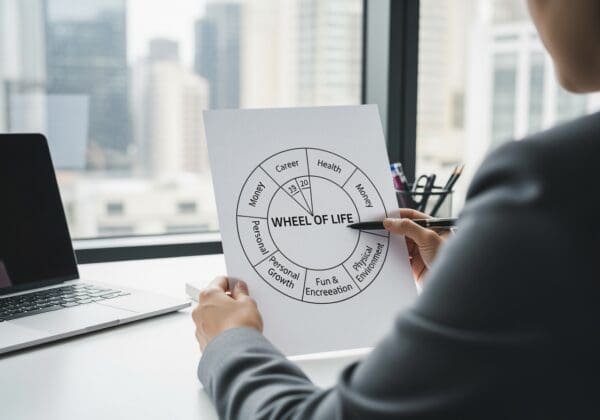
One widely used tool in this process is the Wheel of Life exercise. As mentioned in the podcast “Why Work–Life Balance is a Myth,” this visual assessment helps clients evaluate their satisfaction levels across various life domains (e.g., career, finances, health, relationships, personal growth). By rating each area, clients gain a clear visual representation of where imbalances lie, providing a starting point for goal-setting and strategic intervention.
Coaching also facilitates significant mindset shifts. Many individuals hold limiting beliefs about what they “should” be doing or what balance means. Coaches challenge these beliefs, helping clients reframe their perspectives and embrace new possibilities. This increased self-awareness empowers clients to understand their patterns, triggers, and strengths, enabling them to make conscious choices that align with their authentic selves and lead to a more fulfilling life.
Essential Strategies for Boundary Management
Effective boundary management is perhaps the most critical skill for achieving and maintaining work-life harmony, especially in demanding fields. Coaches equip clients with practical, actionable strategies to create and uphold these essential lines:
- Email Curfews and Digital Disconnection: Establishing specific times when work emails and messages are not checked. This might mean an “email curfew” after 6 PM or designating weekends as strictly work-free. Mindful transitions, such as a short walk or a change of clothes after work, can also help mentally separate work from personal time.
- Strategic Prioritization: Learning to identify and focus on what truly matters. As the book The ONE Thing emphasizes, identifying the single most important thing that will make everything else easier or unnecessary can dramatically reduce overwhelm.
- Assertive Communication: Developing the ability to communicate needs and limits clearly and respectfully. This involves learning to say “no” to non-essential tasks or requests without feeling the need for lengthy justifications. When you don’t offer a reason, people can’t argue with it.
- Protecting Deep Thinking Time: In a world of constant interruptions, coaches help clients carve out and fiercely protect blocks of time for focused, uninterrupted work or creative thought. This “deep work” is essential for high-quality output and mental clarity.
- Scheduling Personal Time First: Treating personal appointments, self-care, and family time with the same importance as work meetings. This often means literally putting these activities on the calendar first.
By implementing these strategies, clients learn to assert control over their time and energy, preventing work from encroaching on their personal lives and fostering a greater sense of autonomy.
Leveraging Technology to Reclaim Personal Time
Ironically, while technology often contributes to the “always-on” culture, it can also be a powerful ally in reclaiming personal time and enhancing work-life balance. Coaches often introduce clients to a range of productivity and organizational tools designed to streamline tasks, minimize distractions, and enforce boundaries:
- Time Tracking and Analytics Tools: Applications like RescueTime and Toggl help clients understand how they are actually spending their time. RescueTime works in the background to categorize activities, providing insights into productivity patterns and identifying time sinks. Toggl, on the other hand, allows manual tracking, which is perfect for project management and understanding effort distribution. This awareness is the first step towards making intentional adjustments.
- Coaching and Client Management Platforms: For coaches themselves, and sometimes for clients to track progress between sessions, platforms like Quenza offer valuable features. Quenza allows coaches to automate assignments, deliver exercises, and monitor client progress, providing a structured and engaging coaching experience.
- Automation Tools: Identifying repetitive tasks and automating them can free up significant time and mental energy. This could range from setting up email filters to using project management tools with automated reminders.
- Delegation Tools: For leaders and managers, effective delegation is crucial. Tools that facilitate clear assignment, tracking, and communication of delegated work ensure that tasks are completed without constant oversight.
- Family Organizing Tools: For those balancing work with family life, tools like Cozi (a family organizing tool mentioned in research) can centralize schedules, grocery lists, and to-do lists, reducing mental load and improving household coordination.
By strategically leveraging these technologies, clients can create more efficient workflows, reduce mental clutter, and protect their precious non-work hours, ultimately supporting a more balanced and integrated lifestyle. It’s about using technology to work smarter, not just harder, and to free up time for activities within their “Zone of Genius” and for personal fulfillment.
Proven Benefits and Long-Term Career Sustainability
The investment in work-life balance coaching yields substantial and measurable benefits that extend far beyond simply feeling less stressed. These advantages contribute significantly to both personal well-being and long-term career sustainability.
Burnout Symptoms (Before Coaching) Balanced Outcomes (After Coaching) Chronic fatigue & exhaustion Increased energy & vitality Decreased productivity Enhanced focus & efficiency High stress & anxiety Greater calm & resilience Relationship strain Improved connections & support Loss of purpose & motivation Renewed clarity & engagement Poor physical health Better self-care & well-being One of the most significant benefits is increased productivity. When individuals are well-rested, focused, and engaged, their output naturally improves. The Centers for Disease Control and Prevention’s Quality of Worklife Questionnaire helps organizations measure the relationship between work environment and worker health, underscoring that a positive work-life dynamic directly correlates with better performance.
Furthermore, individuals who report better work-life balance demonstrate higher work ability outcomes, which translates to increased productivity and even longevity. A cohort study by Berglund et al. (2021) found that strong work-life balance predicted improved work ability 2 years later, underscoring the long-term impact on career health and performance. This research, found at https://doi.org/10.1186/s12889-021-11235-4, provides compelling evidence for the tangible benefits of prioritizing balance. By reducing fatigue and enhancing overall well-being, coaching helps professionals sustain their careers for longer, avoiding early burnout or health-related career interruptions.
Impact on Leadership and Organizational Culture
The benefits of work-life balance coaching extend beyond the individual, profoundly impacting leadership effectiveness and organizational culture. When leaders prioritize their own work-life harmony, they effectively model behavior for their teams. This sends a powerful message that well-being is valued, giving team members permission to set their own boundaries and prioritize self-care without fear of negative repercussions. This ripple effect contributes to a healthier and more supportive work environment.
Research, including studies cited by Joe Robinson in his work-life balance coaching, suggests that boundaries are a critical success strategy. A Harvard study, for instance, has shown the importance of boundaries for job and life satisfaction. Leaders who implement and respect boundaries foster a culture of psychological safety, where employees feel secure in expressing their needs and concerns. This, in turn, enhances trust, collaboration, and overall team well-being.
Coaching helps leaders cultivate authentic presence, enabling them to be fully engaged and effective in both their professional and personal roles. This authenticity can inspire greater loyalty and engagement from their teams. Additionally, by learning to manage their own stress and rumination, leaders can significantly reduce second-hand stress within the workplace. Just as stress can be contagious, so too can calm and intentionality. A balanced leader creates a more balanced team, ultimately leading to a more resilient and productive organizational culture.
Realistic Expectations and Results
While work-life balance coaching can be transformative, approach it with realistic expectations. The goal isn’t instant perfection, but rather the development of sustainable habits and a deeper understanding of one’s own needs and priorities. Clients can expect to see tangible improvements in several key areas:
- Improved Sleep: By establishing clearer boundaries and reducing evening work, clients often report better sleep quality and duration.
- Enhanced Resilience: Coaching helps build mental fortitude, enabling individuals to bounce back more effectively from setbacks and stressors.
- Prioritized Self-Care: Clients learn to view self-care not as a luxury, but as a non-negotiable component of sustained performance and well-being. This often involves incorporating practices from positive psychology, and resources like the free Positive Psychology Exercises can be integrated into their routines.
- Greater Clarity of Purpose: Through guided reflection, clients gain a clearer understanding of their values, goals, and what truly brings them fulfillment, both professionally and personally.
- Effective Boundary Setting: Clients develop practical skills to establish and maintain boundaries, reducing feelings of overwhelm and protecting personal time.
- Reduced Guilt and Stress: By addressing underlying beliefs and implementing new strategies, clients experience a significant reduction in guilt associated with prioritizing themselves and a decrease in overall stress levels.
The results are not about eliminating challenges, but about equipping individuals with the tools and mindset to navigate them more effectively, leading to a more intentional, joyful, and sustainable life.
Frequently Asked Questions about Work-Life Balance
Is work-life balance actually possible in high-growth tech?
Yes, work-life balance is absolutely possible in high-growth tech, but it requires a redefined approach. The traditional 50/50 split is often a myth in such demanding environments. Instead, the focus shifts to work-life integration and harmony, where your career choices align with your personal values and priorities. It means being intentional about setting boundaries, managing your energy, and being present in whichever life domain you choose to focus on at a given moment. Many tech executives and professionals find success by working with coaches to customize strategies that fit their unique roles and company cultures, proving that high achievement and personal well-being can coexist.
How does coaching differ from traditional therapy for stress?
While both coaching and therapy can address stress, their approaches and focus areas differ significantly. Therapy typically delves into past experiences, emotional wounds, and mental health conditions (like anxiety or depression) to heal and resolve underlying issues. It often involves diagnosis and treatment. Coaching, on the other hand, is forward-looking and action-oriented. It focuses on identifying current challenges, setting clear goals, and developing practical strategies to achieve desired outcomes. For stress, a coach helps you build coping mechanisms, set boundaries, manage time and energy, and cultivate resilience, without necessarily exploring deep-seated psychological roots. It’s about empowering you to move forward and thrive.
Can coaching help with the specific challenges of remote and hybrid work?
Absolutely. Remote and hybrid work models have introduced new complexities to work-life balance, often blurring the lines between home and office. Coaching is highly effective in addressing these specific challenges. A coach can help you:
- Establish clear physical and digital boundaries: create dedicated workspaces, set “email curfews,” and develop routines to signal the start and end of the workday.
- Combat isolation and maintain connections: Developing strategies for virtual team engagement and nurturing personal relationships outside of work.
- Manage self-discipline and motivation: Implementing structures and accountability to stay productive without constant external oversight.
- Optimize communication: Learn to convey availability and expectations effectively to colleagues and family members.
- Prevent digital fatigue: Strategies for managing screen time and incorporating breaks.
Coaching provides personalized tools and accountability to navigate the unique demands of remote and hybrid work, ensuring that flexibility doesn’t turn into constant availability.
Conclusion
In an “always-on” world where the lines between work and life are increasingly blurred, the pursuit of work-life harmony is not a luxury, but a necessity. As we’ve explored, work-life balance coaching offers a strategic, personalized, and highly effective path to achieving this. It equips individuals with the tools to navigate the demands of high-pressure environments, particularly in tech, by fostering self-awareness, setting crucial boundaries, and aligning daily actions with core values.
By debunking myths and embracing concepts like work-life integration, coaching empowers professionals to take personal agency over their lives. It’s about making intentional living a reality, leading to not just reduced stress and burnout, but also enhanced productivity, improved relationships, and a profound sense of purpose. This journey isn’t just about surviving; it’s about thriving. Investing in work-life balance coaching is an investment in sustainable success, effectively future-proofing careers against the relentless pace of modern demands, and ultimately, reclaiming joy in every aspect of life.
It’s time to stop letting work demands dictate the quality of your life. With the right support, you can craft a life that is both professionally rewarding and deeply fulfilling.