How Clear Aligners Are Used In Pre Restorative Dental Planning
You might be looking at your teeth in the mirror, knowing you need crowns, veneers, or maybe even implants, and feeling that mix of urgency and hesitation. You want a healthy, confident smile, but you worry that if you move one piece, the whole puzzle might shift in a way you regret. You might be asking yourself if you should straighten your teeth first, or fix them first, or somehow do both without losing time or money—and whether a dentist in Livonia can help you do it right.
If that sounds familiar, you are not alone. Many people are told they need “a lot of work” and feel overwhelmed, especially when different dentists mention orthodontics, clear aligners, bite changes, and “ideal positions” without explaining how it all fits together. Because of this tension, you might wonder whether clear aligners are just a cosmetic extra, or whether they can actually make your restorative treatment safer, more predictable, and more conservative.
Here is the short version. Using clear aligners for pre restorative dental planning is often less about getting a movie star smile and more about putting teeth in the right place so that crowns, veneers, bonding, and implants can be done with less drilling, fewer surprises, and better long term stability. When the foundation is aligned, the restorative work usually lasts longer and looks more natural.
Why your bite and tooth position matter before restorative work
Imagine trying to renovate a house where the doors are crooked and the floor slopes. You can paint and decorate, but nothing quite fits. Teeth are similar. If they are crowded, tilted, or flared, a dentist often has to remove more tooth structure to create space for crowns or veneers, or accept compromises in shape and function.
Several problems tend to show up when restorations are done on misaligned teeth. You might see chipping of veneers on teeth that collide during biting. Crowns with thick or uneven edges because the dentist had to “make it fit” in a tight space. Gum recession around bulky restorations that are hard to clean. You may also feel jaw discomfort or notice that some teeth wear faster than others.
That is why many clinicians are moving toward what some call “ortho restorative” planning. They first ask, “If these teeth were in a healthier position, how much less would we need to drill or build up?” Research has shown that aligning teeth before restorative care can help distribute bite forces more evenly and reduce complications. For example, clear aligner therapy has been used successfully to correct crowding and improve occlusion so that restorative work can be done more conservatively and predictably, as discussed in studies on aligner based interdisciplinary treatments such as those described in recent clinical reports on aligner assisted restorative cases.
So where does that leave you? If your teeth are out of position, your dentist has two options. Shape the teeth aggressively to “force” the restorations into place. Or gently move the teeth with aligners so the restorations can be thinner, better supported, and easier to clean.
How clear aligners fit into pre restorative planning
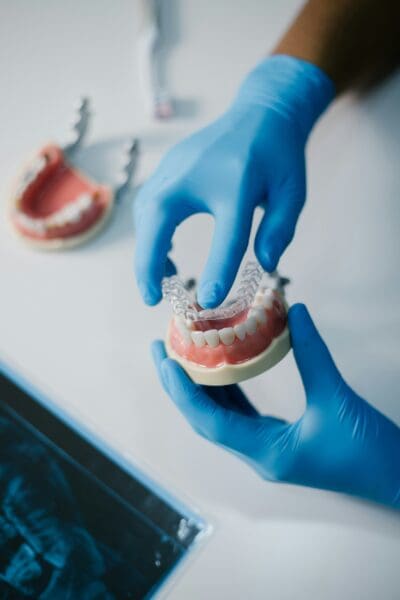
Clear aligners are not just plastic trays that make teeth straighter. Used thoughtfully, they become part of a larger plan. The focus is not only on looks, but on creating room, correcting bite relationships, and aligning roots and crowns so the restorative work sits on a stable base.
Here are some of the most common ways pre restorative orthodontic treatment with clear aligners can help.
1. Creating space instead of drilling it away
If you have crowding or overlapping front teeth, a dentist placing veneers or crowns often has to remove more enamel to make the teeth look aligned. With aligners, space can be created by small controlled movements or very light enamel reshaping. That way, when restorations are placed, they can be thinner and more natural. Studies examining aligner therapy have highlighted how planned tooth movements reduce the amount of invasive preparation needed, as seen in clinical evaluations like those reported in research on aligner treatment outcomes.
2. Improving your bite before rebuilding teeth
If your bite is deep, open, or shifted to one side, restorative work done on top of that can be under constant stress. Clear aligners can be used to level the bite, adjust overbite or overjet, and improve how upper and lower teeth meet. This can reduce the risk of future chipping and cracking of your new restorations. Some protocols even combine aligner wear with carefully planned build ups or temporary restorations to guide the bite into a healthier position.
3. Positioning teeth for implants or bridges
When a tooth is missing, neighboring teeth often drift or tip into the space. If an implant is placed without correcting that, the final crown can look narrow or off center. Aligners can upright or move neighboring teeth to recreate ideal space and angulation. Evidence from orthodontic and restorative literature supports using aligners to manage spacing before implant placement, improving both esthetics and function, as described in clinical studies indexed on PubMed such as recent reviews of aligner based interdisciplinary care.
4. Planning digitally, then treating in stages
Modern aligner systems allow dentists to plan tooth movements in 3D and overlay that plan with proposed crowns or veneers. In some workflows, the final restorative design is created first, then teeth are moved to fit that design. This “visualize the end, then move toward it” method is supported by digital planning research and case series, for example those described in orthodontic and restorative integration studies such as the thesis available from Marmara University at this open access resource on aligner assisted planning.
Comparing options before restorative treatment with clear aligners
When you are already worried about cost, time, and comfort, adding another “phase” of treatment can feel like too much. It helps to see how the choices actually compare.
| Approach | Short term benefits | Long term risks | Best suited for |
|---|---|---|---|
| Restorations only on misaligned teeth | Faster. Fewer appointments. No aligner wear. | More tooth drilling. Higher risk of chipping or fracture. Esthetic compromises. Potential gum issues from bulky shapes. | Minor issues, or when orthodontic treatment is not possible for medical or personal reasons. |
| Clear aligners before restorations | More conservative tooth prep. Better bite alignment. Improved esthetics with thinner, natural restorations. | Longer total treatment time. Higher upfront cost. Requires patient cooperation with aligner wear. | Moderate to severe crowding or spacing. Complex esthetic cases. Implant planning. Patients who want durability and conservation. |
| Combination of minor prep and limited aligner treatment | Balanced timeline. Some improvements in alignment and bite. Reduced drilling compared to restorations only. | Some compromises remain. Still requires aligner wear and dental visits. | Patients with time or budget limits who still want a more conservative and planned approach. |
There is no single “right” option for everyone. The right path depends on your goals, your tolerance for wearing aligners, your budget, and how much change is needed to support stable, long lasting restorations.
Three practical steps you can take right now
1. Ask for a joint ortho restorative plan, not just a quote
Before you agree to crowns or veneers, ask your general dentist how tooth position and your bite are influencing the plan. Ask questions like, “If my teeth were aligned first, would you remove less tooth?” and “Can you show me a digital simulation of both the tooth movements and the final restorations?” A thoughtful pre restorative clear aligner plan should explain what will move, why it matters, and how it protects your investment.
2. Clarify time, cost, and maintenance in concrete terms
It is reasonable to worry that adding aligners will make everything more expensive or slow. Ask for two or three options with approximate timelines and costs, including how long the restorations are expected to last and what kinds of repairs might be needed in each scenario. Understanding that “three extra months with aligners may avoid early replacement of veneers” can make the decision feel more grounded and less abstract.
3. Be honest about your lifestyle and what you can commit to
Aligners only work if you wear them as instructed. If you travel a lot, snack frequently, or know you struggle with routines, say so. A good planning conversation will match the treatment to your life, not the other way around. Sometimes that means shorter, targeted aligner treatment with realistic goals. Sometimes it means a staged approach where the most urgent teeth are restored first, then alignment is addressed in a second phase.
Bringing it all together
You do not have to choose between a healthy bite and a beautiful smile. Thoughtful use of clear aligners in pre restorative dental planning allows both to support each other. When teeth are moved into positions that respect your jaw, your gums, and your future restorations, the work your dentist does can be more conservative, more comfortable, and more durable.
If you feel overwhelmed, that is understandable. There are many moving parts and the decisions feel permanent. You are allowed to slow down, ask for explanations, and seek a plan that treats your mouth as a whole system rather than a collection of separate problems. With the right guidance, clear aligner treatment can be a quiet, steady step that makes all the restorative work that follows safer and more predictable.