
A Consumer’s Guide to Modern Tooth Replacement Options
Tooth loss is a common challenge that affects people of all ages, impacting not only the ability to chew and speak but also one’s overall quality of life. Fortunately, advances in dental science have made it possible to restore your smile with solutions tailored to every need and budget. From time-tested removable dentures to state-of-the-art dental implants, each option comes with distinct benefits and considerations. For those seeking permanent solutions, exploring Dental Implants St. Louis, MO, can be an excellent starting point.
The right approach to tooth replacement depends on oral health, bone structure, lifestyle, and personal expectations. Advances in implant dentistry now offer solutions that are both functional and natural-looking, including options like the All-on-4 system and specialized bridges. Consulting skilled dental professionals helps patients make informed decisions and restore function, aesthetics, and confidence in their smiles.
Traditional Dentures: A Time-Tested Solution
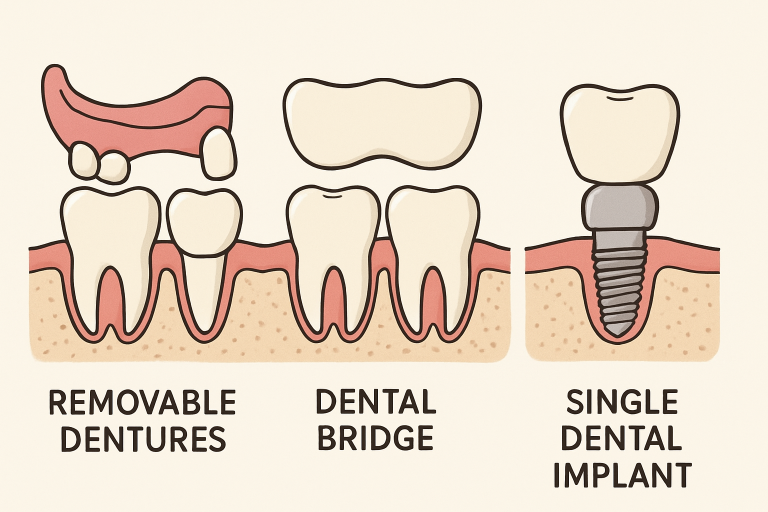
Traditional dentures remain a cornerstone in restorative dentistry, providing full or partial replacement for missing teeth. These prosthetic devices rest on the gums and can be easily removed for cleaning. Dentures offer an accessible, non-invasive solution, especially for those who are not candidates for surgical procedures or who prefer a more budget-friendly alternative. However, users frequently report challenges such as reduced bite force, slipping, and the need for periodic adjustment due to changes in the bone and gum tissue over time. Proper maintenance and regular dental check-ups are essential to prolong the life and comfort of traditional dentures.
Dental Bridges: Bridging the Gap
Dental bridges offer a fixed restorative option by using adjacent teeth as supports for one or more replacement teeth. This solution is ideal for individuals with healthy teeth flanking a gap left by missing teeth. Bridges provide excellent aesthetic results and function, but require reshaping healthy anchor teeth, which may be a drawback for some patients. Nevertheless, bridges remain a popular choice due to their relatively quick restoration and predictable results. They are particularly beneficial for those who may not qualify for dental implants due to insufficient jawbone density or medical considerations. Further details can be found in the resources provided by Healthline. Dental bridges also help maintain the natural alignment of teeth, preventing neighboring teeth from shifting into the space left by the missing tooth. Regular dental check-ups are essential to ensure the longevity of the bridge and the health of the supporting teeth.
Dental Implants: The Modern Marvel
Dental implants represent a gold standard in modern tooth replacement, offering unmatched durability, comfort, and appearance. The process involves surgically placing titanium posts into the jawbone, which act as artificial roots for crowns that blend seamlessly into your natural smile. According to the FDA, dental implants are regulated medical devices, and understanding their safety and proper use is essential for anyone considering this treatment. Implants stimulate the underlying bone, preventing the bone loss that typically accompanies missing teeth. This makes them a superior choice for long-term oral health and stability. While the initial procedure and cost may be higher than those of other options, implants are often considered an investment in lifelong dental function and aesthetics.
All-on-4 Implants: A Revolutionary Approach
For patients who require a complete set of new teeth, the All-on-4 technique has emerged as a transformative solution. Utilizing just four strategically placed implants per arch, this method supports a whole row of prosthetic teeth with minimal surgery and a rapid recovery compared to traditional implant approaches. Patients often walk away with a restored smile in a fraction of the time it takes for conventional treatments. The All-on-4 system is designed to maximize existing bone, meaning that even those with compromised bone density can typically benefit from this innovation. This approach is revolutionizing how full-mouth rehabilitations are performed, offering newfound hope for broader patient groups.
Choosing What’s Right for You
When deciding on the best tooth replacement strategy, a holistic approach is essential. Factors such as oral and general health, remaining teeth, bone structure, and budget must be weighed carefully. Some may prefer non-invasive, removable solutions like dentures, while others opt for the longevity and security of dental implants or bridges. Consulting with an experienced dentist ensures all variables are considered, from immediate needs to long-term maintenance, resulting in a customized plan that best suits your smile and life goals.
Conclusion
Modern dentistry offers a variety of pathways from tooth loss to a renewed, confident smile—whether you select traditional dentures, fixed bridges, advanced dental implants, or the innovative All-on-4 technique. Thoughtful evaluation and expert guidance can help you navigate the journey, ensuring that your choice meets both your functional and emotional expectations. By staying informed and proactive, you can regain both the beauty and function of your teeth, enhancing your overall well-being for years to come.