Excavation Contractors and Tree Removal Services: A Comprehensive Guide

Undertaking a construction or landscaping project often begins with properly preparing the land. This includes removing trees, clearing debris, and excavating the site to create a stable foundation for future development. Choosing the right excavation contractors is crucial for ensuring safe, efficient, and professional site preparation that meets the needs of both residential and commercial projects.
Expert excavation and tree removal services ensure that projects are completed efficiently, minimizing risks to both people and property. Whether you’re planning to build a new structure, install utilities, or simply improve your outdoor space, understanding each process will help you make informed decisions and avoid unnecessary setbacks.
Not only do professional contractors bring experience and the right equipment to the job, but they also navigate various regulations that govern excavation and tree removal. In many areas, removing mature trees or excavating near protected zones may require obtaining specific permits and adhering to environmental standards.
Taking time to plan each stage of the project, from assessment and permitting to proper waste management, will streamline the process and help avoid common pitfalls. Relying on experienced professionals can ensure the safety and sustainability of your project from start to finish.
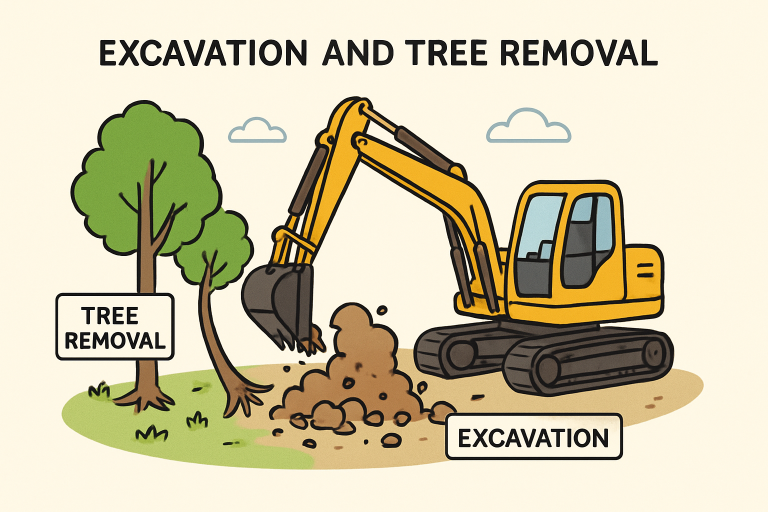
Understanding Tree Removal Services
Tree removal is sometimes necessary during property development or when trees pose a risk to safety. Professional services assess the condition of each tree to determine the most suitable method of removal, taking safety and local regulations into account. According to OSHA, tree care and removal operations must adhere to strict safety protocols, as the industry involves high-risk tasks that require specialized training and protective measures.
- Assessment: Arborists inspect trees for disease, instability, or proximity to structures to ensure removal is warranted.
- Permitting: Many areas require permits, especially for removing heritage or protected tree species. It’s important to check local codes before proceeding.
- Removal Process: Professional crews utilize specialized tools and equipment to safely remove trees in a controlled manner, minimizing risks to people and property.
Having tree removal performed by skilled professionals reduces the risk of accidents, property damage, and legal complications.
Safety Considerations in Excavation and Tree Removal
Both excavation and tree removal present significant safety hazards if not managed properly. For excavation, shoring, trench boxes, and proper sloping are essential to avoid collapses, which can result in severe injury or fatality. Tree removal requires expertise in handling heavy equipment and working at heights, making personal protective equipment and safe practices a necessity.
Implementing their recommendations is crucial for both contractors and property owners.
Choosing the Right Service Provider
Selecting the ideal contractor ensures your project progresses smoothly and safely. Key aspects to evaluate include:
- Experience and Credentials: A track record of similar projects and appropriate licensing are vital for reliable results.
- Insurance: Comprehensive liability and workers’ compensation insurance protect against unexpected incidents.
- References and Reviews: Seeking feedback from past clients and independent review platforms provides valuable insight into professionalism and quality.
Request detailed project proposals to compare scope, timelines, and pricing among potential contractors.
Cost Factors and Budgeting
The price of excavation and tree removal depends on project complexity, equipment requirements, and local permitting fees. Larger or more complex jobs, such as those involving rock excavation or removing mature trees near buildings, typically increase costs.
- Project Complexity: Varied terrain and densely wooded sites demand more planning, time, and resources.
- Equipment Needs: Access to specialized machinery may be necessary for tight spaces or challenging sites, which can impact the overall price.
- Permitting Fees: Costs may rise if local authorities require extensive permitting or site inspections.
Always request itemized estimates and confirm all labor, equipment, and disposal fees are covered before finalizing your decision.
Environmental Considerations
Responsible excavation and tree removal help preserve the local ecosystem and maintain compliance with environmental standards. Applying best practices allows developers to minimize negative impacts and contribute to long-term sustainability.
- Erosion Control: Implement silt fences, cover bare soil, and use retaining walls to protect against runoff and soil loss after excavation.
- Tree Replacement: Consider replanting or transplanting trees to restore habitat value and adhere to any local replanting requirements.
- Waste Management: Dispose of or recycle materials, such as wood chips and soil, in accordance with regulations to reduce landfill burden.
By working with environmentally conscious contractors, property owners maintain ecological balance and protect their investments for the future.
Conclusion
Excavation and tree removal are foundational steps in many development projects. Understanding the intricacies, from hiring skilled contractors to following safety protocols and environmental best practices, lays the groundwork for a successful outcome. With careful planning and attention to detail, property improvements can be accomplished safely, efficiently, and sustainably.