Building the Perfect Aquarium: Essential Supplies and Tips
A thriving freshwater aquarium is a captivating centerpiece that brings tranquility and natural beauty to any space. However, maintaining a vibrant aquatic ecosystem with healthy fish and crystal-clear water requires more than just a beautiful tank. At its core, successful aquarium keeping hinges on effective filtration.
Achieving optimal water quality is paramount for the well-being of your aquatic inhabitants. Without proper filtration, toxic ammonia and nitrites can quickly accumulate, leading to stressed fish and a cloudy, unhealthy environment. This makes understanding and selecting the right filter one of the most critical decisions for any freshwater hobbyist.
This comprehensive guide will demystify freshwater tank filters, helping you navigate the various types and their functions. We will explore everything from mechanical debris removal to the crucial role of biological filtration, ensuring you can make informed choices. For a foundational understanding of setting up your aquatic space, including essential considerations, you might find an Aquarium Warehouse setup guide particularly helpful.
Join us as we delve into the nuances of filter selection, maintenance routines, and common pitfalls to avoid. Our goal is to empower you with the knowledge needed to maintain a pristine, healthy freshwater aquarium, so your aquatic pets can thrive for years to come.
Embarking on the journey of setting up a freshwater aquarium requires careful planning. The initial decisions regarding your tank’s volume, the types and number of fish you intend to keep, and the filtration system will lay the groundwork for a successful and healthy aquatic environment. Understanding these interdependencies is crucial for long-term success.
Choosing the Right Tank and Location for Your Aquarium Setup
The first step in any aquarium setup is selecting the right tank and its ideal location. Tank size directly affects the stability of your aquatic ecosystem; larger tanks generally offer more stable water parameters due to greater dilution. When considering tank size, it’s beneficial to consult a guide to help you match your aspirations with practical considerations. Water is heavy – approximately 1 kilogram per liter – so a 100-liter tank will weigh over 100 kg when full, plus the weight of the tank itself, substrate, and decorations. Ensure your chosen location can support this weight and is away from direct sunlight, which can lead to excessive algae growth and temperature fluctuations.

Filtration: The Heart of Your Tank
Filtration is arguably the most vital component of any freshwater aquarium. It’s the system responsible for removing waste, maintaining water clarity, and detoxifying harmful compounds. Effective filtration combines three crucial stages: mechanical, chemical, and biological.
- Mechanical Filtration: This stage physically removes particulate matter from the water, such as uneaten food, fish waste, and plant debris. Media like sponges, filter floss, or pads trap these particles, preventing the water from becoming cloudy and reducing the organic load that can break down into toxic substances. Regular cleaning of mechanical media is essential to prevent it from becoming a source of pollution itself.
- Chemical Filtration: Designed to remove dissolved impurities, odors, discoloration, and certain toxins from the water. Activated carbon is the most common chemical filter media, adsorbing these undesirable elements. Other chemical media might target specific issues, such as ammonia-removing resins or phosphate removers. Chemical media typically have a finite lifespan and need periodic replacement.
- Biological Filtration: This is the most critical stage for a healthy freshwater tank. It provides a vast surface area for beneficial bacteria to colonize. These bacteria perform the vital process of nitrification, converting highly toxic ammonia (from fish waste and decaying matter) into less toxic nitrite, which is then converted into relatively harmless nitrate. Without robust biological filtration, ammonia and nitrite levels would quickly become lethal for fish. Media like ceramic rings, bio-balls, or specialized sponges are designed to maximize surface area for bacterial growth.
The type of filter you choose will determine how these three stages are implemented and the overall effectiveness of the system. Here are the main types of freshwater aquarium filters:
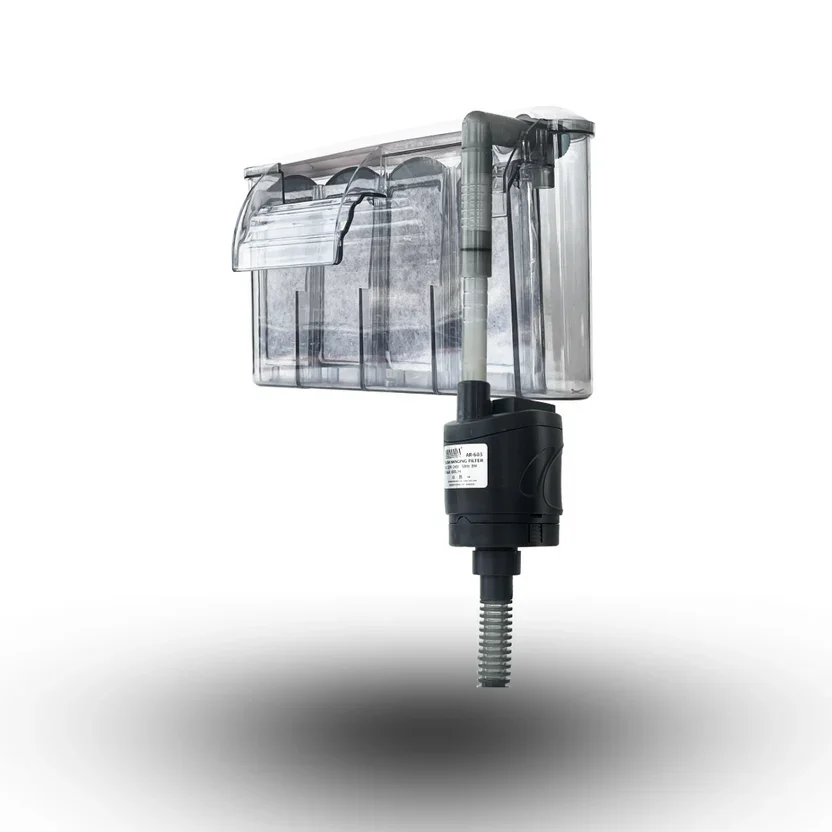
- Hang-on-Back (HOB) Filters: These popular external filters hang on the back of the aquarium, drawing water from the tank, passing it through various media cartridges, and returning clean water via a waterfall-like spillway. They are easy to install and maintain, making them a great choice for beginners. HOBs offer decent mechanical and chemical filtration, with some biological capacity, but their media volume is often limited.
- Internal Filters: Submerged in the aquarium, internal filters are compact and often consist of a pump, a sponge, and, sometimes, a small chemical media compartment. They are ideal for smaller tanks, quarantine tanks, or as supplementary filtration in larger setups. While easy to clean, their smaller size means lower media volume and thus lower filtration capacity than external options.
- Sponge Filters: Simple, inexpensive, and highly effective, sponge filters draw water through a sponge using an air pump or powerhead. They excel at biological filtration and are gentle enough for fry tanks or tanks with delicate species. For an excellent biological foundation, consider options like the Aquatees Jumbo Sponge. They offer excellent surface area for beneficial bacteria.
- Canister Filters: These are powerful external filters that sit below or beside the aquarium. Water is pumped from the tank into a sealed canister containing multiple baskets or trays for different filter media. Canister filters offer superior mechanical, chemical, and biological filtration due to their large media volume and customizable media choices. They are often considered the ‘workhorse’ for larger tanks and heavily stocked aquariums, providing high flow rates and efficient water polishing. For robust external filtration, an external filter pump like the Periha EC Canister can be an excellent investment, some even including integrated UV clarifiers.
- Under-Gravel Filters (UGF): These filters use a plate placed under the substrate to draw water down through the gravel, which acts as a biological filter. While once very popular, UGFs can accumulate detritus under the plate, requiring thorough cleaning, and are generally less efficient than modern external filters. They can, however, provide additional biological filtration in conjunction with other filter types.
When choosing a filter, consider the flow rate (measured in liters per hour or gallons per hour, GPH), media surface area, and filter volume. A higher flow rate ensures more water passes through the filter, but the actual effectiveness depends on the media’s ability to process that water. Larger media volume and surface area directly translate to greater biological filtration capacity, which is crucial for maintaining stable water parameters and fish health. For an in-depth look at options, explore resources on finding the best tank filter for your specific needs.
Understanding the Nitrogen Cycle in Detail
To truly appreciate biological filtration, one must understand the nitrogen cycle, the biological process that converts toxic nitrogenous waste into less toxic compounds. This cycle is the cornerstone of any successful aquarium.
- Ammonia (NH3/NH4+): This is the primary waste product excreted by fish through their gills and waste. It also comes from decaying uneaten food and plant matter. Ammonia is highly toxic to fish, even in extremely low concentrations (above 0.25 ppm can be lethal or cause severe gill damage).
- Nitrite (NO2-): Beneficial bacteria, such as Nitrosomonas, colonize the biological filter media and consume ammonia, converting it into nitrite. While nitrite is slightly less toxic than ammonia, it is still highly dangerous. Nitrite enters the fish’s bloodstream and binds to hemoglobin, preventing it from carrying oxygen, a condition known as “brown blood disease.”
- Nitrate (NO3-): A second group of beneficial bacteria, Nitrospira or Nitrobacter, converts nitrite into nitrate. Nitrate is significantly less toxic and can be tolerated by most freshwater fish in moderate concentrations (typically below 20-40 ppm). Nitrate is removed from the aquarium through regular partial water changes or absorbed by live aquatic plants as a nutrient source.
Selecting and Customizing Filter Media
The beauty of advanced filtration systems, particularly canister filters and some hang-on-back models, is the ability to customize the media configuration. Understanding how to layer your media is crucial for maximizing efficiency.
- The Order of Filtration: Water should always pass through mechanical media first, then chemical media (if used), and finally biological media. This sequence ensures that large debris is trapped before it can clog the tiny pores of biological media, which would suffocate the beneficial bacteria by restricting oxygen-rich water flow.
- Mechanical Media Options: Coarse sponges are excellent for trapping large particles and can be washed and reused many times. Fine filter floss or polishing pads are used as the final mechanical stage to trap microscopic particles, giving the water a crystal-clear appearance. Filter floss is typically discarded and replaced during maintenance.
- Chemical Media Options: Activated carbon is highly effective at removing organic compounds that cause yellow water and odors, as well as removing medications after treatment. However, it must be replaced every 3 to 4 weeks as it becomes saturated. Other options include synthetic adsorbents like Purigen, which selectively target nitrogenous organic waste before it can break down into ammonia, and phosphate-absorbing resins to help control algae growth.
- Biological Media Options: Sintered glass and ceramic rings are the gold standard for biological media due to their incredibly high surface-to-volume ratio. They contain millions of microscopic pores where nitrifying bacteria can establish colonies. Bio-balls are better suited to wet/dry trickle filters with high oxygenation, as their open structure prevents clogging but offers less surface area per volume than porous ceramic media.
Step-by-Step Filter Maintenance Guide
Proper maintenance is vital to keep your filtration system running efficiently. A common mistake among beginners is cleaning filter media too aggressively, which can destroy the beneficial bacterial colony and cause a catastrophic ammonia spike (often referred to as “new tank syndrome”).
- Preparation: Always unplug the filter and any associated equipment (like heaters) before performing maintenance to prevent damage or electrical hazards. Prepare a clean bucket dedicated solely to aquarium use (never use a bucket that has held household cleaning chemicals).
- Siphon Tank Water: Fill the bucket with water siphoned directly from the aquarium. This is the water you will use to rinse your filter media. Never use chlorinated tap water, as chlorine and chloramines will instantly kill the beneficial bacteria living on the media.
- Disassemble and Clean Mechanical Media: Remove the sponges and filter pads. Gently squeeze and rinse them in the bucket of tank water until the majority of the trapped debris is removed. If you are using fine filter floss, discard it and replace it with fresh floss.
- Rinse Biological Media: Gently swish ceramic rings or bio-balls in the tank water in the bucket to remove any loose detritus. Do not scrub them or expose them to air for too long, as the bacteria need to remain wet and oxygenated.
- Clean the Impeller and Housing: Over time, slime and debris can accumulate on the impeller (the spinning magnetic component that pumps water). Remove the impeller cover, pull out the impeller, and clean it with a small brush or toothbrush. Wipe down the impeller well and intake tubes to ensure unrestricted water flow.
- Reassemble and Prime: Reassemble the filter components in the correct order (mechanical, chemical, biological). If using a canister filter, fill the canister with tank water before sealing it to prevent airlocks. Plug the filter back in and ensure water is flowing smoothly.
Calculating Flow Rates and Turnover
When selecting a filter, pay close attention to the manufacturer’s flow rate, typically expressed in liters per hour (LPH) or gallons per hour (GPH). As a general rule of thumb, your filter should turn over the entire volume of your aquarium at least 4 to 6 times per hour. For example, if you have a 100-liter aquarium, you should look for a filter with a minimum flow rate of 400-600 LPH. However, this is a baseline recommendation. Heavily stocked tanks, tanks with large or messy fish (like goldfish or cichlids), and heavily planted tanks may require a turnover rate of 8 to 10 times the tank volume per hour. It is also important to note that manufacturers measure flow rates under ideal conditions with no media inside the filter. Once you add sponges, ceramic rings, and chemical media, and as debris accumulates, the actual flow rate can drop by 30% to 50%. Therefore, it is always wise to over-filter your tank by choosing a filter rated for a slightly larger aquarium than you actually have.