Beyond the Warehouse: How Pre-Engineered Buildings Are Reshaping Commercial and Community Architecture
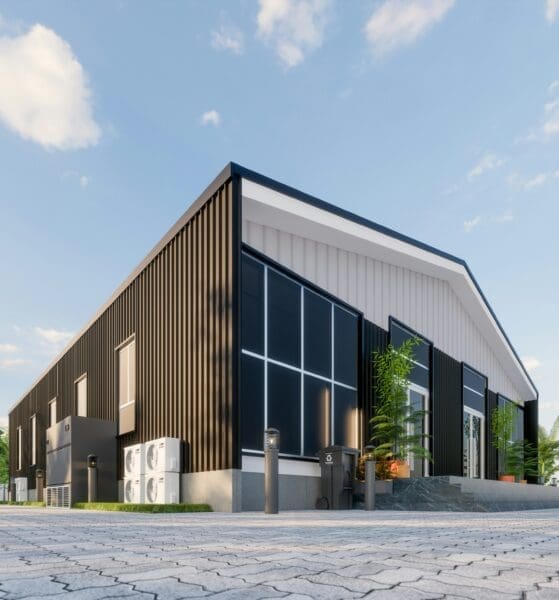
Most people hear the term “pre-engineered building” (PEB) and immediately picture the same thing: a drab, corrugated metal warehouse sitting on the edge of an industrial park. For decades, that was the reality. PEBs were chosen for utility, not aesthetics, serving exclusively as manufacturing plants, storage facilities, and agricultural sheds.
But according to Will Waters, Principal at RPM Team, holding onto that outdated stereotype means missing out on one of the most significant shifts in modern construction.
With over a decade of experience in commercial real estate development, analysis, and construction management, Waters has a front-row seat to the evolution of building systems. Today, he and the Structures division at RPM Team are utilizing pre-engineered buildings for a radically different set of applications, from high-traffic airport terminals and sleek commercial centers to stunning municipal buildings.
We sat down with Waters to discuss why developers, architects, and city planners need to rethink what a pre-engineered building can actually do.
Breaking the “Metal Box” Myth
The biggest hurdle PEBs face in the broader commercial market is their historical reputation.
“There is a lingering misconception that if you choose a pre-engineered structure, you are sacrificing design and architectural freedom,” says Waters. “That simply isn’t the reality anymore. Today’s pre-engineered building systems are incredibly sophisticated. We aren’t just putting up metal boxes; we are engineering highly customized, architecturally striking facilities that just happen to be manufactured in a factory.”
Waters points out that modern PEBs can seamlessly integrate with traditional building materials like glass, masonry, stucco, and architectural panels. The structural core is pre-engineered for maximum efficiency, but the exterior envelope can be tailored to meet strict commercial design standards or blend into existing municipal aesthetics.
Speed to Market: The Developer’s Ultimate Advantage
In commercial real estate development, time is quite literally money. This is where Waters’ background in estimating, scheduling, and project management comes into sharp focus.
Traditional construction is linear and heavily dependent on site conditions and sequenced trade labor. Pre-engineered buildings flip that script. Because the structural components are designed, engineered, and fabricated in a controlled manufacturing environment while the site work is happening simultaneously, project timelines are drastically compressed, even for complex, architecturally demanding facilities requiring extensive customization.
- Rapid Deployment: “We are cutting months off the construction schedule,” Waters explains. “For a commercial developer, getting a tenant into a space three to six months faster drastically changes the financial modeling and ROI of a project.”
- Structural Efficiency & Cost Reductions: The real financial unlock happens when developers look at the primary structure. “By converting the large, overarching ‘super shell’ of a building to a pre-engineered steel frame, we see drastic reductions in overall project costs,” Waters notes. “You get the massive, high-volume structure you need for a fraction of the price of conventional steel framing, freeing up the budget to invest heavily in high-end exterior finishes and custom interior build-outs.”
Unexpected Applications: Where PEBs Are Winning Today
If PEBs are no longer just for warehouses, where are they being utilized? According to Waters, the applications are expanding rapidly into high-stakes, high-visibility sectors:
1. Aviation and Airport Corridors Airports require massive clear-span spaces, but they also require absolute security and minimal disruption during construction. “We are using tension fabric structures and advanced pre-engineered systems to build temporary and permanent airport terminals, passenger walkways, and baggage handling facilities,” notes Waters. “They offer the necessary clear spans without the logistical nightmare of traditional heavy construction on an active tarmac.”
2. Modern Commercial and Retail Spaces Retail developers are leveraging the vast, column-free interiors of PEBs to create flexible commercial environments. Because the interior load-bearing walls are eliminated, these spaces can be easily reconfigured as tenant needs change over time.
3. Customer-Facing Municipal and Civic Centers Perhaps the most striking shift is in the realm of highly visible, customer-facing architecture. RPM Team is increasingly designing civic administration centers, modern office buildings, expansive community gyms, and conference centers using pre-engineered systems. “You can walk up to a new city hall or a corporate administration building, see a stunning facade with massive glass curtain walls, and have no idea the core structure is a PEB,” Waters says. “It allows cities to deliver beautiful, modern, and welcoming public facilities while remaining incredibly responsible with taxpayer dollars.”
The Future is Pre-Engineered
As labor shortages continue to squeeze the traditional construction industry and the demand for faster, more sustainable building methods grows, the shift toward pre-engineered systems is only going to accelerate.
For Waters, the focus remains on educating the market and executing at a high level.
“Construction is an industry that historically resists change, but the data and the results are becoming impossible to ignore,” Waters concludes. “Whether you are a developer looking for better ROI, or a municipality needing to build stunning community infrastructure quickly, pre-engineered buildings are no longer just an alternative option in many cases, they are the best option.”
Will Waters is a Principal at RPM Team, leading the firm’s Structures division with a focus on turnkey program management, estimating, and commercial development. To see how RPM Team is utilizing modern pre-engineered building systems across the country, visit their portfolio.