An Empty Nester’s Guide to a Budget San Francisco Getaway
There’s a particular kind of freedom that comes with planning a trip when there’s no school schedule to work around, no summer camp pickup to coordinate, and no extra plane ticket for a teenager who’d rather be anywhere else. San Francisco rewards that flexibility better than almost any other US city, since a lot of what keeps costs down here depends entirely on being able to travel midweek, shoulder season, or on short notice, none of which was ever an option back when trips revolved around somebody else’s calendar.
Timing the trip matters more than almost anything else for the budget
Flying midweek instead of over a weekend, and picking shoulder season months over the peak summer crowds, brings hotel rates down noticeably in a city that otherwise runs expensive year-round. A budget hotel in San Francisco booked for a Tuesday-to-Friday stretch instead of the usual weekend getaway often costs meaningfully less for the same room, and without a school pickup schedule dictating when the trip has to happen, there’s finally room to actually chase those cheaper dates instead of working around them.
Golden Gate Park delivers a full free day, easily
This park alone can eat up an entire day without costing a dime, running more than three miles across the city with lakes, gardens, and enough walking paths to fill a leisurely morning and afternoon. The Japanese Tea Garden charges a small admission, but the surrounding grounds, the bison paddock, and the botanical gardens cost nothing at all, and without needing to keep pace with anyone else’s energy level or attention span, it’s the kind of place that rewards actually slowing down and wandering rather than rushing through a checklist.
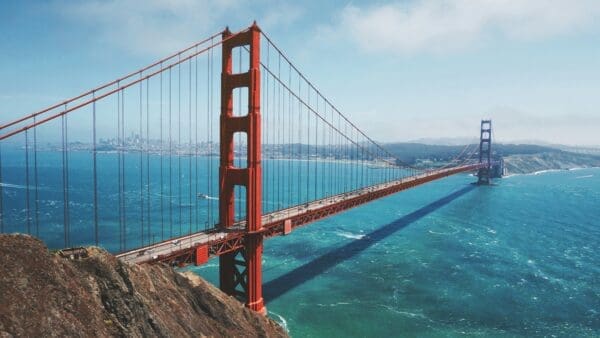
Walking the Golden Gate Bridge costs nothing and takes half a morning
The pedestrian lane across the bridge is free, and on a clear day, the views back toward the city are worth building an entire morning around. It’s a longer walk than it looks on a map, roughly a mile and a half each way, so checking the weather beforehand matters since fog and wind roll in fast and can turn a pleasant walk into a cold, damp slog without much warning.
The Ferry Building works as a grazing lunch instead of a sit-down splurge
Rather than committing to one restaurant, the Ferry Building’s food hall allows for picking up smaller portions from several vendors, oysters from one counter, a pastry from another, coffee from a third, which tends to cost less overall than a full sit-down meal while still feeling like an actual outing rather than a budget compromise. It’s also a good spot for people-watching along the waterfront without needing to book anything in advance.
Chinatown rewards a slow wander more than a guided tour
Skipping the paid walking tours in favor of just wandering through on your own costs nothing and often turns up more than a scheduled tour would anyway, since there’s no rush to keep pace with a group or a set itinerary. The alleyways just off the main strip tend to hold the more interesting shops and smaller, family-run restaurants, and having the flexibility to duck into whatever looks interesting, rather than sticking to a tour guide’s fixed stops, is one of the quieter perks of traveling without kids in tow.
Cable cars are worth the ride even without a destination in mind
A single ride costs a modest fare, and riding one just to ride it, without needing it to actually get somewhere specific, is a perfectly reasonable way to spend twenty minutes taking in the hills and the views. Visitor passes bring the per-ride cost down further if more than one or two rides are planned across the trip, and watching the cars go by for free from one of the turnaround points is its own small entertainment if the lines are running long.
A day trip to wine country doesn’t have to mean a splurge
Napa and Sonoma both sit within a reasonable drive, and while tasting fees add up fast at the bigger, more polished wineries, plenty of smaller producers charge modest tasting fees or waive them with a purchase. Splitting a rental car for the day between two people rather than booking an organized tour keeps the cost down considerably, and without needing to coordinate the trip around anyone else’s schedule, a spontaneous weekday drive out becomes a lot easier to actually pull off.
Build in slower mornings instead of packing every hour
One of the real advantages of a childfree trip is not needing to be anywhere by a specific time, and leaning into that rather than defaulting to the same packed itinerary a family trip would require tends to make the whole visit feel less like a vacation that needs recovering from. A slow coffee, a late start, and only one or two planned activities per day costs nothing extra and changes the entire pace of the trip for the better.
Plan by neighborhood, not by a scattered bucket list
San Francisco’s neighborhoods each have their own character, and grouping a day around one area, the park and the bridge one day, the waterfront and Chinatown another, cuts down on the cross-town transit costs that add up fast if the itinerary bounces between opposite ends of the city. It also plays into the slower pace that makes this stage of travel so appealing in the first place.
A San Francisco trip on a real budget doesn’t mean sacrificing the parts of the city that make it worth visiting. Between the flexibility to travel on cheaper dates, the genuinely excellent free attractions scattered throughout the city, and the freedom to set a pace that suits two people instead of four, this stage of life turns out to be a pretty good one for finally seeing San Francisco properly, without the price tag that usually comes with it.