Urban Design Strategies to Reduce Motorcycle Accidents

Motorcycle accidents present persistent challenges in busy urban environments, often leading to severe injuries or fatalities. Many communities find it beneficial to consult a motorcycle crash lawyer when navigating the aftermath of such incidents, but a proactive approach to safety is equally important. With growing populations and increasingly congested traffic, prioritizing thoughtful urban design becomes essential to protect all road users, especially vulnerable motorcyclists.
Strategic shifts in city infrastructure can dramatically lower accident rates. Streets designed with safety at the forefront are a critical factor in preventing dangerous collisions, fostering a more livable and pedestrian-friendly city landscape. Emphasizing these changes not only improves public health outcomes but also nurtures a sense of security for those who rely on two-wheeled transportation.
Urban planners and policymakers must leverage modern safety data to make informed decisions. By studying patterns and understanding what features lead to safer streets, they lay the groundwork for targeted, impactful change. Recent studies underscore how specific interventions, such as reducing lane widths and improving intersection visibility, translate into better outcomes for motorists and motorcyclists alike.
Introduction
Urban areas consistently report higher rates of motorcycle accidents. Factors like dense traffic, complex roadways, and frequent intersections create environments where risks are amplified. Strategic improvements in urban design remain one of the most effective options for reducing accident rates and ensuring the safety of all who share the roads.
As cities grow and adapt, the integration of safety-minded planning can transform busy streets into safe spaces for motorists, cyclists, and pedestrians. Supported by ongoing research and city data, these strategies promise to lessen the incidence of tragic motorcycle collisions.
The Impact of Urban Design on Motorcycle Safety
Urban design influences everything from daily commute experiences to long-term safety outcomes. Road width, intersection layout, and flow management all contribute to motorcycle accident rates. Wider roads may inadvertently encourage higher speeds, increasing crash severity, while narrower, well-marked lanes promote naturally slower and more cautious driving behaviors. Research from Johns Hopkins University illustrates that reducing lane widths can successfully calm traffic, resulting in fewer and less deadly accidents.
Poorly designed intersections and weak infrastructure disproportionately endanger motorcyclists, whose smaller vehicles are less visible and offer limited protection. Features such as ambiguous signage or unprotected left turns further heighten the risk of collisions, particularly in fast-moving or unpredictable traffic environments.
Effective Urban Design Strategies
To combat motorcycle accidents, city authorities are turning to evidence-based design solutions:
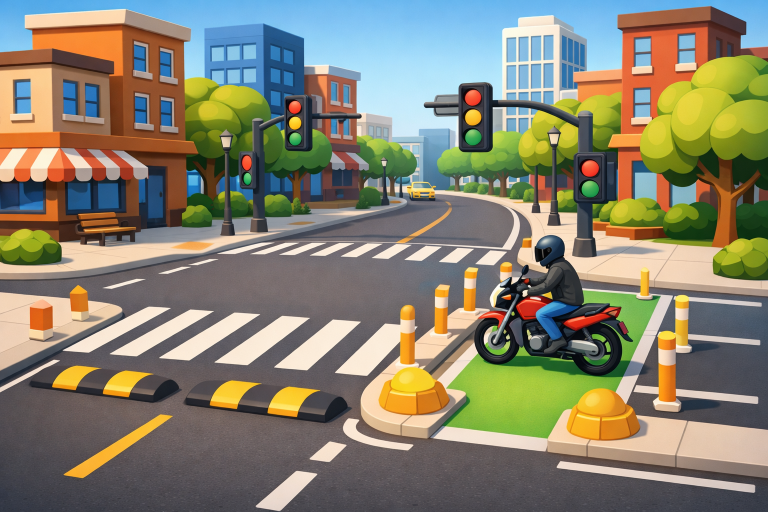
- Protected Bike Lanes: Separating motorcycles and bicycles from cars and trucks through dedicated lanes reduces collision opportunities and keeps all travelers safer.
- Traffic Calming Measures: Features like speed bumps, raised crosswalks, and roundabouts are proven to reduce speeds and minimize crash impact severity, particularly in areas where different modes of transportation intersect.
- Upgraded Lighting: Enhanced street lighting, especially at intersections and crosswalks, boosts visibility for drivers and riders at night. This step addresses a major factor in many urban motorcycle accidents after dark.
- Clear Signage and Markings: Good signage and visible lane markings guide traffic predictably, lessening confusion and making the roads safer for motorcycles to navigate challenging turns or merges.
Design solutions must be flexible enough to serve a city’s specific needs and traffic patterns while maintaining a focus on universal safety improvements.
Case Studies of Successful Implementation
Cities worldwide have demonstrated that investment in urban design leads to measurable drops in motorcycle crashes. Research by the World Resources Institute shows that roads featuring dedicated lanes and speed-reducing measures saw fewer motorcycle injuries and fatalities. The link between vehicle speed and accident severity is particularly well documented, supporting the case for traffic calming features and safer road layouts.
Major cities such as Amsterdam and Tokyo have led the way in holistic urban design, producing dramatic reductions not only in motorcycle crashes but also in overall road fatalities. These case studies highlight that, regardless of geographical differences, certain proactive safety solutions consistently yield positive results.
Challenges in Implementing Safer Urban Designs
- Budget Constraints: Large-scale infrastructure projects require investment, and financial limitations often delay or limit the scope of safety upgrades in many urban communities.
- Public Resistance: Changes to established roadways, such as narrowing vehicle lanes or replacing parking with bike paths, can meet opposition from local residents and business owners who fear economic loss or inconvenience.
- Space Limitations: Densely populated or fully developed neighborhoods may lack available space for dedicated motorcycle or bike lanes, necessitating creative or incremental solutions.
Overcoming these challenges requires strong public engagement, transparent policy discussions, and often a phased approach that balances immediate needs with long-term objectives.
Conclusion
Urban design is a central pillar in the ongoing effort to reduce motorcycle accidents. Through innovative planning, data-led decision-making, and commitment to safer streets, cities can make meaningful progress toward protecting their most vulnerable road users. By addressing obstacles and harnessing proven strategies, urban centers create safer, more vibrant environments for everyone who travels their roads.