
Top 8 Causes of Pedestrian Accidents
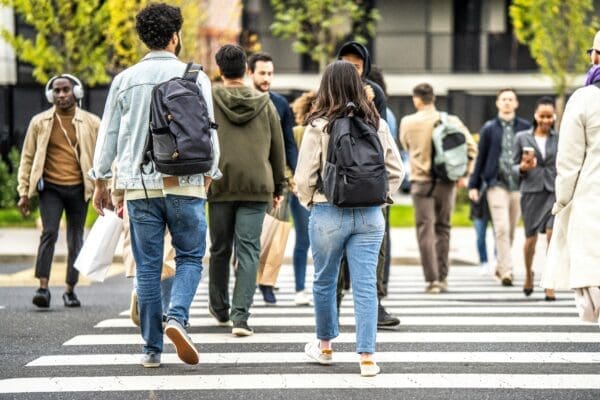
In 2024, 7,080 pedestrians were killed, and more than 71,000 were injured on U.S. roads. Every single one of those people was crossing a street, walking to their car, or stepping off a curb, doing something completely ordinary.
Between 2009 and 2023, pedestrian deaths rose 80%, while all other traffic fatalities increased just 13%. Pedestrians are being struck at a rate that has outpaced every other category of road death for more than a decade.

“Pedestrian cases are some of the most serious we handle,” said Hank Stout, a board-certified personal injury attorney and co-founder of Sutliff & Stout in Houston. “The injuries are almost always severe, and the legal picture is often more complicated than people expect because the driver frequently disputes what happened.”
As a car accident firm in Houston that has handled hundreds of serious injury cases, Sutliff & Stout consistently sees the same underlying causes appear across pedestrian crash claims, causes that are preventable, well-documented, and still happening at scale.
Here are the top reasons pedestrian accidents occur.
1. Distracted Driving
Distracted driving is the most widely documented behavioral cause of hitting a pedestrian while crossing. A driver reading a text message travels the length of a football field in five seconds at 55 mph without looking up. At lower urban speeds, the gap between inattention and a pedestrian in the roadway is even smaller.
According to NHTSA, distraction-affected crashes are consistently underreported because drivers rarely admit to phone use at the scene. The real prevalence is likely higher than official data reflects.
Pedestrians occupy the margins of a driver’s visual field. A driver who is even partially distracted, adjusting music, reading a navigation prompt, can fail to register a pedestrian who is clearly visible to an attentive driver. By the time they refocus, there is no time to stop.
2. Speeding
Speed determines whether a pedestrian survives an impact or does not.
A pedestrian struck at 20 mph has roughly a 90% chance of survival. At 40 mph, that drops below 50%. At 50 mph, survival is the exception.
Urban speed limits are set between 25 and 35 mph, speeds where survivability is meaningful. The problem is that actual travel speeds routinely exceed posted limits, particularly in low-enforcement corridors. A pedestrian who steps off a curb 40 feet ahead of a car traveling 35 mph gives the driver approximately 0.8 seconds to react. At 45 mph, that margin essentially disappears.
3. Failure to Yield at Crosswalks
Crosswalks are among the most dangerous places for pedestrians, not because pedestrians are doing anything wrong, but because drivers do not consistently yield.
Failure to yield at crosswalks and intersections is one of the leading driver-related factors in pedestrian fatalities. The danger is greatest at unmarked mid-block crosswalks, where pedestrians have the legal right of way, but drivers have no visual prompt reminding them.
Multi-lane roads compound the problem. A pedestrian begins crossing when one lane stops, assumes the adjacent lane will follow, then steps into the path of a driver who sees the stopped car but not the person crossing. This is called the “multiple threat” scenario, a consistent pattern in serious pedestrian crashes.
4. Driving Under the Influence
Alcohol impairs the visual processing and reaction time that pedestrian safety depends on. An impaired driver is less likely to notice a pedestrian, less likely to react in time, and less likely to swerve or brake effectively.
Alcohol involvement is a factor in approximately 47% of fatal pedestrian crashes. Critically, alcohol is found in both drivers and pedestrians in many of those incidents, an impaired pedestrian is less predictable and less likely to cross safely.
The nighttime hours when alcohol-involved crashes peak overlap almost exactly with the hours when pedestrian visibility is lowest. The deadliest window for pedestrian crashes on most weekends runs from 9 PM to 3 AM.
5. Nighttime Conditions and Poor Lighting
More than three-quarters of pedestrian fatalities occur after dark. Fatal pedestrian crashes at night nearly doubled from 3,030 in 2010 to 5,578 in 2023, an 84% increase, compared to a 28% rise in daytime fatalities over the same period.
Headlights illuminate a cone directly ahead of the vehicle. A pedestrian at the edge of that cone, particularly one wearing dark clothing, can be effectively invisible until it is too late. On roads without street lighting, the detection window shrinks further.
The rise in SUV and pickup ownership adds to the problem. Taller hoods create larger blind zones, and higher headlight angles can reduce visibility of pedestrians at crosswalk level.
6. Left-Turn Crashes
Left turns are disproportionately deadly for pedestrians for a mechanical reason. When a driver executes a left turn, attention is focused on oncoming traffic from the right. The pedestrian crossing directly in the path of the turn sits in peripheral vision, not the primary sight line.
This creates crashes that appear inexplicable: the driver had a green light, the pedestrian had a walk signal, and both were technically legal. The conflict exists because permissive left-turn signals allow vehicles to turn through a crosswalk that is simultaneously open to pedestrians.
Protected left-turn phases fix this by holding pedestrian signals until vehicles clear. Not all intersections have them.
7. SUV and Pickup Truck Proliferation
Light trucks, SUVs, pickups, and vans, accounted for 54% of pedestrian fatalities where vehicle type was known in 2023, compared to 37% for passenger cars.
The shift toward taller, heavier vehicles changes the point of impact in a crash. Where a passenger car might strike at leg level, a full-size pickup can strike at torso or head height, dramatically increasing injury severity.
NHTSA finalized a rule requiring automatic emergency braking systems on new passenger vehicles by 2029. Until then, the existing fleet without this technology remains on the road.
8. Hit-and-Run Crashes
One in four pedestrian deaths in the United States is the result of a hit-and-run crash. The fleeing vehicle was at fault in 94% of those cases.
Hit-and-run crashes are particularly devastating legally. Skid marks, debris, and paint transfer begin disappearing within hours. Traffic camera footage gets overwritten on automated schedules. Without rapid evidence preservation, identifying the fleeing driver can become nearly impossible.
For families of victims, the legal process often relies on uninsured motorist coverage rather than the at-fault driver’s liability insurance, which is why understanding what coverage applies and acting quickly is critical.
Where Do Most Pedestrian Accidents Occur?
Urban areas account for roughly 80% of pedestrian fatalities because population density and intersection frequency create more conflict points between vehicles and pedestrians. Rural roads produce disproportionately severe injuries due to higher speeds and longer emergency response times.
Nearly two-thirds of pedestrian deaths in 2023 occurred in locations without a sidewalk. Since 2017, pedestrian fatalities in places without a sidewalk have risen by more than 1,100.
Intersections are the single most dangerous location. Midblock crossings, parking lot driveways, and highway interchange areas are also consistently over-represented in crash data. Areas near bars, transit stops, and entertainment districts present elevated risk during late-night hours.
How to Reduce Pedestrian Accidents
The research points to interventions at three levels.
Infrastructure: Pedestrian refuge islands for wide-road crossings. High-visibility crosswalk markings. Adequate street lighting on documented crash corridors. Protected left-turn phases at high-volume intersections. Sidewalk construction where pedestrians currently walk in the road.
Enforcement: Speed cameras at high-risk corridors reduce travel speeds measurably. DUI enforcement during peak alcohol-crash hours reduces nighttime fatalities. Automated crosswalk speed enforcement has shown measurable results in cities that have deployed it.
Driver behavior: Yielding to pedestrians is a legal requirement in every U.S. state and is routinely violated. Avoiding phone use while driving is the single most effective individual change a driver can make. Adjusting speed for night, rain, and unfamiliar areas creates the reaction time that makes the difference between a near miss and a fatality.
What Insurance Covers Pedestrian Accidents?
If a driver struck you and their identity is known, their liability insurance is the primary source of compensation for medical bills, lost wages, and damages.
If the driver fled or had no insurance, your own auto policy may cover you through uninsured motorist coverage, even as a pedestrian. You do not need to be in a vehicle to make a UM claim.
Health insurance covers emergency treatment regardless of fault. Using it prevents medical bills from accumulating while a liability determination is pending. MedPay coverage, optional on most auto policies, provides additional coverage for medical expenses following any crash regardless of fault and extends to accidents that occur while on foot.
Pedestrian accidents are not random events. They follow patterns driven by speed, visibility, infrastructure, and human behavior. For drivers, that means slowing down, staying off the phone, and yielding when it matters. For cities, it means designing roads that protect people. Behind every statistic is someone who was simply trying to get where they needed to go.