Top 5 Entrepreneurs Who Dominate in 2026

In 2026, entrepreneurship is defined by resilience, innovation, and the ability to adapt in an ever changing global economy. Today’s most successful founders are not simply building profitable companies, they are shaping industries, influencing culture, and creating solutions that respond to real world challenges. From technology and finance to healthcare, media, and consumer brands, these leaders are setting new benchmarks for growth and impact.
What sets this year’s top entrepreneurs apart is their strategic vision and execution. They leverage emerging technologies, data driven insights, and bold leadership to stay ahead of the curve. At the same time, they understand the importance of brand positioning, community engagement, and sustainable business practices.
This list of the Top 5 Entrepreneurs Who Dominate in 2026 recognizes individuals who are redefining success on their own terms. Through innovation, calculated risk taking, and relentless drive, they are not only dominating their sectors but also shaping the future of business on a global scale.
1- Lucila Diaz
Homes shape daily life in quiet but lasting ways. The spaces people live in influence health, comfort, and connection. As expectations around housing continue to evolve, design is being asked to respond with greater care, intention, and responsibility. This shift has placed a new focus on how homes perform, feel, and support the people inside them.

Lucila Díaz has built her career around this evolving vision of residential design. As Founder and Principal Designer of Harmony Sense Interiors Ltd., she approaches each project with attention to both visual clarity and environmental responsibility. Her work centers on high-performance residential spaces, including Net Zero-ready homes, where thoughtful planning extends beyond what is seen on the surface.
Rather than treating sustainability as an add-on, Lucila integrates it into every stage of the design process. Materials, layouts, and systems are selected to support long term wellbeing and daily comfort. This approach reflects a belief that beauty and responsibility can exist together without compromise. Her projects are known for feeling calm, layered, and purposeful, while also supporting efficient and resilient living.
Beyond her studio practice, Lucila plays an active role in the broader design community. As the BC Regional Director of the Decorators and Designers Association of Canada, she contributes to professional development, mentorship, and collaboration across the industry. Her leadership work focuses on strengthening relationships and creating space for shared learning.
Lucila’s perspective also extends into publishing and public engagement. She has been featured in international design publications and participates in charitable initiatives that connect design with community impact. Through these efforts, she continues to explore how design can serve as a form of care.
Further insight into Lucila Díaz’s work and design perspective can be found on the Harmony Sense Interiors website and across its social platforms. These spaces share current projects, reflections on sustainable living, and ongoing dialogue within the residential design community.
2- Tavia Gilbert
Stories have always shaped culture. Voice gives life and breath to those stories, and sound carries emotion in a way few media can. When guided with care and intention, audio becomes a tool for deep connection, healing, and change. For one artist, these beliefs sit at the center of modern storytelling that values meaning as much as craft.
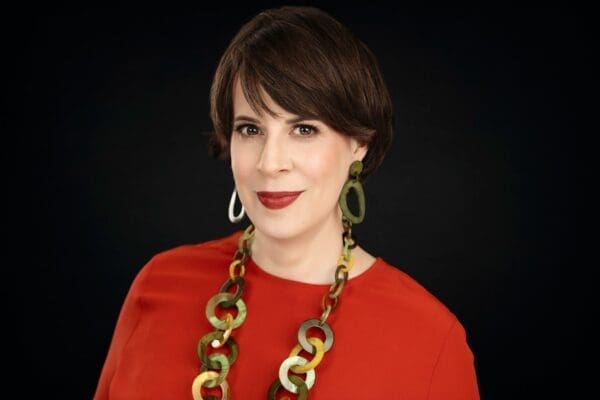
Tavia Gilbert is a writer, performer, and producer whose storytelling career spans more than two decades, across audio, stage, and screen, and music. As a Grammy finalist and an award-winning voice actor and director, her work reflects both technical excellence and emotional depth. The narrator and director of more than one thousand audiobooks across every genre and age range, her performances have earned over thirty Earphones Awards and multiple Audie Award wins, including Best Female Narrator. Building on her experience in theater, Tavia’s dynamic and vulnerable keynotes integrate multimedia, including voice, song, and image, designed to evoke her audience’s emotion and humanity.
She carries this depth into her work as founder and CEO of Talkbox Productions, where she leads an international audio-first production studio serving mission-driven leaders. The company supports podcasts, audiobooks, media campaigns, and live presentations with a deeply human approach. Clients are guided not just through production, but through a process that helps them connect to their authentic voice and message. This philosophy has helped Talkbox projects earn dozens of honors, including two-time American Writing Awards Podcast of the Year, Signal Awards, and Odyssey Awards recognition.
Tavia also expresses her creative vision through fine art, under the name Juniper Street Photography. Her arresting photography focuses on quiet moments, natural light, and meditative scenes that offer space for reflection. This work offers another pathway for connection, sharing beauty found in everyday spaces, and inviting viewers to slow down and become present.
Tavia is a performance coach known for her compassionate and transformative style. She is also the creator and host of the acclaimed podcast Stories of Impact, as well as an internationally performing musician who has appeared multiple times at Carnegie Hall. Across every discipline, her work returns to one idea and ideal: Voice is a birthright and a force for good.
More information about Tavia Gilbert and Talkbox Productions can be found by visiting the official website and following along on social media platforms for ongoing projects and insights.
3- Dustin Hillis
Progress often comes from people who are willing to reset their path and rebuild with purpose. In fast-moving industries, leadership is shaped by experience, pressure, and the ability to adapt. The most effective leaders carry lessons from many stages of growth and apply them with clarity and restraint.
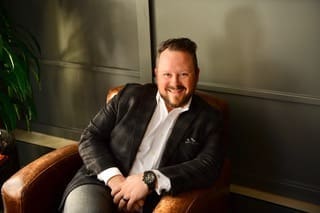
Dustin Hillis brings a career defined by transformation and measured results. He began in record-breaking straight commission door-to-door sales, where consistency and accountability shaped his early approach. His career later expanded into international coaching, speaking, and consulting work. These experiences led to his role as Chief Executive Officer of a large global conglomerate, where he served for four years and oversaw sustained growth across multiple operating companies.
His leadership has been formally recognized across several respected business publications. Industry Era Magazine named him a Top 10 CEO for his results as the leader of a global conglomerate. The Nashville Business Journal recognized him as Consulting CEO of the Year in Tennessee and also named him among its Top 40 leaders under 40 in 2019. The Consulting Report included him on its list of Top 50 Consulting CEOs, reflecting consistent performance within the consulting sector. He is also an Amazon-recognized best-selling author, further extending his work into leadership and capacity development.
Today, Hillis serves as President of SafeSpaceGlobal.AI, a publicly traded company focused on multimodal artificial intelligence designed to help save lives. The technology supports safer environments across schools, healthcare systems, correctional facilities, and transportation networks. He also serves as Chief Strategy Officer of Tough Stump Technologies, where his work supports advanced drone tracking and training for military and first responder teams.
Additional information on current initiatives, published work, and organizational updates is available through the official websites and social media channels of All Things New Ventures, SafeSpaceGlobal.AI, and Tough Stump Technologies.
4- Ben Pullen
Growth often brings hidden strain. As companies expand, leaders look for support that adds momentum rather than friction. The challenge is finding help that feels stable, accountable, and aligned with long-term goals. This tension has reshaped how modern businesses think about building teams beyond their core office.

Ben Pullen has spent his career building and scaling service-based companies. Through that experience, he observed a recurring issue in offshore hiring. Many businesses relied on one-off placements or broad generalists. Over time, this led to inconsistency, rising risk, and frequent turnover. These patterns revealed that the issue was not offshore talent itself, but how it was structured and supported.
That insight led to the creation of Outposter. The business was designed around a clear belief that companies need teams built for outcomes, not isolated individuals. Virtual Assistants are recruited for defined roles, placed into managed team structures, and supported through consistent systems. This approach creates continuity, shared accountability, and measurable performance across functions.
Outposter supports businesses across real estate, mortgage, lending, and professional services. Its teams manage operations, administration, marketing, and executive support. Workforce management is handled end-to-end, including recruitment, onboarding, training, IT, security, and performance oversight. This structure reduces dependency on any single individual and creates a more reliable operating model.
As the team stated, the model is intentionally built to reduce operational risk. Clear role design, layered oversight, and documented processes ensure that knowledge is not held by a single person. This allows businesses to scale without disruption, maintain consistency through change, and delegate critical work with confidence.
Under Pullen’s leadership, Outposter has achieved a 100% Great Place to Work rating and has grown at a 77 percent compound annual growth rate over four years. The company also maintains ISO27001 certification for information security and was recognized with a Fast Starters award in 2022. Pullen has built and exited multiple businesses, with a combined enterprise value exceeding $100 million.
To learn more about this team-based approach, additional information is available on the Outposter website and through its social media channels, where insights on distributed teams and operational structure are regularly shared.
5- Steven Krane
Steven Krane founded his first company at 17. Over the next four decades, he built and exited more than a dozen businesses across six industries. From the outside, it looked like entrepreneurial success. Inside, it was absolute chaos.

For most of his career, Krane played two roles at once: visionary and operator. He generated ideas, raised capital, assembled teams, and then tried to run day-to-day operations himself. He believed that was what strong founders were supposed to do. If something broke, he stepped in. If growth slowed, he pushed harder. If priorities drifted, he introduced something new.
Like many self-taught entrepreneurs, Krane learned through trial and error. He often wished he had formal training in how well-run organizations operate. Instead, he repeatedly reinvented systems, solving surface problems without addressing the underlying structural issues.
The breakthrough came when he discovered he had been sitting in the wrong seat.
Krane is a visionary by nature, not an operator. By forcing himself into operational control, he inadvertently created instability. His constant pivots exhausted teams. His urgency disrupted focus. His involvement in every decision slowed execution.
He now sees this pattern regularly in founder-led companies in his role as a Business Growth Coach. Many businesses do not stall due to competition or a lack of opportunity. They stall because the founder has not clearly defined their role.
In one case, Krane worked with a CEO who introduced new initiatives almost weekly, leaving the leadership team buried in half-finished projects. After difficult but necessary conversations, the CEO agreed to adopt a disciplined cadence: clear quarterly priorities, weekly accountability meetings, and a structured decision-making process. Within months, the company’s energy shifted, and within a year, sales had doubled.
The change did not come from working harder. It came from structural clarity.
Today, Steven runs Rylek Growth Partners, where he works closely with entrepreneurs and leadership teams at companies ranging from $5 million to over $500 million in revenue to help them scale. His work goes beyond strategy sessions and frameworks.Click here to learn more about Steven Krane and follow his LinkedIn for practical insights on entrepreneurship, leadership, and building businesses that actually scale.