The Science Behind Slippery Sidewalks Around Homes After Rain
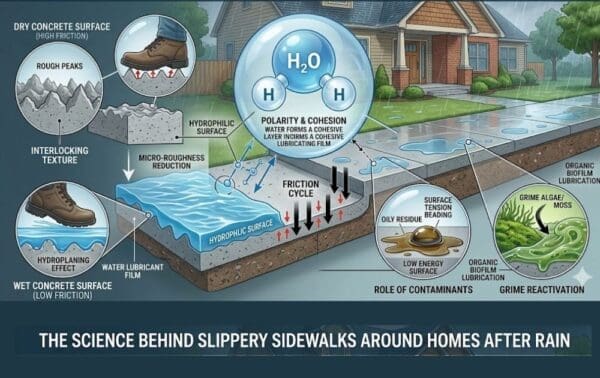
When you walk outside after it has rained, you feel something different on the ground, not just wet, you feel it is slick. This doesn’t feel like the ground is just wet. It feels like there is soap on the ground. Most people think that the reason this is happening is because of the rain. This is not the case. The real reason the ground is slippery is because before the rain clouds even formed, there were materials on the surface that made the ground slippery.
This especially true for sidewalks that are located in dark, humid, or shady places in and around Chesapeake. The people that step in the dark, greasy, and slick, are also the ones that are noticing the problem. However, what is going on with it is, not people just noticing it, it is people having professional pressure washing services Chesapeake VA. Most people think this is the correct way of dealing with it.
What Is Actually Growing on Your Sidewalk
Concrete may appear uniform and smooth on the surface, but there are numerous small holes and pores. These pores capture and retain moisture, and trap organic debris (such as leaf litter and soil) as well as provide the ideal habitat for the microscopic organisms to settle, spread, and proliferate. Algae is the most visible of these organisms; it forms flat green films, and rain becomes nearly frictionless when it hits such surfaces.
These organisms are ubiquitous and do not require much to live. Just a little moisture, some organic substrates, and a damp surface are sufficient. Once a colony gets started, it spreads faster than most homeowners expect, and it does not stop growing just because the surface looks dry on a sunny afternoon.
How Biofilm Turns a Dry-Looking Surface Dangerous
As algae and other microorganisms grow, they produce something called a biofilm, a thin, sticky coating made up of living organisms and the material they release. This film is nearly invisible. A sidewalk covered in biofilm can look perfectly normal until rain makes contact with it.
Why the Surface Feels Like Ice Right After Rain
When water hits biofilm, the film swells instantly and kills all friction. The danger is not the water, it is what the water activates underneath.
- Biofilm fills in the rough texture of concrete that shoes normally grip
- The surface goes from normal pavement to something close to a wet tile floor
- It happens fast and with no visible warning
Why Shaded and Humid Areas Are the Worst
Spots that do not get much direct sunlight are where the most dangerous buildup tends to happen. North-facing walkways, paths under trees, areas near downspouts, these stay damp the longest after rain and dry out the slowest. Without sunlight interrupting the moisture cycle, algae and moss have a much longer window to grow between any kind of cleaning.
The Safety Risk Homeowners Often Underestimate
Slip and fall accidents on residential walkways are more common than most people realize. Elderly visitors, young children, and anyone carrying something, groceries, a bag, or a delivery box are especially at risk because they cannot react quickly enough when a foot suddenly loses traction. No standing water, no ice, no visible slick patch. The surface looks fine right up until it is not.
Here are the warning signs that a walkway is already developing a slip hazard:
- A greenish or dark tint on shaded sections, even when the concrete appears dry
- A slightly greasy or slick feeling underfoot after rain
- Sections that stay darker than the rest long after rain has stopped
- Black or gray streaking near downspouts or along fence lines
- Moss growing in the joints between pavers or along the edges of the path
Ways to Reduce Slip Hazards Around Your Home
Keeping walkways safe comes down to a few consistent habits. Trimming back trees that cast shade over concrete paths, making sure downspouts direct water away from walkways, and sealing concrete every two to three years all make a real difference. Less moisture means less opportunity for algae and moss to take hold.
When Scrubbing Is Not Enough
For surfaces with light growth, a stiff brush and cleaning solution can handle it. But for heavier buildup especially in joints and cracks, regular scrubbing usually does not fully clear it out. That is where controlled cleaning with the right equipment gets into the pores rather than just clearing the top layer.
Conclusion
A slippery sidewalk after rain is a buildup problem that rain simply makes visible. Algae, mildew, and biofilm grow quietly for months before anyone notices. Catching the warning signs early and keeping shade and moisture in check are the most reliable ways to make sure an ordinary rainstorm does not turn into a serious accident right outside your front door.