Prioritizing Safety and Education for Underwater Exploration
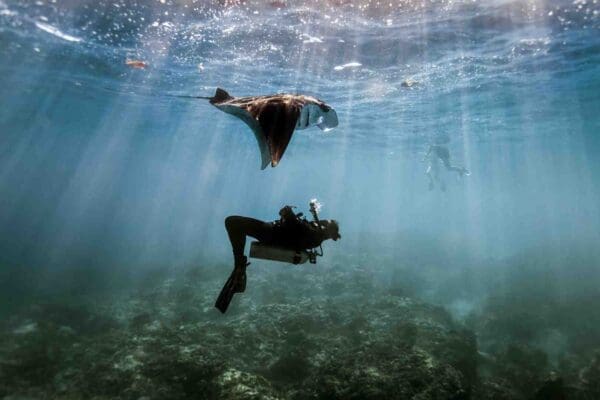
The underwater world offers incredible adventures. As experienced divers, we often seek new challenges. Deeper wrecks, hidden caves, and unique marine life await us. But these advanced dives demand exceptional skill and a strong focus on safety.
With greater depths and complex environments, risks increase. We must constantly refine our techniques. We also need to heighten our awareness. This guide will help us dive with more confidence and safety.
We will explore key strategies for advanced diving. We will cover perfecting buoyancy and breathing. We will look at advanced navigation techniques. We will also discuss essential safety protocols for specialized environments. Understanding advanced diving safety, a topic often highlighted by experts like Michael Strauss advanced diving safety, is crucial. It helps us enjoy thrilling adventures responsibly. Let’s learn how to lift our diving skills and manage risks effectively.
To truly excel in advanced diving, we must first master the fundamental skills that underpin every safe and enjoyable underwater experience. These core pillars – buoyancy, breathing, navigation, finning, and situational awareness – are not just for beginners; they are the bedrock upon which all advanced techniques are built. Continuous practice and refinement of these skills are what truly separate the proficient diver from the merely certified.
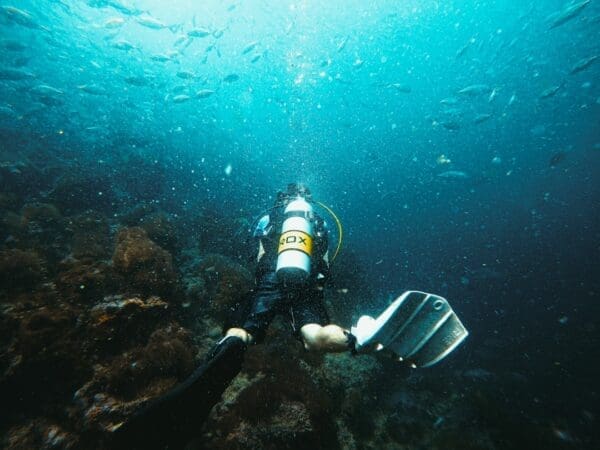
Achieving perfect control over our position and movement underwater, maintaining optimal air consumption, and always knowing our whereabouts are critical for both personal safety and the preservation of the delicate marine environment. This holistic approach to skill development ensures that we are not just observers, but responsible and capable participants in the underwater world.
Refining Buoyancy and Breathing for Scuba Diving Safety
Good buoyancy control is widely recognized as the hallmark of an expert diver. While many beginning divers are often overweighted, leading to constant adjustments and increased air consumption, advanced divers strive for effortless neutral buoyancy. Our lungs are our primary tool for controlling buoyancy underwater; a slightly bigger breath makes us floatier, while a full exhalation helps us sink. Mastering this subtle breath control is key to making fine adjustments without relying heavily on our BCD.
The Archimedes Principle dictates that the buoyant force on an object equals the weight of the fluid it displaces. For us, this means every liter of air in our lungs or BCD contributes to our buoyancy. A full, forced exhalation and inhalation can vary our lung volume by as much as 5 liters, creating a significant buoyancy shift. Learning to control this lung volume precisely, using natural breathing rather than exaggerated breaths, allows for tactical buoyancy control – subtly rising over a coral head or sinking gently to observe a creature.
Proper weighting is the first step to achieving this mastery. We should aim to be neutrally buoyant at our 15-foot safety stop with an almost empty tank and no air in our BCD. This often means being slightly negative at the surface with a full tank, half-full lungs, and an empty BCD. As we descend, our wetsuit compresses, becoming less buoyant. This requires us to add small, precise bursts of air to our BCD to maintain neutrality. Conversely, during ascent, the air in our BCD expands, requiring us to vent small amounts continuously to prevent an uncontrolled rise. Buoyancy control problems are cited as a cause or contributing factor in 50% of diving fatalities, highlighting its critical importance.
Beyond buoyancy, breathing technique profoundly impacts our air consumption and overall dive duration. At 30 meters, we will use our air four times faster than at the surface, making efficient breathing paramount. While beginners might breathe rapidly due to excitement or exertion, advanced divers cultivate slow, deep breaths. This not only conserves air but also helps manage carbon dioxide (CO2) levels in our body, preventing the feeling of “air hunger” and reducing the risk of narcosis at depth. Some experts suggest consciously shifting our breathing pattern to “out, in, medium pause” to maximize gas exchange efficiency. This mindful approach to breathing, combined with perfect buoyancy, allows for a relaxed and extended dive, protecting both us and the environment.
Advanced Navigation and Finning Techniques
Underwater navigation is far more than just following a guide. For advanced divers, it involves a sophisticated understanding of our surroundings and the ability to confidently lead a dive or find our way back in challenging conditions. We learn to combine natural navigation cues – such as light, shadows, bottom composition, and marine life patterns – with precise compass use. Measuring distance by counting fin kicks (kick cycles) or tracking elapsed time allows us to accurately estimate our position and plan our dive profiles.
Consider a dive in an unfamiliar environment or one with reduced visibility; our navigation skills become our lifeline. Practicing precise compass headings, swimming a square or triangle, and then returning to our starting point builds confidence. We also learn to anticipate how currents might affect our trajectory, adjusting our navigation plan accordingly.
Finning techniques are equally crucial for advanced diving. Beyond the basic flutter kick, we refine specialized propulsion methods for different scenarios:
- Frog Kick: This powerful and efficient kick minimizes disturbance, making it ideal for navigating silty bottoms or confined spaces like wrecks and caves. It propels us forward without kicking up sediment or damaging delicate marine life.
- Back Kick: Essential for moving backward without turning around, this technique is invaluable in tight spots or when maintaining a fixed position while observing.
- Helicopter Turn: This allows us to rotate 360 degrees in place, offering precise maneuverability without forward or backward movement, perfect for photography or observing a specific point.
- Modified Frog/Flutter: Adapting our kicks to current conditions or specific tasks, such as a short, rapid frog kick for quick bursts of movement.
Knowing when and how to apply these different kicks allows us to conserve energy, protect the environment, and maintain optimal control. For instance, using a frog kick in a wreck environment helps prevent silt-outs that can quickly disorient and endanger us.
Situational Awareness and Task Loading
As we progress in our diving journey, our ability to maintain heightened situational awareness and manage task loading becomes paramount. Situational awareness isn’t just about knowing where we are; it’s about understanding everything happening around us and anticipating potential issues. Experts identify nine key elements to consciously monitor:
- No-Stop Time: Our remaining time at depth before requiring decompression stops.
- Gas Management: Our air supply, consumption rate, and turn pressure.
- Environment: Currents, visibility, depth, temperature, and marine life.
- Equipment: Functionality of our gear, gauges, and any potential malfunctions.
- Hazards: Overhead environments, mess risks, sharp objects, or dangerous marine life.
- Depth: Our current depth and planned profile.
- Navigation: Our position, direction, and route relative to the dive plan.
- Buddy System: Our buddy’s location, well-being, and air supply.
- Secondary Objectives: Any specific goals for the dive (photography, exploration, etc.).
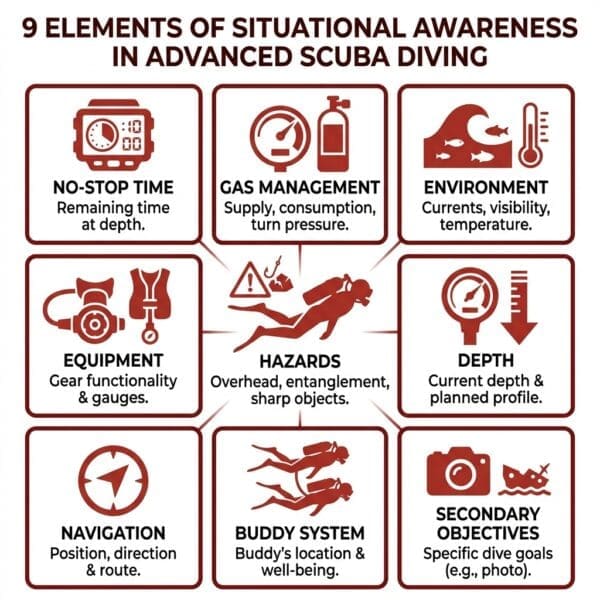
Initially, our focus as divers is often inward, on our own comfort and basic skills. With experience, our awareness expands to include our buddy, then the immediate environment, and eventually the broader dive plan and potential contingencies.
Task loading refers to the mental and physical demands placed on us during a dive. Advanced dives, with their increased complexity, can significantly raise task loading. To manage this effectively, we adopt a strategy often summarized as “Dive First, Situation Second, Communicate Third.” This prioritizes our immediate well-being and fundamental diving skills, then addresses the specific situation, and finally, communicates with our buddy or team. This systematic approach helps us respond faster, better, and with reduced stress, ensuring we remain in control even when unexpected events occur. This diligent approach to safety and preparedness is a cornerstone of responsible diving, echoed in the comprehensive insights provided by Michael Strauss on advanced diving safety.
Depth (meters) Air Consumption Rate (relative to surface) No-Stop Limit (approx. for single dive, based on PADI RDP) Surface 1x N/A 18m (60ft) 2.8x ~56 minutes 30m (100ft) 4x ~20 minutes (approx. 3 times shorter than at 18m) Note: No-stop limits are illustrative and vary based on dive tables, computers, and individual physiology. Always follow your dive computer or planned dive limits.
Advanced Training and Specialized Environments
Once we have solidified our core diving skills, the underwater world truly opens up. Advanced training allows us to explore specialized environments that require specific techniques, equipment, and safety protocols. These include deep dives, wreck penetration, and even cave diving, each presenting unique challenges and rewards.
Pursuing further certifications, such as the PADI Advanced Open Water Diver course, is a natural progression. This course builds on foundational skills and introduces us to new types of diving, with mandatory deep and navigation dives. It qualifies us to dive to 30 meters/100 feet, opening up a vast array of dive sites previously inaccessible. Beyond this, a variety of specialty courses offer focused training for specific interests, ensuring we are well-prepared for any adventure.
Safety Protocols for Deep and Overhead Environments
Diving deeper and entering overhead environments like wrecks or caves demands a heightened level of preparedness and adherence to strict safety protocols.
Deep Diving: The allure of deeper sites often comes with increased risks, primarily nitrogen narcosis and accelerated air consumption. At 30 meters, our air consumption rate is four times faster than at the surface, and the effects of narcosis can become noticeable. U.S. Navy tests showed that all subjects experienced some narcosis at 100 feet. To mitigate these risks, we must:
- Plan Conservatively: Establish clear turn pressures (when to start ascending) and maximum bottom times.
- Monitor Air: Check our air supply more frequently, as it depletes rapidly at depth.
- Manage Narcosis: Stay focused, maintain slow and deep breathing, and recognize symptoms. If narcosis becomes impairing, a slight ascent (10 feet) can often alleviate symptoms.
- Ascent Rates & Safety Stops: Strictly adhere to recommended ascent rates (e.g., 9 meters/30 feet per minute until the safety stop) and perform at least a 3-minute safety stop at 5 meters/15 feet to allow for off-gassing. For the recreational limit of 40 meters/130 feet, the PADI Deep Diver course is essential.
Overhead Environments (Wrecks & Caves): These environments, by definition, prevent a direct ascent to the surface, demanding specialized training and redundant systems.
- Wreck Diving: When exploring shipwrecks, mess and disorientation are primary concerns. We always carry a wreck reel to lay a line, tracing our path in and out, especially in low visibility or potential silt-outs. This ensures a clear exit route.
- Cave Diving: This is one of the most demanding forms of diving, requiring extensive training and strict adherence to the “rule of thirds” for gas management (one-third in, one-third out, one-third reserve for emergencies). Redundancy is paramount: we carry at least two independent air systems and three light sources (primary and two backups). Cavern divers, a less advanced form of overhead diving, should not go further than 130 feet into a cave. The complexity and inherent risks associated with overhead environments underscore the need for specialized training from accredited agencies.
The Role of Specialty Courses in Scuba Diving Safety
Continuous learning is a cornerstone of advanced diving. Specialty courses offer us the opportunity to deepen our knowledge and skills in specific areas, enhancing both safety and enjoyment. Each Adventure Dive completed during the PADI Advanced Open Water Diver course can even be credited toward a related PADI Specialty certification, providing a clear pathway for progression.
Here are a few examples of how specialty courses contribute to our safety and proficiency:
- PADI Enriched Air (Nitrox) Diver: This course teaches us to dive with higher oxygen percentages, which can extend our no-stop bottom times, particularly beneficial for repetitive or deeper dives. This reduces nitrogen loading and often allows for more conservative dive profiles.
- PADI Rescue Diver: While not strictly an “advanced” diving course in terms of depth or environment, the Rescue Diver course is arguably one of the most important. It hones our problem-solving skills, teaches us how to prevent and manage dive emergencies, and makes us a more confident and capable buddy.
- PADI Deep Diver: This course expands our depth limit to 40 meters/130 feet, providing the necessary training and experience to safely explore the recreational limits of deep diving.
- PADI Night Diver: Diving at night presents unique challenges and rewards. This course teaches us specialized navigation techniques, communication methods, and how to manage our lights effectively in low-light conditions.
- PADI Equipment Specialist: While not an in-water course, understanding how our gear works, how to perform basic maintenance, and how to troubleshoot minor issues can be invaluable for dive safety and preventing aborted dives.
- PADI Drift Diver: This course teaches us how to safely and efficiently dive in currents, a skill crucial for many advanced dive sites where strong water movement is common.
These courses, among many others, ensure that our skills remain sharp and that we are prepared for the specific demands of diverse diving conditions. As Michael Strauss emphasizes in his discussions on diving science, continuous education and practical application are vital for mitigating risks and fostering safe diving practices.
Gear Maintenance and Marine Conservation
Beyond skills and training, our approach to gear maintenance and marine conservation reflects our commitment to advanced diving.
Gear Maintenance: Our equipment is our life support system underwater. Proper care and maintenance are non-negotiable for advanced divers.
- Regular Cleaning: Rinsing all gear with fresh water after every dive, especially after saltwater exposure, prevents corrosion and extends lifespan.
- Scheduled Servicing: Regulators, BCDs, and dive computers require professional servicing at recommended intervals, usually annually. This ensures all components are functioning correctly and safely.
- Streamlining: Configuring our gear to be streamlined – minimizing dangling hoses or accessories – not only reduces drag and conserves air but also prevents mess, a critical safety consideration in wreck or cave diving.
Marine Conservation: Advanced divers, with our increased access and understanding of the underwater world, have a profound responsibility to protect it. Our practices directly impact the health of marine ecosystems.
- Buoyancy Control: Perfect buoyancy is the ultimate conservation tool. By maintaining neutral buoyancy and horizontal trim, we avoid contact with delicate corals, stirring up silt that can smother marine life, or damaging fragile habitats. We strive to “take only photos, leave only bubbles.”
- Respect Marine Life: We never harass, chase, touch, or feed marine animals. We observe from a respectful distance, understanding that our presence should have minimal impact.
- Responsible Practices: This extends to dive planning, waste management (ensuring nothing is accidentally dropped or left behind), and even choosing environmentally conscious dive operators. Our logbooks can serve as a record not just of our dives, but also of any observations we make that could contribute to marine science or conservation efforts.
By carefully caring for our gear and actively practicing marine conservation, we embody the principles of responsible advanced diving, ensuring that the incredible underwater world remains vibrant for future generations of explorers.