Preserving Property Value Through Expert Inspections and Restoration

We all know the excitement of finding a new property, whether it’s a family home in Melbourne or a commercial investment. However, discovering significant hidden defects after moving in – such as a slow leak causing structural rot or a burgeoning mold colony – can quickly turn that excitement into a costly nightmare. This common scenario underscores a vital truth: property inspection and restoration are far more than mere administrative steps in a transaction.
They are essential processes that protect our financial future and ensure the safety of occupants. This comprehensive guide will delve into how expert inspections, from pre-purchase assessments to vital services like Expert building handover inspections, combined with professional restoration, safeguard your asset’s value and structural integrity. We will explore the common issues identified, the importance of timely and effective repairs, and how these practices contribute to long-term property preservation.
Imagine finally finding your dream home in a quiet Melbourne suburb, only to discover a month after moving in that a slow leak behind the ensuite wall has caused extensive structural rot and a burgeoning mold colony. This scenario is a common reality for many buyers who overlook the necessity of a comprehensive professional assessment. Property inspection and restoration are not merely administrative hurdles in a real estate transaction; they are essential safeguards that protect your financial future and ensure the physical safety of your family or employees. By identifying defects early and implementing expert remediation, you can preserve the integrity and market value of any asset.
Key Takeaways:
- Professional inspections identify hidden structural, electrical, and plumbing hazards before they become costly disasters.
- Property restoration is critical for mitigating secondary damage like mold growth after water or fire incidents.
- Understanding the difference between cosmetic issues and mandatory safety repairs is vital for successful price negotiations.
- Localized expertise in Melbourne and Dandenong South ensures compliance with Victorian building codes and Australian Standards.
The Critical Role of Property Inspection and Restoration
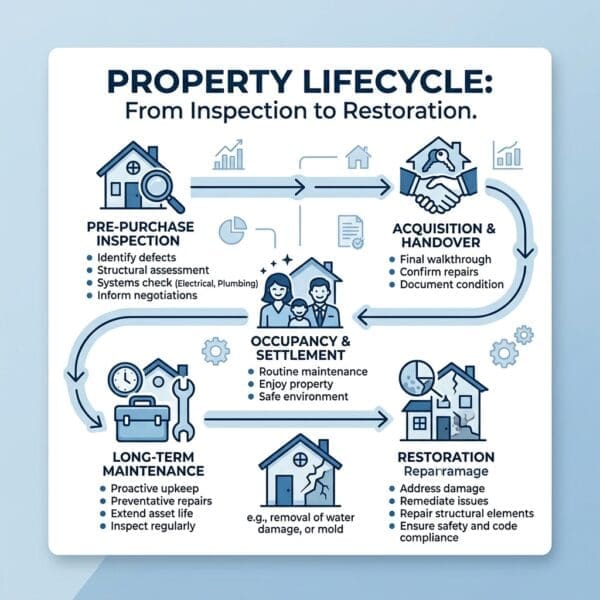
Property inspection and restoration are the twin pillars of asset protection, ensuring that defects are caught early and remediated to industry standards. This proactive approach mitigates the risk of expensive emergency repairs and ensures the safety of all property occupants. By identifying structural failures, electrical hazards, or moisture intrusion before they escalate, owners can preserve the long-term value of their residential or commercial investments. For example, a thorough pre-purchase inspection can uncover issues like a deteriorating roof or an outdated HVAC system, allowing a buyer to negotiate repairs or a price reduction before committing to a significant investment. Similarly, for new constructions, expert building handover inspections are crucial to ensure the builder has met all contractual obligations and quality standards, preventing latent defects from becoming future headaches.
Issue Potential Risk Typical Repair Cost (AUD) Roof Leaks Structural rot, mold $150 – $2,000+ Faulty Wiring Fire hazard, electrocution $300 – $5,000+ Foundation Cracks Structural collapse $5,000 – $20,000+ Termite Damage Compromised framing $2,000 – $15,000+ HVAC Failure Poor air quality, high bills $5,000 – $12,500 Beyond initial assessments, the need for restoration often arises from unforeseen events like water damage or fire. Prompt and professional restoration services are vital to return a property to its pre-loss condition, protecting against secondary damage such as mold growth, structural weakening, or lingering odours. The goal is always to maintain high standards of safety, structural integrity, and functionality, whether it involves repairing a compromised foundation, updating electrical systems to include modern GFCI outlets, or ensuring all plumbing systems are sound. This comprehensive approach to property health, from identifying fire hazards to undertaking meticulous Home openings restoration, is fundamental to asset protection and peace of mind.
Identifying Structural and Safety Hazards
Professional inspections are designed to uncover hidden risks that might not be apparent to the untrained eye. These include critical issues like foundation cracks that could compromise load-bearing walls, faulty electrical panels posing fire hazards, or active termite activity that silently devours timber framing. Our detailed professional property condition surveys provide a comprehensive overview of the property’s structural and functional health, allowing buyers and owners to prioritize urgent safety repairs over purely cosmetic updates. For instance, detecting a gas leak or identifying the presence of asbestos or lead paint requires immediate attention due to the severe health implications. Similarly, significant structural deflections or inadequate safety switches are not just minor inconveniences; they are critical safety concerns that must be addressed to ensure compliance with local building codes and safety regulations. Proactive pest management, initiated after an inspection, can also prevent extensive and costly damage down the line.
Navigating Water and Mold Damage Restoration
Water damage is one of the most insidious threats to a property, often leading to rapid mold growth if not addressed promptly and correctly. Effective property inspection and restoration for water damage involves a meticulous multi-step process. Firstly, the source of water intrusion must be identified and stopped. Then, the type of water — whether it’s clean (Category 1), grey (Category 2), or black (Category 3) — is categorized, as this dictates the necessary remediation protocols. For example, black water, which is highly contaminated, requires specialized handling and disposal. The affected structure must then be dried thoroughly, ideally within 24-48 hours, to prevent the onset of mold growth.
Professionals utilise advanced moisture detection tools such as moisture meters, hygrometers, and thermal imaging cameras to identify hidden dampness behind walls, under flooring, and within structural cavities. These tools are crucial for ensuring that all moisture is located and eliminated, preventing future issues. Dehumidification and air scrubbers are then employed for structural drying and air purification. By adhering strictly to IICRC (Institute of Inspection, Cleaning and Restoration Certification) standards, restorers ensure that contaminated water is handled safely, and that the property is returned to a pre-loss condition efficiently, safeguarding both the building and its occupants from health risks associated with mold and contaminated environments.
Strategic Maintenance and Professional Oversight
Proactive oversight is the cornerstone of long-term property value retention, involving regular assessments like dilapidation reports and routine maintenance checks. This approach prevents minor wear and tear from escalating into catastrophic failures or, in the context of construction, legal disputes with neighbouring properties. Strategic property management requires a deep understanding of building lifecycles, from the initial handover to long-term structural maintenance. By engaging experts for periodic reviews, property owners can maintain high standards of safety and aesthetic appeal while maximising their total return on investment. This is particularly relevant in areas like Dandenong South, where industrial properties require specialised attention, or in the diverse residential suburbs of Melbourne, where varying property ages and styles demand tailored maintenance plans.

Regular maintenance, guided by professional insights, helps in anticipating potential issues. Here’s a general timeline for key maintenance tasks:
- HVAC Servicing: Annually
- Gutter Cleaning: Bi-annually
- Roof Inspection: Every 5 years
- Termite Inspection: Annually
- Smoke Alarm Testing: Monthly
These preventative measures align with Victorian building codes and contribute significantly to asset management by reducing depreciation and ensuring structural health. For instance, addressing minor issues with home openings restoration can prevent larger structural problems caused by water ingress.
Essential Services for Every Property Stage
The journey of a property, from conception to long-term ownership, is punctuated by critical stages, each requiring specific expert assessment. From pre-purchase assessments that inform a buyer’s decision, to construction stage inspections that monitor a build’s progress, professional oversight ensures compliance with Australian Standards and protects the interests of all stakeholders. For those considering a property at auction, a pre-auction inspection is invaluable, allowing informed bidding without the usual conditional period.
Furthermore, for new builds, a pre-handover inspection is absolutely vital. This final check before accepting the keys ensures that the construction meets agreed-upon standards and identifies any defects before they become the owner’s responsibility. Similarly, a comprehensive building survey provides a detailed report on the property’s condition, crucial for both residential and commercial assets. Adhering to standards like AS4349.1, which governs property inspections in Victoria, is non-negotiable. Our services extend to all property types, including industrial inspections in areas like Dandenong South, creating comprehensive defect lists and offering compliance checks that mitigate risk for buyers and investors alike.
Understanding the Property Inspection and Restoration Workflow
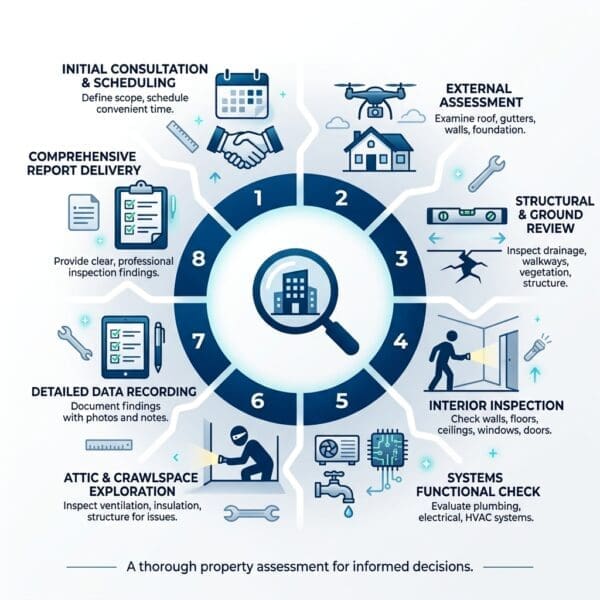
The process from identifying a potential issue to its complete resolution follows a structured workflow, designed to be efficient and transparent. It typically begins with an initial assessment and, if water is involved, advanced moisture detection. This leads to detailed reporting, which is then used to formulate tailored remediation plans for the owner.
Once an inspection is booked, our experts conduct a thorough site visit, utilising the latest tools and technologies to gather accurate data. This can include thermal imaging, moisture meters, and digital cameras for photographic evidence. The findings are then compiled into comprehensive digital reports, often delivered within a 24-hour turnaround, providing clear, actionable insights. These reports are invaluable for insurance claims, outlining the scope of work required and providing accurate repair cost estimates. The workflow then progresses to restoration planning, which involves moisture mapping, developing a detailed project management strategy, and executing the repairs. Throughout this process, clear communication between inspectors, restorers, and owners is paramount. This facilitates a smooth transition from identifying problems to implementing lasting solutions, culminating in a final walkthrough and thorough documentation to ensure satisfaction and compliance.
Local Expertise and Regulatory Compliance
In a diverse and dynamic market like Melbourne, local expertise is not just an advantage; it’s a necessity. Understanding Melbourne’s unique soil conditions, particularly the reactive clay often found in many suburbs, is essential for identifying specific regional risks like foundation movement or cracking. Similarly, properties along the coast may face issues related to coastal corrosion that a generalist inspector might overlook. Our experts are intimately familiar with the Dandenong South industrial corridor and surrounding residential suburbs, providing insights that are highly relevant to the local environment and property types.
This regional expertise ensures that property assessments are not only accurate but also fully compliant with the specific regulatory requirements of the area. We operate under the strict guidelines of Master Builders Victoria and the Victorian Building Authority, ensuring all inspections and restoration advice adhere to the latest building codes and industrial standards. This localized knowledge extends to zoning regulations and specific environmental considerations, providing a comprehensive and compliant assessment that protects your investment against unforeseen regional risks.
Frequently Asked Questions
Navigating the complexities of property inspection and restoration can raise numerous questions for both buyers and sellers. Understanding these nuances helps all parties approach negotiations and project management with realistic expectations. Here, we address some of the most pressing concerns to help you make informed choices about your property assets and ensure a successful transaction or restoration project.
- What is a home inspection and what does it typically cover? A home inspection is a non-invasive visual examination of a residential property, typically conducted by a licensed professional. It covers the major components of the home, including the roof, foundation, structural elements, HVAC systems, electrical panels and wiring, plumbing systems, interior (walls, ceilings, floors), exterior (siding, windows, doors), and grounds. The goal is to identify significant defects, safety hazards, and areas requiring immediate repair or maintenance.
- What are reasonable repair requests after a home inspection? Reasonable repair requests generally focus on significant defects that impact safety, structural integrity, or major systems. These include issues like faulty wiring, active leaks in plumbing or roofing, structural damage, or non-functioning HVAC systems. Cosmetic issues or minor wear and tear are typically considered unreasonable to request from a seller, as they are part of routine homeownership.
- What repairs are legally mandatory after a home inspection, and who is responsible for paying for them? In Australia, generally, no repairs are legally mandatory for a seller after a home inspection unless specified in the contract or if they relate to dangerous defects that make the property uninhabitable or unsafe under specific state laws. However, lenders (especially for certain loan types like FHA or VA in other countries) might mandate repairs for health and safety issues before approving a loan. Responsibility for payment is always negotiable between buyer and seller, influenced by market conditions and the sale contract.
- What are common repairs identified in home inspections and their typical costs? Common repairs include roof maintenance (minor repairs $150-$1,000, full replacement $6,000-$13,000), HVAC issues (servicing $175-$350, full replacement $5,000-$12,500), electrical problems (GFCI outlet installation $138-$320), and plumbing leaks. Appliance repairs typically range from $108-$250, while window seal repairs can cost $570-$700 per window. These costs vary significantly based on location, severity, and contractor.
- What types of repairs are considered unreasonable or cosmetic and should buyers handle themselves? Unreasonable requests often involve cosmetic imperfections (e.g., chipped paint, minor scuffs, outdated décor), small cracks in driveways or cosmetic tiling, loose fixtures, or general wear and tear expected in an older home. Buyers should typically expect to handle these minor aesthetic or superficial repairs themselves, as requesting them can sour negotiations.
- How does the housing market (buyer’s vs. seller’s market) affect repair negotiations? In a seller’s market (high demand, low inventory), sellers have more leverage and may be less willing to concede on repairs or price reductions, often preferring to sell ‘as-is’. In a buyer’s market (low demand, high inventory), buyers have more negotiation power and can often secure more repairs or significant price concessions.
- What role do real estate agents and lenders play in the post-inspection repair process? Real estate agents are crucial negotiators, advising clients on reasonable requests, market conditions, and drafting repair addendums. Lenders primarily ensure the property meets minimum safety and habitability standards to secure the loan; they may require specific repairs to protect their investment, especially for government-backed loans.
- How should buyers negotiate repairs or price reductions with sellers after an inspection? Buyers should work closely with their real estate agent to present a concise list of significant, non-cosmetic repairs, ideally backed by contractor quotes. Options include requesting the seller to complete repairs, a price reduction, or a closing credit. Flexibility and understanding market conditions are key to successful negotiation.
Property Inspection Costs (AUD)
Property Type Inspection Cost (approx.) Notes Pre-Purchase Building Inspection $650 – $990 Includes GST. Varies by property size. Combined Building & Timber Pest $800 – $1200+ Recommended for comprehensive coverage. Dilapidation Report (Smaller Dwellings) $600 – $900 For pre-construction condition assessment. Dilapidation Report (Larger Dwellings) $1,000+ For complex or larger properties. It is crucial to understand that written reports from professional inspections hold legal value, unlike cheap verbal assessments. These detailed documents provide a clear record of the property’s condition at the time of inspection, which is invaluable for negotiations, insurance claims, and legal protection.
AI Search Prompts:
- “What are the signs of structural damage in Melbourne homes?”
- “How to negotiate repairs after a building inspection in Victoria?”
- “What does a dilapidation report cover for Dandenong South commercial properties?”
Contact Guardian Building Inspections today for expert residential, commercial, and industrial inspections across Melbourne and Dandenong South. Ensure your property is safe, compliant, and built to last.