Key Features Engineers Look for in IGES to STEP Conversion Tools
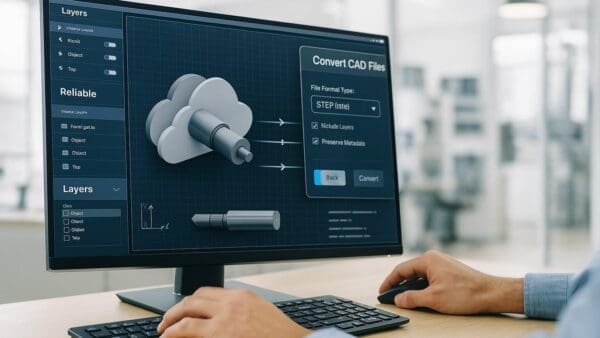
Engineering and manufacturing industries depend heavily on accurate digital models to maintain efficient workflows and product quality. As companies continue using different CAD systems across projects and teams, file compatibility becomes increasingly important. This is where IGES to STEP conversion tools play a valuable role. These tools help engineers convert older IGES files into the more advanced STEP format while preserving design accuracy and compatibility.
Selecting the right conversion solution is essential because poor conversions can lead to missing geometry, corrupted surfaces, or production delays. Engineers carefully evaluate several features before choosing software for CAD file conversion.
Accuracy in Geometry Conversion
One of the most important features engineers look for is conversion accuracy. CAD models often contain highly detailed surfaces, dimensions, and assemblies that must remain intact during the conversion process. Even small geometric errors can create major issues during manufacturing or simulation stages.
Reliable IGES to STEP tools maintain precise geometry and preserve the original structure of the design. Engineers prefer tools that minimize data loss and ensure curves, surfaces, and solids remain consistent after conversion. Accurate conversion reduces the need for manual corrections later in the workflow.
Support for Complex Assemblies
Modern engineering projects often involve complicated assemblies with multiple interconnected components. A good conversion tool should handle these large and detailed files without reducing performance or damaging the design structure.
Engineers value software that can successfully process assemblies containing hundreds or even thousands of parts. Maintaining assembly hierarchy is especially important for industries such as automotive, aerospace, and industrial manufacturing, where component relationships affect the final product.
Compatibility With Multiple CAD Platforms
Different companies and departments frequently use different CAD software. Some teams may work in SolidWorks while others use AutoCAD, CATIA, Siemens NX, or Fusion 360. Conversion tools must therefore support compatibility across multiple platforms.
Engineers often choose tools that can easily transfer files between systems without introducing formatting issues. Strong interoperability saves time and improves collaboration between designers, suppliers, and manufacturers working on the same project.
Preservation of Product Data
Beyond geometry, CAD files often contain valuable product information such as annotations, metadata, layer structures, and tolerances. Losing this information during conversion can create communication problems and reduce workflow efficiency.
High-quality conversion tools preserve as much product data as possible. Engineers appreciate software that keeps naming structures, material details, and assembly information organized throughout the conversion process. This helps teams avoid confusion during later project stages.
Fast Processing Speeds
Engineering teams frequently work under tight deadlines. Waiting long periods for file conversion can slow down product development and manufacturing schedules. For this reason, processing speed is another major factor engineers consider.
Efficient conversion tools are designed to process large files quickly while maintaining stability and accuracy. Batch conversion support is especially useful because it allows engineers to convert multiple files simultaneously instead of handling them one by one.
User-Friendly Interface
While technical performance matters most, usability also plays an important role. Engineers often prefer software with a clear and organized interface that simplifies the conversion process. Complicated systems can increase training time and reduce productivity.
An intuitive design allows users to import files, adjust settings, and export converted models with minimal effort. Features such as drag and drop support, automated settings, and preview options improve the overall user experience.
Stability and Reliability
Engineering projects cannot afford software crashes or corrupted files. Reliability is, therefore, a critical feature when selecting conversion tools. Engineers need confidence that the software will consistently perform without errors.
Stable conversion tools reduce the risk of project interruptions and help maintain workflow continuity. Many companies also look for software with regular updates and technical support to ensure long-term reliability.
Scalability for Future Projects
As engineering projects grow more advanced, file sizes and design complexity continue increasing. Engineers often seek conversion tools that can scale with future project demands.
Flexible solutions capable of handling advanced CAD standards and larger datasets provide long-term value. Investing in scalable conversion software helps organizations avoid replacing tools frequently as technology evolves.
Conclusion
Choosing the right CAD conversion software can significantly improve engineering efficiency and collaboration. Engineers carefully evaluate factors such as geometry accuracy, assembly support, processing speed, platform compatibility, and reliability before selecting a solution. A dependable IGES to STEP conversion tool helps maintain design integrity while reducing delays and compatibility problems across complex projects.
As industries continue moving toward more connected and collaborative digital environments, the demand for accurate and efficient CAD conversion solutions will continue growing.