Innovative Applications of Asphalt Millings in Modern Construction

Asphalt millings have become an increasingly popular solution for sustainable construction. As a byproduct of asphalt pavement recycling, they offer a cost-effective, environmentally responsible alternative to traditional paving materials. Their adaptability means they are now used for a wide variety of modern construction projects, making them invaluable in today’s building industry. For those curious to learn more about asphalt millings, this guide explores their most innovative applications and the technologies that enable them.
With urban expansion and the need for sustainable construction practices on the rise, contractors and municipalities are increasingly turning to recycled materials for roads, paths, driveways, and more. Asphalt millings are particularly desirable because they reduce waste, conserve natural resources, and extend the lifespan of infrastructure projects. Their versatility allows for unique applications that benefit both budgets and the environment, setting a precedent for future construction trends.
Driveway and Parking Lot Surfacing
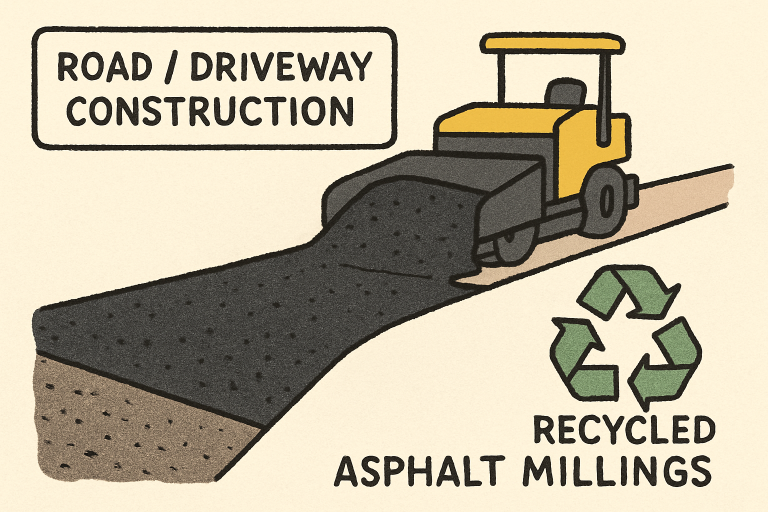
One of the primary uses for asphalt millings is as a surface for driveways and parking lots. When properly installed and compacted, asphalt millings form a solid, uniform surface that is weather-resistant and requires minimal maintenance. The use of recycled materials means installation costs are often significantly lower than those associated with new asphalt or concrete, helping property owners save money while reducing their environmental footprint. Because the process involves reusing existing pavement, projects are completed more efficiently, with less need to create and transport new materials. According to For Construction Pros, proper installation practices are crucial to maximize durability and functionality in these surfaces.
Pathways and Walking Trails
Asphalt millings have proven highly effective for constructing pathways and walking trails in parks, nature reserves, and residential neighborhoods. Their compact nature yields a sturdy, slip-resistant surface that can weather the elements with minimal upkeep. For municipalities and organizations seeking eco-friendly alternatives, millings enable the creation of accessible trails without relying on quarried stone or newly manufactured asphalt products. They also blend visually with natural surroundings, making them a preferred option for recreational and conservation spaces.
Base Material for New Pavement
Another innovative application of asphalt millings is as a base layer for new pavement construction. When used as a foundational material rather than a surface layer, they improve the structural integrity of roads and other paved surfaces. Their strong compaction properties mean less virgin aggregate is required, resulting in considerable savings on material costs. This sustainable approach also supports the construction industry’s commitment to reducing reliance on nonrenewable resources.
Erosion Control and Soil Stabilization
Erosion control and soil stabilization are essential considerations for both municipal and private projects, especially on slopes and embankments. Asphalt millings provide an environmentally safe way to stabilize soil and prevent loss due to wind and rain. By spreading millings over vulnerable terrain and compacting them, builders create a protective barrier that discourages soil displacement and helps establish native plant growth. This method reduces ongoing maintenance while securing landscapes against the destructive effects of erosion.
Innovative Technologies Enhancing Asphalt Millings
The growing adoption of asphalt millings in construction is driven by new technologies that boost their performance and lifespan. One standout innovation is the advent of soybean oil-based solutions, such as Biomag™ Easy Pave, which bind and seal recycled asphalt pavement (RAP) millings to create new roadways and parking lots with enhanced stability. This technology serves as a competitive, environmentally friendly alternative to conventional hot mix asphalt and requires less energy for installation. These developments showcase how technology is supporting the shift toward greener construction solutions. More details can be found in Business Wire’s coverage.
Environmental and Economic Benefits
Integrating asphalt millings into modern construction projects yields significant environmental and economic benefits. The recycling process prevents millions of tons of waste from reaching landfills each year and reduces demand for new aggregate production. This approach not only conserves natural resources but also slashes project expenses associated with raw materials and transportation. In addition, surfaces constructed with high-quality millings tend to last longer and need fewer repairs, delivering ongoing value for property owners and contractors. Studies cited by the EPA further support the environmental impact of asphalt recycling.
Conclusion
Asphalt millings have emerged as a valuable innovation in modern construction, offering a practical balance between environmental responsibility and cost efficiency. Created from recycled asphalt pavement, these materials reduce the need for new raw resources while minimizing construction waste. Contractors benefit from their durability, affordability, and ease of application in projects such as driveways, roads, and parking areas. As sustainable building practices gain momentum, asphalt millings continue to prove their value. Their adaptability and reliable performance demonstrate that environmentally conscious construction can also deliver strong economic advantages for developers, contractors, and communities alike.