Recognizing the Telltale Signs Your AC Needs Professional Help
 Summer in Lakeland, FL, means more than just sunshine; it means facing intense heat. With over 100 days a year reaching 90°F or higher, a well-functioning air conditioner isn’t a luxury – it’s a lifeline. Without it, our homes can quickly become uncomfortable, even unsafe.

Imagine a family relaxing in a cool, comfortable living room, bright sunlight streaming through the windows but kept at bay by their efficient AC. This scene captures the essence of surviving Lakeland’s climate, where 90°F temperatures are a common reality.
Ensuring your AC unit runs smoothly is vital for comfort and energy savings. Understanding your options for AC repair in Lakeland, FL, is key to beating the heat and maintaining a pleasant indoor environment.
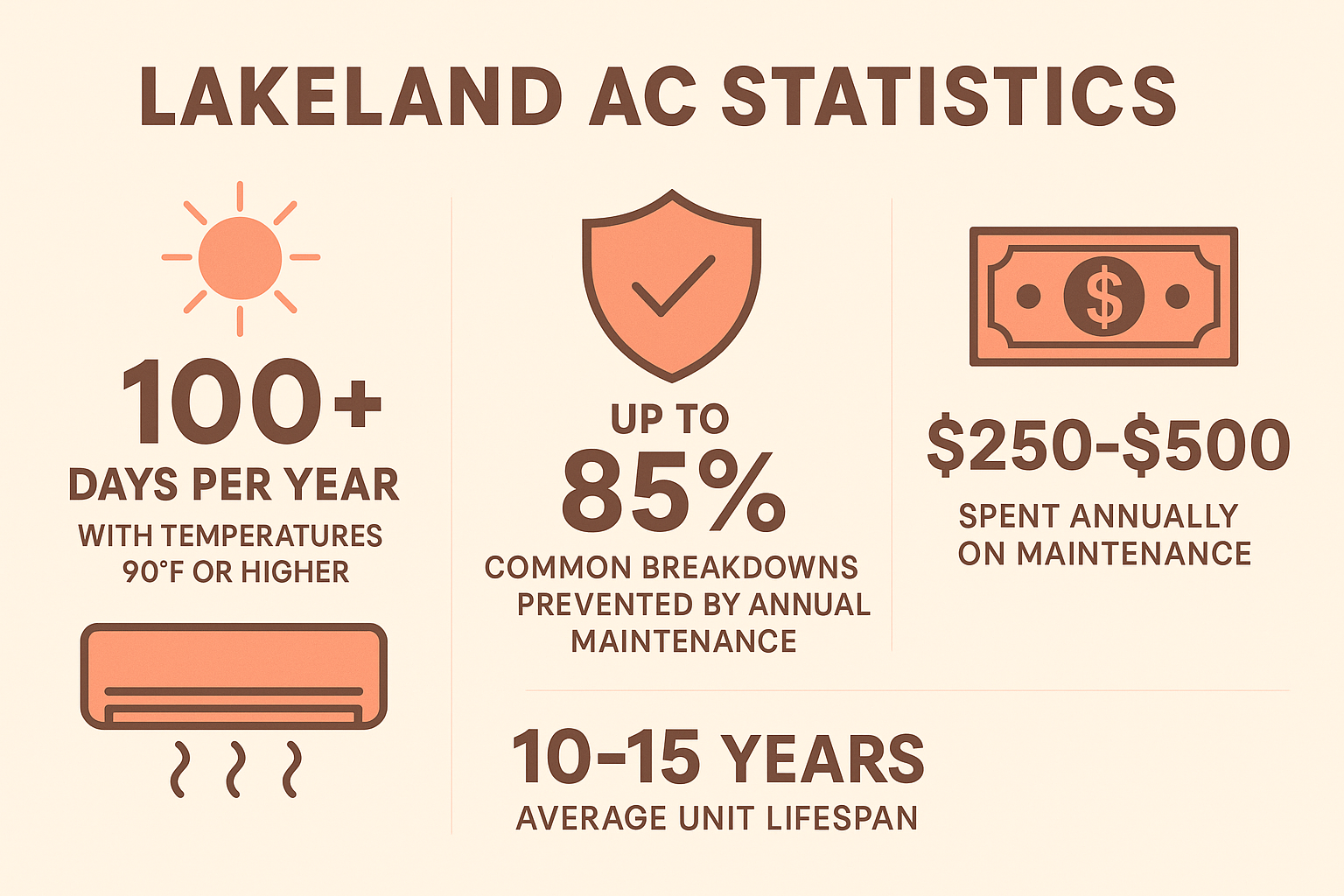
Lakeland, FL experiences an average of 100+ days per year with temperatures reaching 90°F or higher, making reliable AC service crucial. Annual AC maintenance in Lakeland can prevent up to 85% of common breakdowns, saving homeowners an average of $150-$300 annually in repair costs. The average lifespan of an air conditioning unit in Florida’s climate is 10-15 years, after which replacement is often more cost-effective than repeated repairs. Lakeland homeowners spend an average of $250-$500 annually on AC maintenance and tune-ups to ensure optimal performance and efficiency.
In this guide, we will explore common AC problems. We will also look at when to consider fixing your unit versus getting a new one. Plus, we will share tips on finding a trusted service provider. We aim to help you keep your cool all year long.
Even the most robust air conditioning systems will eventually show signs of wear and tear, especially under the relentless Florida sun. Recognizing these indicators early can save you from more extensive damage, higher repair costs, and prolonged discomfort. Ignoring subtle warnings can lead to a complete system breakdown when you need it most.

One of the most noticeable signs is weak airflow. If you feel that the air coming from your vents isn’t as strong as it used to be, or if some rooms are significantly warmer than others, it could indicate a problem. This might stem from clogged filters, blocked ductwork, or even a failing blower motor struggling to push air through the system.
Another common red flag is strange noises. Your AC unit should operate with a consistent, relatively quiet hum. Any deviation from this, such as grinding, hissing, squealing, clicking, or banging sounds, warrants immediate attention. These noises can signify anything from loose parts and worn-out bearings to refrigerant leaks or serious compressor issues.
Foul odors emanating from your AC vents are also a clear sign that something is amiss. A musty smell often points to mold or mildew growth within the ducts or on the evaporator coil, a common issue in humid climates. A burning smell might indicate an electrical problem, such as burnt wiring or an overheating motor, which can be a serious safety hazard.
An inaccurate thermostat can lead to your AC running constantly without reaching the set temperature, or cycling on and off too frequently. This could be due to a faulty sensor, miscalibration, or a complete thermostat malfunction, preventing your system from receiving proper commands.
In summary, here are crucial warning signs that your AC unit needs professional attention:
- Warm air from vents: The most obvious sign that your AC isn’t cooling effectively.
- Frequent cycling: Your unit turns on and off too often, indicating inefficiency or a system struggling to maintain temperature.
- High humidity levels indoors: If your home feels clammy even with the AC on, the unit isn’t properly dehumidifying the air.
- Water leaks around the unit: Puddles or drips near your indoor or outdoor unit often signal a clogged condensate drain line or a refrigerant leak.
Why You Shouldn’t Ignore Strange AC Noises
Ignoring unusual sounds from your air conditioner is akin to ignoring a check engine light in your car – it rarely ends well. Each distinct noise can be a clue to an underlying problem, some of which require immediate professional intervention to prevent catastrophic failure or safety risks.
- Grinding sounds: Often indicate issues with the motor’s bearings. If left unaddressed, the motor could seize, requiring a costly replacement.
- Hissing noises: A common sign of a refrigerant leak. Refrigerant is essential for cooling, and a leak not only impacts performance but can also be harmful to the environment.
- Squealing or screeching: Typically points to a worn-out fan belt or a failing motor bearing. These can escalate quickly, leading to total system failure if not repaired.
- Clicking sounds: While some clicking is normal during startup and shutdown, persistent clicking could mean a faulty control panel or a relay problem.
- Banging or clanking: These loud, impactful noises are usually a sign of loose or broken parts within the compressor or blower motor. This is a severe issue that demands immediate shutdown of the unit to prevent further internal damage.
The Problem with Poor Airflow and Warm Air
When your AC struggles to deliver cool, consistent airflow, it’s not just an inconvenience; it’s a symptom of deeper problems that can compromise your system’s efficiency and lifespan.
One of the simplest yet most overlooked culprits is clogged filters. A dirty air filter restricts airflow, forcing your AC to work harder, consuming more energy and leading to uneven cooling. We recommend checking and changing your filters regularly, especially in Lakeland’s dusty and pollen-rich environment.
Blocked ductwork can also significantly impede airflow. Ducts can become kinked, disconnected, or accumulate debris over time, preventing conditioned air from reaching its intended destination. This not only reduces comfort but also wastes energy as your system tries to compensate.
Frozen evaporator coils are another common issue, often caused by restricted airflow (like a dirty filter) or low refrigerant levels. When coils freeze, they can’t absorb heat effectively, leading to warm air output and potential water damage as the ice melts.
Perhaps the most serious cause of poor airflow and warm air is compressor issues. The compressor is the heart of your AC system, responsible for circulating refrigerant. If it’s failing or has completely broken down, your unit simply won’t be able to cool. If your AC is blowing warm air, it’s a clear signal that professional diagnostic and repair services are needed to identify and rectify the root cause. This issue can range from minor fixes to major component failures, making prompt attention crucial.
Common AC Ailments in Florida’s Climate and Their Fixes
Florida’s unique climate, characterized by high temperatures and pervasive humidity, places immense strain on air conditioning systems. This environment contributes to specific AC ailments that Lakeland homeowners frequently encounter. Understanding these common problems can help you identify issues faster and appreciate the importance of professional intervention.

The relentless Florida humidity is a primary factor affecting AC performance. While your AC unit is designed to remove humidity, the sheer volume of moisture in the air means it’s constantly working overtime. This increased workload can lead to faster wear and tear on components and a reduced ability to cool effectively if not properly maintained.
Though Lakeland is inland, the high humidity can still contribute to issues that mimic coastal environments, such as increased moisture leading to corrosion on electrical components over time. The high usage strain from near-constant operation during hot months also means components are under more stress, making them prone to failure.
Refrigerant leaks are a common and serious issue. Refrigerant is the chemical compound that absorbs heat from your home’s air and releases it outside. If there’s a leak, your system won’t be able to cool effectively, leading to warm air, reduced efficiency, and potentially damaging the compressor. Addressing these leaks promptly is crucial, as low refrigerant can lead to your AC compressor issues.
Clogged drain lines are almost inevitable in Florida’s humid climate. Your AC unit produces condensate (water) as it removes humidity from the air. This water drains through a condensate line. Algae and mold thrive in this warm, moist environment, often clogging the line. A clogged drain line can cause water to back up, leading to leaks, water damage, and even system shutdown if the safety float switch is activated.
Capacitor failure is another frequent electrical problem. Capacitors are small, cylindrical components that provide the initial jolt of electricity needed to start the AC’s motors (blower motor and compressor motor). Due to constant use and high temperatures, these components can degrade and fail, preventing your unit from starting or running efficiently.
How Lakeland’s Humidity Impacts Your Air Conditioner
Lakeland’s high humidity is a double-edged sword for AC units. While air conditioners are designed to dehumidify, the sheer volume of moisture in the air forces them to work harder and longer.
- Increased workload: Your AC isn’t just fighting heat; it’s also battling moisture. This dual task means your unit runs more frequently and for longer durations, leading to accelerated wear and tear on all components.
- Mold and mildew growth: The damp, warm conditions inside your AC unit and ductwork are ideal breeding grounds for mold and mildew. This can lead to musty odors, reduced indoor air quality, and even allergic reactions for occupants.
- Clogged condensate drains: As mentioned, the constant production of condensate, combined with Florida’s warm temperatures, creates a perfect environment for algae and slime to grow, leading to frequent clogs in the drain line.
- Reduced efficiency: When your AC is constantly battling high humidity, its energy efficiency can drop. It consumes more power to achieve the desired temperature and humidity levels, leading to higher utility bills.
- Dehumidification function: While your AC does remove humidity, it might not be enough in extreme conditions. Some homeowners consider supplemental dehumidifiers or AC units with improved dehumidification capabilities to truly tackle the Lakeland mugginess.
The Most Frequent Repairs for Lakeland Homeowners
Given the climate challenges, certain AC repairs are more common for Lakeland residents. Being aware of these can help you understand potential issues when they arise.
- Capacitor replacement: This is a very common repair. As discussed, capacitors provide the electrical boost for motors. They wear out over time, especially with constant use, and replacing them is usually a quick and relatively inexpensive fix.
- Refrigerant recharge and leak repair: Due to the system’s age, installation issues, or simple wear and tear, refrigerant leaks occur. A professional technician will not only recharge the refrigerant but also locate and repair the leak to prevent future loss.
- Drain line flush: This is a routine maintenance task that often becomes a repair if neglected. Flushing the condensate drain line clears out algae and slime buildup, preventing clogs and water overflow.
- Fan motor repair/replacement: Both the indoor blower fan and the outdoor condenser fan motors can fail due to continuous operation. Signs include unusual noises, reduced airflow, or the outdoor unit not running.
- AC Keeps Freezing Up During Summer: This is a very common complaint in Florida. While it might seem counterintuitive for an AC to freeze, it’s often a sign of restricted airflow (dirty filter, blocked return vents) or low refrigerant. When the evaporator coil doesn’t get enough warm air to absorb heat, or if there’s not enough refrigerant to absorb the heat, the coil’s surface temperature drops below freezing, causing ice to form. This issue requires professional diagnosis to prevent further damage.
The Financial Side of AC Repair Lakeland FL
Understanding the financial implications of AC repair is crucial for homeowners in Lakeland. While we won’t dig into specific dollar figures for individual repairs, it’s important to grasp the factors that influence the overall cost. The average cost for AC repair in Lakeland, FL can range from $150 to $400 for minor issues, and upwards of $1,000 for major component replacements, reflecting the complexity and parts involved.
Several elements contribute to the repair costs. The most significant factors include the part complexity and availability, the labor time required for diagnosis and repair, and whether emergency service fees apply for after-hours or weekend calls. Simple fixes like a capacitor replacement or a drain line flush are generally less expensive than major component replacements such as a compressor or evaporator coil.
When considering the cost of repairs, it’s also important to factor in the potential for your AC to be causing high electric bills. An inefficient or malfunctioning unit works harder, consuming more energy and driving up your monthly utility expenses. Sometimes, the cost of frequent repairs combined with inflated energy bills can quickly approach the cost of a new, more efficient system. Seeking Affordable AC repair Lakeland FL means finding a balance between immediate fixes and long-term operational efficiency.
Energy-Saving Tips to Lower Your Cooling Costs
Beyond repairs, there are proactive steps you can take to significantly reduce your AC-related energy consumption and save money, especially in Lakeland’s hot climate.
- Programmable thermostats: Install and properly use a programmable or smart thermostat. These devices allow you to set different temperatures for different times of the day, optimizing cooling when you’re home and conserving energy when you’re away or asleep.
- Regular filter changes: This is perhaps the simplest and most effective tip. A clean air filter ensures optimal airflow, preventing your AC from overworking. Change filters monthly during peak cooling season.
- Sealing air leaks: Inspect your home for air leaks around windows, doors, and ductwork. Sealing these leaks with caulk or weatherstripping prevents conditioned air from escaping and unconditioned air from entering, reducing your AC’s workload.
- Using ceiling fans: Ceiling fans create a wind-chill effect, making you feel cooler without actually lowering the thermostat setting. This allows you to set your AC a few degrees higher, saving energy. Remember to turn them off when you leave the room.
- Maintaining outdoor unit clearance: Ensure your outdoor condenser unit has at least two feet of clearance on all sides. Clear away any foliage, debris, or obstructions that can impede airflow, as restricted airflow forces the unit to work harder.
The Big Decision: Repairing vs. Replacing Your AC Unit
One of the most challenging decisions for a Lakeland homeowner facing AC trouble is whether to repair the existing unit or invest in a complete replacement. This choice involves weighing immediate costs against long-term savings and comfort.
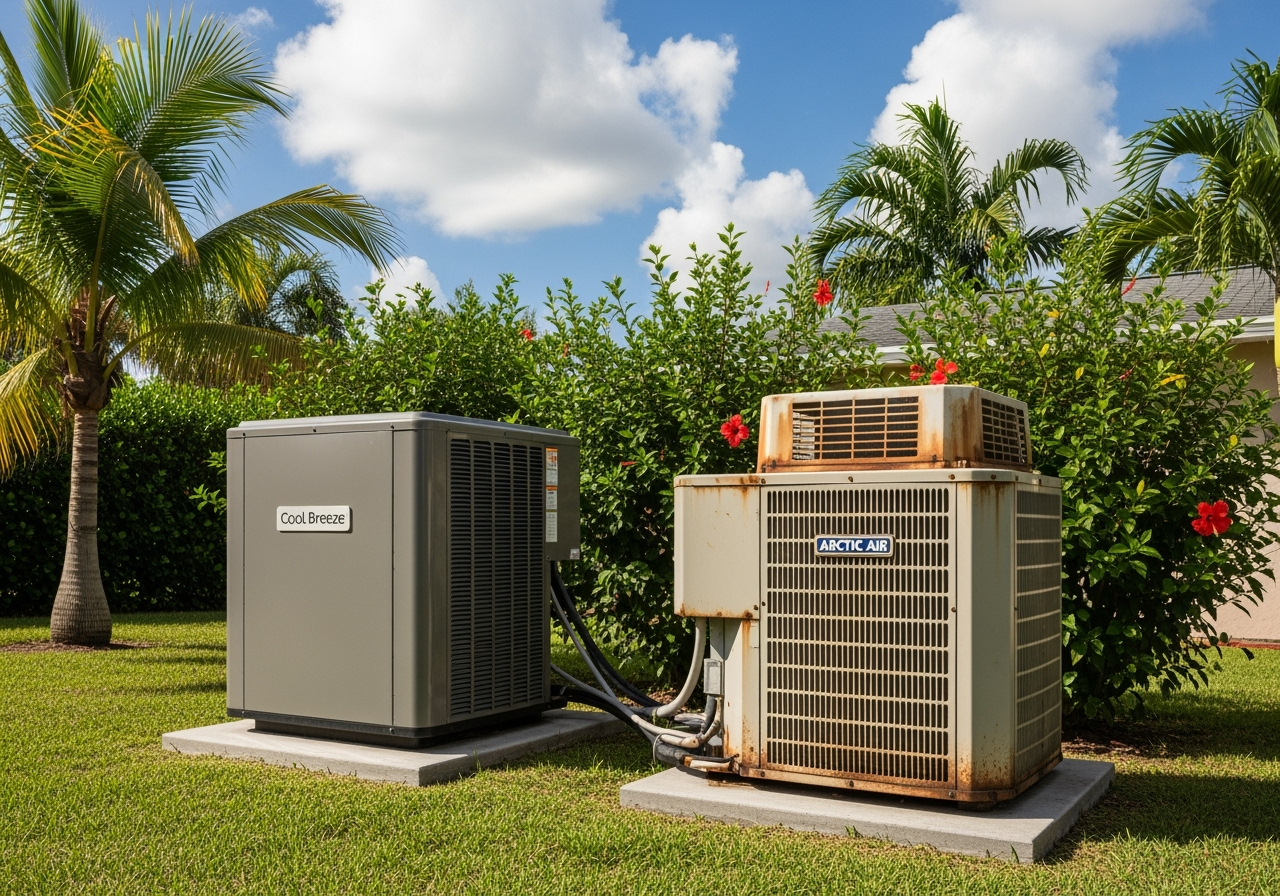
Several factors play into this crucial decision. The system age is paramount; an older unit nearing the end of its typical lifespan might not be worth significant investment. Repair frequency is another indicator – if your unit requires constant fixes, the cumulative cost can quickly outweigh the benefit. The repair cost itself, especially if it’s a major component, needs to be compared to the cost of a new unit. Finally, energy efficiency (measured by SEER ratings) is a critical consideration. Older units are far less efficient, meaning they cost more to operate every month.
Here’s a general comparison to help you weigh your options:
| Factor | Repair | Replacement |
|---|---|---|
| Initial Cost | Lower (for minor to moderate repairs) | Higher (significant upfront investment) |
| Efficiency | Remains the same (older, lower SEER) | Significantly improved (higher SEER ratings, lower energy bills) |
| Lifespan | Extends existing unit’s life, but overall lifespan remains limited | New unit, full lifespan (10-15 years in FL) |
| Reliability | May still be prone to other issues if unit is old | High reliability, fewer breakdowns in initial years |
| Warranty | Limited on repaired part, existing unit warranty may be expired | Full manufacturer and labor warranties |
| Comfort | Restores existing comfort level | Potentially improved comfort (better dehumidification, even cooling) |
| Long-term Value | Diminishing returns if frequent repairs are needed | Significant long-term savings on energy, increased home value |
When to Consider AC Replacement
While repairing an AC unit can be a cost-effective solution for minor issues, there are clear scenarios where replacement makes more financial and practical sense.
- Unit is over 10-15 years old: In Florida’s harsh climate, AC units typically last 10 to 15 years. If your unit is approaching or has exceeded this age, major repairs often signal the beginning of the end, and investing in a new system is usually a wiser long-term decision.
- Uses R-22 refrigerant: Older AC units often use R-22 (Freon), a refrigerant that has been phased out due to environmental concerns. Replenishing R-22 is becoming increasingly expensive and difficult, making repairs involving refrigerant leaks less viable.
- Repair costs exceed 50% of replacement cost: A common rule of thumb is the “50% rule.” If the cost of a single repair is more than half the cost of a new unit, it’s generally better to replace.
- Frequent breakdowns: If your AC unit is constantly breaking down, requiring multiple repairs each season, it’s a clear sign that the system is failing. The cumulative cost and inconvenience of these repairs will quickly surpass the investment in a new, reliable system.
- Poor energy efficiency: Older units have significantly lower SEER (Seasonal Energy Efficiency Ratio) ratings compared to modern systems. Replacing an old 8-10 SEER unit with a new 16-20 SEER model can lead to substantial monthly energy savings that quickly offset the replacement cost.
What to Look for in a New AC Installation
If you decide to replace your AC unit, the installation process is just as critical as the unit itself. A proper installation ensures optimal performance, efficiency, and longevity.
- Proper sizing: An AC unit that is too large will cycle on and off too frequently (short-cycling), leading to poor dehumidification and uneven cooling. One that is too small will run constantly and struggle to cool your home. A professional technician will perform a load calculation (Manual J) to determine the ideal size for your home.
- High SEER rating: Look for units with a high SEER (Seasonal Energy Efficiency Ratio) rating, which indicates greater energy efficiency. While units with higher SEER ratings may have a higher upfront cost, they will save you significant money on your energy bills over their lifespan.
- Professional installation: Ensure the installation is performed by certified and experienced technicians. Proper ductwork sealing, refrigerant charging, and electrical connections are paramount for efficiency and safety.
- Good warranty: A new AC unit should come with a comprehensive manufacturer’s warranty on parts and a labor warranty from the installer. Understand the terms and conditions of these warranties.
- For a deeper dive into ensuring your new system performs optimally, consider consulting a comprehensive guide to AC installation for optimal efficiency. This can provide valuable insights into the nuances of a successful setup.
Choosing a Trustworthy AC Service Provider in Lakeland
When your AC unit falters in the Lakeland heat, choosing the right service provider is paramount. You need a company that is not only skilled but also reliable and transparent. Here’s what to look for to ensure you’re making an informed decision.

First and foremost, verify licensing and insurance. Any reputable AC repair company in Florida must hold a valid HVAC contractor’s license (e.g., CAC, CMC). Insurance is equally vital, protecting both you and the technicians in case of accidents or damage during service. Don’t hesitate to ask for proof of both.
Check for positive reviews and a strong local reputation. Online platforms like Google, Yelp, and the Better Business Bureau offer valuable insights into a company’s customer service and quality of work. Look for consistent praise regarding professionalism, punctuality, and effective problem-solving.
Local experience is a significant advantage. A company familiar with Lakeland’s specific climate challenges – the intense heat, high humidity, and associated issues like mold and drain line clogs – will be better equipped to diagnose and fix problems efficiently.
Demand transparent pricing and written estimates. A trustworthy company will provide a clear breakdown of costs before any work begins, avoiding hidden fees or surprises. A written estimate protects you by outlining the scope of work and agreed-upon charges.
Finally, inquire about NATE-certification. NATE (North American Technician Excellence) certification is a rigorous industry standard that demonstrates a technician’s comprehensive knowledge and expertise in HVAC systems. Technicians with this certification are often more skilled and up-to-date on the latest technologies and best practices.
Key Questions to Ask a Potential AC Repair Company
Before committing to any AC repair service, asking the right questions can help you gauge their professionalism and suitability for your needs.
- Are you licensed and insured? This is non-negotiable. Request their license number and verify it with the state licensing board.
- Do you offer written estimates? A professional company will always provide a detailed, written estimate before starting any work. This protects you from unexpected costs.
- What warranties do you provide? Inquire about warranties on parts and labor for the repair. A good warranty offers peace of mind.
- Do you have experience with my AC brand? While most technicians can service various brands, asking this ensures they are familiar with your specific unit’s intricacies.
- Are your technicians certified? Specifically, ask if they are NATE-certified, as this indicates a higher level of training and expertise.
Frequently Asked Questions about AC Repair in Lakeland, FL
We understand that homeowners have many questions when it comes to maintaining their AC systems in a challenging climate like Lakeland’s. Here are answers to some of the most common inquiries.
What are the benefits of regular AC maintenance in Lakeland’s climate?
Regular AC maintenance is not just a recommendation; it’s a necessity in Lakeland. The benefits are substantial:
- Prevents breakdowns: Proactive maintenance identifies and addresses minor issues before they escalate into costly major breakdowns, especially during peak summer months.
- Improves efficiency: A well-maintained unit runs more efficiently, consuming less energy to cool your home. This translates directly into lower monthly energy bills.
- Lowers energy bills: By ensuring optimal performance, maintenance helps your system cool effectively without overworking, directly impacting your utility costs.
- Extends unit lifespan: Regular tune-ups reduce wear and tear on components, helping your AC unit last longer, delaying the need for an expensive replacement.
- Improves indoor air quality: Maintenance includes cleaning coils and checking filters, which helps prevent the buildup of mold, dust, and allergens, leading to cleaner, healthier air inside your home.
What is the typical lifespan of an AC unit in Florida?
Due to the high heat, humidity, and near-constant use, the average lifespan of an AC unit in Florida is typically 10 to 15 years, which is shorter than in milder climates. While some units might last longer with meticulous maintenance, the intense demands placed on them by the Florida weather mean they generally don’t reach the 20-year lifespans sometimes seen in cooler regions. Factors like consistent professional maintenance, proper sizing, and initial installation quality can influence how long your specific unit will last.
How can I choose a reputable company for AC repair Lakeland FL?
Choosing a reputable company for affordable AC repair in Lakeland, FL, is essential for peace of mind and effective service. As discussed, look for licensed and insured contractors with a strong local reputation. Check their online reviews on platforms like Google, Yelp, and the Better Business Bureau for consistent positive feedback. Ensure they offer transparent pricing with written estimates before any work begins. Finally, prioritize companies whose technicians are NATE-certified, as this indicates a high level of training and expertise. Don’t be afraid to ask for references or examples of their work.
Conclusion: Staying Cool and Comfortable in Lakeland
Living in Lakeland, FL, means embracing the sunshine, but it also means being prepared for the intense heat and humidity. Your air conditioning system is your first line of defense against discomfort, and ensuring its optimal performance is key to a comfortable home.
We’ve covered the critical signs that your AC needs professional attention, from weak airflow and strange noises to foul odors and inaccurate thermostats. We’ve also explored common AC ailments specific to Florida’s climate, such as the impact of humidity, clogged drain lines, and capacitor failures, along with their typical fixes. Understanding the financial considerations of repair versus replacement, and implementing energy-saving tips, can empower you to make informed decisions for your home and budget.
Proactive care and timely professional service are your best allies in maintaining a reliable and efficient AC system. Don’t wait for a complete breakdown in the middle of a scorching summer day. By addressing issues promptly and choosing a trustworthy AC repair company in Lakeland, FL, you can ensure your home remains a cool, comfortable sanctuary, no matter how high the temperatures climb outside.