Enhancing Senior Living Communities and Home Climate Control

We all know how a comfortable indoor environment can impact our day. For older adults, however, precise climate control is not just about comfort. It’s a critical factor for their health and safety.
As our population ages, we see unique changes in how seniors experience temperature and humidity. Older adults often have a reduced ability to regulate their own body temperature. This makes them especially vulnerable to extreme heat and cold. This applies whether they are in an assisted living facility or a vibrant 55+ community Staunton VA.
In this extensive guide, we will explore why precise climate control is so vital for senior living residents. We will delve into recommended temperature and humidity ranges. We will also cover the role of smart technology, indoor air quality, and strategies for ensuring HVAC resilience. Our goal is to show how facilities can create individualized comfort while balancing energy efficiency.
For older adults, maintaining a stable and comfortable indoor temperature is far more than a luxury—it’s a critical component of their health and safety. As we age, our bodies undergo physiological changes that significantly impair our ability to regulate internal body temperature. This includes a decreased metabolic rate, poorer circulation, and thinning skin, all of which make seniors highly susceptible to the adverse effects of temperature extremes.
Consider the stark reality: over 80% of the 12,000 annual heat-related deaths in the U.S. occur in individuals over the age of 60. This statistic underscores the profound vulnerability of older adults to high temperatures, which can lead to severe health consequences such as dehydration, heat exhaustion, and even life-threatening heatstroke. Conversely, prolonged exposure to cold can increase the risk of hypothermia and exacerbate respiratory issues.
Temperature fluctuations, even seemingly minor ones, can trigger significant health problems. Older adults can experience respiratory distress or cardiac strain when temperatures swing too widely. This highlights the necessity of maintaining a narrow, consistent comfort band. Experts recommend aiming for a temperature range of 72°F to 75°F in resident rooms year-round. This precise control helps to prevent rapid body temperature changes that can stress an aging system.
Achieving and maintaining this thermal comfort requires robust, reliable heating, ventilation, and air conditioning (HVAC) systems. Facilities often rely on specialized providers for their HVAC needs, ensuring that systems are not only efficient but also tailored to the unique demands of senior living environments. For example, a dedicated provider like Thompson’s senior living HVAC can offer the expertise and solutions necessary to keep these critical systems running optimally, safeguarding resident well-being. By prioritizing consistent thermal comfort, we protect our seniors from preventable health risks and contribute significantly to their overall quality of life.
Optimizing Indoor Air Quality and Humidity for Respiratory Wellness
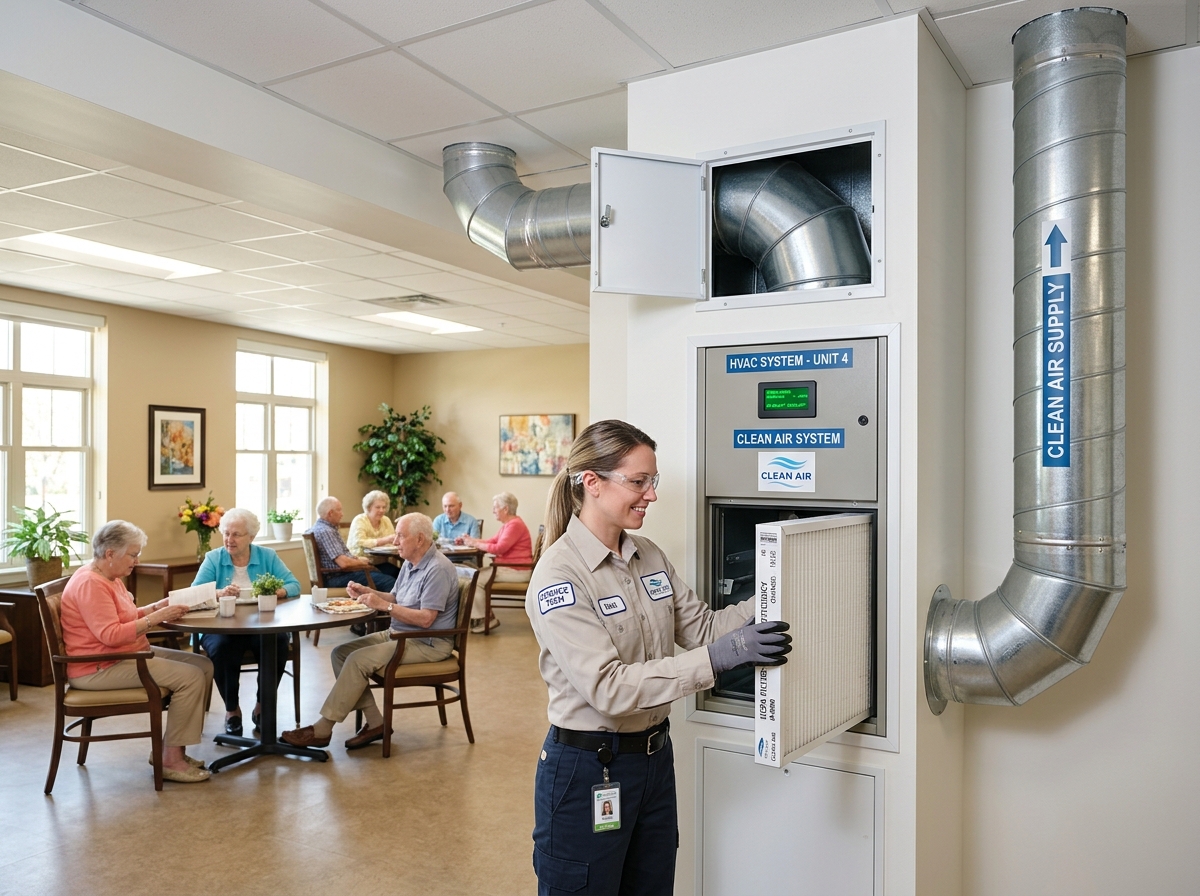
Beyond temperature, the quality of the air residents breathe plays an indispensable role in their health, particularly in preventing infections and supporting respiratory wellness. Indoor Air Quality (IAQ) is a mission-critical factor in senior living environments, where residents are often more susceptible to respiratory illnesses. Poor IAQ can exacerbate conditions like asthma and Chronic Obstructive Pulmonary Disease (COPD), making effective ventilation and filtration paramount.
Industry standards, such as ASHRAE 62.1, provide clear guidelines for ensuring adequate fresh air. For instance, in skilled-nursing wings, it’s recommended to provide 35 cubic feet per minute (cfm) of fresh air per resident, while common rooms require 15 cfm. This constant introduction of fresh air helps dilute airborne contaminants and odors, creating a healthier environment.
One highly effective technology for optimizing IAQ while managing energy consumption is the Energy Recovery Ventilator (ERV). These systems can precondition incoming fresh air by transferring heat and moisture from the exhaust air, significantly reducing the HVAC load. In fact, ERVs can shave HVAC loads by up to 60% during shoulder seasons, offering a dual benefit of improved air quality and substantial energy savings.
Here’s a simplified comparison of ventilation strategies:
Maintaining Ideal Humidity in Senior Living and Climate Control Systems
Humidity control is another vital,, aspect of IAQ. Maintaining the right relative humidity (RH) range is crucial for both health and comfort. Experts recommend holding relative humidity between 40% and 55% year-round in senior living facilities.
This specific range is not arbitrary; it’s scientifically linked to better health outcomes. Within this band, the survival rate of airborne viruses, including those responsible for the flu and common cold, is significantly reduced. Conversely, humidity levels outside this range can pose problems: too dry, and viruses thrive, while too damp, and mold begins to flourish. Mold growth can lead to allergic reactions, respiratory flare-ups, and skin irritation, all of which are particularly detrimental to older adults.
Moreover, consistent humidity helps prevent respiratory discomfort and supports overall skin health, reducing instances of dryness and irritation. To prevent stress on residents’ sensitive respiratory systems and joints, it’s advised that any shifts in humidity be small and steady—no more than five percent RH over a 24-hour period.
Advanced Filtration and Pressure Strategies
To further enhance IAQ and infection control, senior living facilities employ advanced filtration and air pressure strategies. Installing high-efficiency MERV-13 filters in main HVAC units is a best practice, as these filters are capable of capturing a wide range of airborne particles, including bacteria, viruses, and allergens. Regular filter changes and coil washing are essential maintenance tasks that must be logged and tracked to ensure optimal performance.
Beyond filtration, controlling air pressure within different zones can be a powerful tool for infection prevention. For example, positive pressure can be maintained in rehabilitation areas to prevent contaminated air from entering, while negative pressure in isolation suites helps contain infectious agents, preventing their spread to other parts of the facility.
Comprehensive IAQ management also involves continuous monitoring of key indicators like carbon dioxide (CO2) levels, humidity, and volatile organic compounds (VOCs). CO2 sensors can trigger demand-controlled ventilation, ensuring fresh air is supplied only when needed, optimizing energy use. Detecting VOCs helps identify and mitigate potential indoor pollutants from cleaning products, furnishings, or other sources. This multi-faceted approach to IAQ ensures that the air in senior living communities is as clean and healthy as possible, directly contributing to resident well-being.
Smart Technology and Individualized Comfort Strategies
In modern senior living, smart technology is revolutionizing how we approach climate control, moving beyond a one-size-fits-all model to offer individualized comfort while simultaneously driving energy efficiency. Zoning systems, for instance, allow different areas within a facility—from individual resident rooms to common areas and dining halls—to have their own tailored temperature and humidity settings. This flexibility is crucial because older adults have varying preferences and sensitivities, and what’s comfortable for one resident might not be for another.
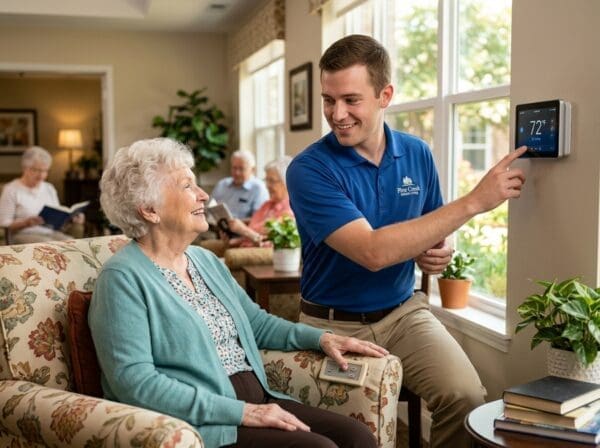
Smart thermostats, integrated with occupancy sensors and remote monitoring capabilities, are at the heart of this personalized approach. They can detect when a room is occupied or vacant, automatically adjusting settings to conserve energy without sacrificing comfort. Edge intelligence, a feature where data is processed directly at the device, enables real-time adjustments without constant reliance on external connectivity, ensuring immediate responses to changing conditions. This level of granular control means that residents can experience comfort tailored to their specific needs, enhancing their overall satisfaction and quality of life. For those seeking maintenance-free living with personalized comfort, a community that embraces such technologies, like a 55+ community Staunton VA, offers significant advantages.
Accessible Interfaces for Senior Living and Climate Control
One of the primary challenges older adults face in managing their indoor environment is the complexity of traditional controls. Physical decline, including reduced dexterity, impaired vision, and cognitive changes, can make small buttons, tiny screens, and convoluted menus on standard thermostats difficult or impossible to use.
Smart technology addresses these barriers head-on by offering accessible interfaces. Features like voice control allow residents to simply speak their desired temperature, eliminating the need for fine motor skills. High-contrast displays with large text and intuitive graphical interfaces make thermostats easier to read and understand. The goal is to restore a sense of environmental agency to residents, allowing them to manage their immediate surroundings with ease.
Furthermore, smart systems can be configured with user roles, giving residents limited control over their unit’s thermostat—perhaps within a safe, pre-defined range—while staff retain full oversight and the ability to intervene if necessary. This balance empowers residents while ensuring their safety and preventing extreme temperature settings. Automation, such as pre-programmed schedules that adjust based on daily routines, further simplifies climate management, reducing the need for constant manual adjustments.
Energy Efficiency and Cost Management
Beyond comfort, smart climate control systems offer significant advantages in energy efficiency and cost management, which is crucial for the operational sustainability of senior living facilities. HVAC systems typically account for a substantial portion—around 40%—of a building’s total energy usage. Optimizing this consumption can lead to considerable savings.
Demand-controlled ventilation, which uses CO2 sensors to modulate fresh air intake based on actual occupancy, prevents over-ventilation and reduces the energy needed to heat or cool incoming air. Smart sequences and automated scheduling can trim 5% to 8% from annual HVAC runtime by ensuring systems operate only when and where needed. For instance, thermostats can be programmed to lower settings when residents are typically out of their rooms for activities or meals, then return to comfortable levels before their return.
The financial benefits are tangible: smart HVAC energy management systems often have the lowest payback period among all energy management technologies, with some recouping their investment in as little as 12 months. This rapid return on investment makes them an attractive option for facilities looking to modernize their infrastructure. Additionally, energy-recovery ventilators (ERVs) can reduce HVAC loads by up to 60% during shoulder seasons by preconditioning incoming air, further contributing to energy savings. Facilities can also participate in demand response programs, earning credits by temporarily curbing energy consumption during peak grid demand, which not only saves money but also supports grid stability.
Ensuring HVAC Resilience and Infrastructure Reliability
The increasing frequency and intensity of extreme weather events, from severe heatwaves to powerful storms that cause prolonged power outages, pose a significant threat to senior living communities. Ensuring HVAC resilience and infrastructure reliability is no longer just a best practice—it’s a critical safety imperative. When the power goes out, essential systems like climate control, medical equipment, lighting, and security can fail, placing vulnerable residents at grave risk.
Natural gas generators offer a robust solution for maintaining continuous power during extended outages. Unlike other fuel sources that may be difficult to resupply during a widespread disaster, natural gas often remains available through underground pipelines. These generators can power entire facilities, ensuring that HVAC systems continue to operate, keeping residents safe from extreme temperatures. This is especially vital given that over 80% of annual heat-related deaths are among those over 60, and 41 million people in the U.S. live in urban heat islands where temperatures are elevated by at least 8°F. Uninterrupted climate control is a lifeline in such conditions.
Beyond generators, building design can contribute to resilience. Thermal mass materials, such as concrete slabs or masonry, can absorb and slowly release heat, providing a passive temperature regulation effect that can help maintain more stable indoor conditions even during short power outages. Incorporating such elements into new construction or major renovations enhances a facility’s ability to withstand environmental challenges and ensures residents’ safety and comfort during emergencies.
Multi-Domain Comfort Factors
While thermal comfort is paramount, a truly optimal senior living environment considers a broader spectrum of comfort factors: visual, acoustic, and air quality. This multi-domain approach creates a holistic sense of well-being.
Acoustic comfort is vital, as excessive noise can disrupt sleep, increase stress, and hinder communication. HVAC systems should be designed for quiet operation, with bedroom terminal units specified to produce no more than 35 dBA. This ensures a peaceful environment conducive to rest and recovery.
Visual comfort involves optimizing natural light and managing glare. Natural light is essential for regulating circadian rhythms, which impact sleep-wake cycles and overall mood. However, direct sunlight can cause uncomfortable heat gain and glare. View-preserving window coverings, such as roller blinds that block heat and UV rays while maintaining outdoor visibility, are ideal. These prevent residents from feeling isolated by constantly closed blinds and support their connection to the outside world. Passive shading strategies, like strategically placed overhangs or exterior shading screens, can further reduce solar heat gain without obstructing views.
Maintenance and Performance Optimization
Even the most advanced HVAC systems require diligent maintenance and continuous monitoring to perform optimally. Proactive strategies are key to preventing breakdowns, ensuring efficiency, and maintaining consistent comfort levels.
Cloud-based Building Management Systems (BMS) provide real-time data and remote diagnostic capabilities, allowing facility managers to monitor HVAC performance from anywhere. These systems can issue automated alerts via SMS or email for critical events, such as temperature or humidity drifts beyond acceptable thresholds (e.g., ±2°F or ±3% RH), communication loss, or filter change reminders. This allows for timely intervention before minor issues escalate into major problems.
Predictive maintenance, driven by sensor data, enables facilities to schedule service based on actual equipment usage and condition rather than fixed intervals. This approach can identify potential failures before they occur, reducing costly emergency repairs and minimizing disruption to residents. Regular tasks such as re-calibrating wall sensors every six months, installing MERV-13 filters, and diligently logging filter changes and coil washing schedules are fundamental to maintaining peak performance. Resident feedback mechanisms, such as satisfaction surveys or direct communication channels, also play a crucial role, providing invaluable insights that can help fine-tune climate control strategies and address individual comfort needs.
Frequently Asked Questions about Senior Climate Management
What are the recommended temperature and humidity ranges for older adults?
For optimal health and comfort, senior living facilities should aim to maintain resident rooms between 72°F and 75°F. Relative humidity should be kept within a narrow band of 40% to 55% year-round. These ranges are critical because older adults have a reduced ability to regulate their body temperature and are more susceptible to the health impacts of extreme heat, cold, or imbalanced humidity.
How do smart thermostats address the challenges of physical decline?
Smart thermostats are designed with accessibility in mind, offering features that overcome common challenges faced by older adults. These include voice control, large text displays, high-contrast screens, and intuitive interfaces that simplify operation. Many systems also allow for remote monitoring and adjustment by staff, or pre-programmed schedules, reducing the need for residents with mobility or cognitive issues to interact directly with the device. This empowers residents with a degree of control while ensuring their safety and comfort.
Why is HVAC resilience critical during extreme weather events?
HVAC resilience is paramount during extreme weather events because power outages and temperature extremes pose significant health risks to older adults. Without reliable climate control, seniors can quickly suffer from heatstroke, hypothermia, or respiratory distress. Resilient systems, often incorporating natural gas generators for continuous power and building designs with thermal mass for passive regulation, ensure that essential heating and cooling, medical equipment, and security systems remain operational, safeguarding residents’ well-being and preventing potential health crises.
Conclusion
The intersection of senior living and climate control is a complex yet critical area demanding our utmost attention. As we’ve explored, precise climate management is not merely about comfort; it’s a fundamental pillar of resident safety, health outcomes, and overall quality of life. From the physiological vulnerabilities of older adults to the increasing threat of extreme weather, the need for robust, intelligent, and adaptable climate control solutions has never been more urgent.
By embracing recommended temperature and humidity ranges, optimizing indoor air quality with advanced filtration and ventilation, and leveraging smart technologies for individualized comfort, facilities can create environments that truly nurture their residents. Furthermore, investing in HVAC resilience through reliable backup power and thoughtful building design ensures that these vital protections endure even in the face of unforeseen challenges.
A proactive approach to climate control, characterized by continuous monitoring, adaptive design, and diligent maintenance, is essential for future-proofing senior living communities. Our collective commitment to these strategies will ensure that older adults can live comfortably, safely, and with dignity, regardless of the external climate.