Enhancing Personal Well-Being Through Therapy, Self-Care, and Nature

In today’s world, where demands often feel endless, it’s easy to neglect our personal well-being. However, prioritizing self-care is not a luxury; it’s a fundamental necessity for navigating the complexities of modern life in April 2026.
We understand that true well-being encompasses more than just the absence of illness. It involves a holistic approach to nurturing our mental, physical, and emotional health. This comprehensive guide will explore the science and practical applications of self-care.
We will delve into the various dimensions of well-being, from the profound impact of nature on our minds to the crucial gut-brain connection. We will also highlight evidence-based strategies for incorporating self-care into daily routines and discuss when professional support, including authentic relationship counseling, can be a vital component of building lasting resilience. Our goal is to empower you with the knowledge and tools to enhance your well-being, fostering a healthier and more balanced life.

Our journey into personal well-being begins with a clear understanding of what self-care truly entails. The World Health Organization (WHO) defines self-care as the ability of individuals, families, and communities to promote health, prevent disease, maintain health, and cope with illness and disability, with or without the support of a health worker. This definition underscores that self-care is a proactive, empowering process, positioning us as active agents in our own health management.
It’s crucial to distinguish self-care from self-indulgence. While a luxurious spa day or a decadent dessert can offer temporary pleasure, genuine self-care is about consistent, intentional practices that nourish our physical, emotional, and psychological needs for long-term well-being. It’s the daily habits that build resilience and reduce our vulnerability to stress, rather than fleeting treats that provide only momentary relief. For those seeking practical, accessible methods to integrate into their daily lives, exploring various natural self-care solutions can provide a wealth of ideas.
In April 2026, the landscape of health and wellness continues to evolve, with a growing emphasis on holistic approaches and evidence-based interventions. The establishment of the Self-Care Observatory in 2024, for instance, highlights the global commitment to compiling and disseminating research on effective self-care practices. This shift recognizes self-care not just as a personal responsibility, but as a critical component of public health and universal health coverage.
Understanding the difference between reactive recovery and proactive self-care is fundamental to building sustainable well-being. Reactive recovery often involves short-term fixes, like relying on caffeine after a sleepless night or binge-watching TV to escape stress. Proactive self-care, on the other hand, is about establishing habits that prevent depletion and build long-term resilience.

Harvard Health emphasizes lifestyle medicine as a core component of self-care, focusing on habits that prevent disease and extend life. Research, including insights from the Nurses’ Health Study and the Health Professionals Follow-up Study, has demonstrated the profound impact of just five key lifestyle habits adopted from age 50 onward. These habits include:
- A healthy diet: Rich in fruits, vegetables, whole grains, and unsaturated fats, while being low in processed meats, sugary drinks, trans fats, and sodium.
- No smoking: Avoiding tobacco use entirely.
- Regular physical activity: The WHO recommends 150-300 minutes of moderate physical activity weekly for adults, along with strength training at least two days a week.
- Moderate alcohol intake: Defined as no more than one drink per day for women and two for men.
- Maintaining a healthy Body Mass Index (BMI): Keeping BMI between 18.5 and 24.9.
Practicing these habits consistently has been shown to extend life by more than a decade, with women living to an average of 93 (compared to 79 without these habits) and men to nearly 88 (compared to 75). Furthermore, adequate sleep is non-negotiable; adults typically require seven to nine hours of quality sleep per night for optimal health.
Impact on Chronic Disease and Longevity
The statistics paint a clear picture of the need for proactive self-care. According to the CDC, six out of every 10 Americans live with at least one chronic disease, and four in 10 have two or more conditions. These chronic conditions, such as heart disease, cancer, stroke, and diabetes, are largely preventable through lifestyle changes.
By embracing the evidence-based self-care practices mentioned above, we can significantly reduce our risk of developing these debilitating diseases. This commitment to self-care not only adds years to our lives but also dramatically improves the quality of those years, fostering greater vitality, mental clarity, and overall well-being. It’s about building a foundation of health that allows us to thrive, rather than merely survive.
The Eight Dimensions of Holistic Wellness

True personal well-being is multifaceted, extending beyond just physical health. The Substance Abuse and Mental Health Services Administration (SAMHSA) framework outlines eight interconnected dimensions of wellness, providing a comprehensive roadmap for a balanced and fulfilling life. These dimensions include emotional, environmental, financial, intellectual, occupational, physical, social, and spiritual well-being. Neglecting even one dimension can create imbalances that impact our overall health.
- Emotional Wellness: Involves understanding and managing feelings, coping with life’s challenges, and building positive relationships. It’s about emotional regulation and self-compassion.
- Intellectual Wellness: Encourages creative activities, learning new skills, and engaging in mentally stimulating pursuits, fostering intellectual growth.
- Occupational Wellness: Finding personal satisfaction and enrichment from one’s work, contributing to occupational balance and managing workplace stress.
- Financial Wellness: Managing financial resources to live within one’s means, make informed decisions, and feel secure about one’s financial future.
- Environmental Wellness: Fostering pleasant and stimulating environments that support well-being, including spending time in nature and maintaining a healthy living space.
Social Connection and Emotional Resilience
Among these dimensions, social connection plays a particularly vital role in emotional resilience. Strong social ties act as a powerful buffer against stress, activating neural pathways that help regulate our physiological response to challenging situations. Loneliness, conversely, has been shown to have detrimental effects on both mental and physical health, comparable to the risks of smoking or obesity.
Cultivating and maintaining meaningful relationships is a form of self-care. This can involve actively participating in community groups, spending quality time with loved ones, or seeking support when needed. Sometimes, navigating complex relationships or healing from past experiences requires specialized guidance. In such cases, seeking authentic relationship counseling can provide invaluable tools and strategies to foster healthier connections and enhance emotional well-being.
Practical Strategies for Personal Well-Being and Self-Care
Incorporating self-care into our daily lives doesn’t require grand gestures; often, it’s the micro-habits that make the biggest difference. These small, consistent actions accumulate over time to build significant resilience.
Here are some accessible daily practices you can start today:
- Gratitude journaling: Dedicate a few minutes each day to write down things you are grateful for, shifting your focus to positivity.
- Box breathing: A simple yet powerful technique to calm the nervous system. Inhale for four counts, hold for four, exhale for four, and hold for four. Repeat several times.
- Digital detox: Schedule regular breaks from screens. Even 30 minutes before bed can significantly improve sleep quality.
- Mindful micro-moments: Pause for 60 seconds of deep breathing and present-moment awareness throughout your day.
- Sensory grounding: Hold an ice cube for 30 seconds to activate the dive reflex, or inhale essential oils like lavender for immediate stress relief.
- Expressive arts: Spend 10 minutes doodling, coloring, or listening to music without judgment.
- Supportive self-talk: Ask yourself what advice you would give a friend in your situation, then apply it to yourself.
These practices, when integrated consistently, help reduce stress, enhance emotional well-being, and build a stronger foundation for overall health.
Integrating Nature and Mindfulness for Mental Health
The profound connection between humans and nature, often referred to as the biophilia hypothesis, suggests an innate human tendency to connect with natural systems. Spending time in natural environments offers a wealth of mental health benefits. Research indicates that nature exposure can significantly reduce cortisol levels, decrease rumination (repetitive negative thoughts), and even improve immune function. Whether it’s a walk in a forest, a few moments gazing at a park, or simply having plants in your living space, integrating nature into our lives is a powerful form of self-care that fosters present-focused awareness and a sense of calm.
Mindfulness, the practice of intentionally bringing one’s attention to the present moment without judgment, is a cornerstone of mental well-being. It helps us observe our thoughts and feelings without getting swept away by them, reducing anxiety and depression symptoms, improving emotional regulation, and preventing the cycle of rumination. Simple practices like mindful walking, eating, or even just focusing on your breath for a few minutes each day can cultivate a more peaceful and centered state of mind.
The Gut-Brain Axis and Physical Health
Our physical and mental health are intricately linked, a connection vividly illustrated by the gut-brain axis. The gut has its own “second brain,” the enteric nervous system, comprising over 100 million nerve cells. This complex network communicates directly with the brain, influencing mood, stress response, and cognitive function.
When we experience stress, our body activates the fight-or-flight response, releasing hormones like cortisol and adrenaline. This redirects blood flow away from the digestive system, leading to the familiar “nervous stomach” sensation—symptoms like nausea, indigestion, or butterflies. Chronic stress can disrupt the delicate balance of our gut microbiome, which in turn can impact neurotransmitter production and contribute to anxiety and depression. Therefore, a nutrient-rich diet, abundant in fruits, vegetables, whole grains, and fermented foods, is not only crucial for physical health but also directly supports mental well-being by nurturing a healthy gut.
Common Pitfalls in Personal Well-Being and Self-Care
While the benefits of self-care are clear, many individuals fall into common traps that hinder their progress. One significant pitfall is perfectionism. The idea that self-care must be elaborate, expensive, or perfectly executed can be paralyzing, leading people to abandon practices if they don’t meet an unrealistic ideal. Similarly, hustle culture often glorifies overachievement and constant productivity, making self-care feel like a luxury or a sign of weakness rather than a necessity.
Another crucial point is recognizing that self-care cannot fix structural barriers. While personal practices are empowering, they cannot fully address systemic issues like poverty, discrimination, or unsafe working conditions. It’s important to advocate for broader societal changes while simultaneously nurturing individual well-being.
To avoid these pitfalls, we must embrace the concept of low-maintenance well-being. This means prioritizing consistency over intensity and flexibility over rigidity. Self-care should be enjoyable and refueling, not another item on a stressful to-do list. Start small, be kind to yourself, and remember that progress, not perfection, is the goal.
Professional Support and Organizational Wellness
Despite our best efforts at self-care, there are times when professional support becomes essential. Mental health conditions are prevalent; in 2024, 23.4% of adults experienced mental illness. This statistic underscores the importance of accessible and comprehensive mental health resources. Organizations and employers have a crucial role to play in fostering a culture of wellness and providing support for their employees.
Employee Assistance Programs (EAPs), such as LifeMatters, offer invaluable resources, including free counseling sessions with master’s-level counselors. These programs are vital for burnout prevention, especially in high-stress professions like healthcare. Healthcare workers, for instance, often face compassion fatigue and secondary trauma, making self-care and professional support not just beneficial but critical for their sustained well-being and ability to provide care.
When to Seek Professional Intervention
Self-care is a powerful tool for maintaining mental health, but it is not a substitute for professional treatment when needed. We should consider seeking professional help if we experience severe symptoms that persist for two weeks or more, such as:
- Significant difficulty sleeping or changes in appetite.
- Persistent low mood, loss of interest in activities, or inability to complete daily tasks.
- Overwhelming anxiety, panic attacks, or irritability.
- Thoughts of self-harm or suicide (in which case, immediate help from resources like the 988 Suicide & Crisis Lifeline is crucial).
- Increased reliance on substances to cope.
A primary care provider can offer initial guidance and referrals to mental health professionals. Multidisciplinary care, involving psychiatrists, psychologists, and counselors, ensures a comprehensive approach to treatment, addressing both biological and psychological factors.
The Role of Therapy in Resilience Building
Therapy plays a transformative role in building resilience and managing mental health challenges. Approaches like Cognitive Behavioral Therapy (CBT) help individuals identify and change negative thought patterns and behaviors, while Exposure and Response Prevention (ERP) is highly effective for conditions like OCD, helping individuals confront fears without engaging in compulsive rituals.
Psychologist Dr. Guy Winch emphasizes the importance of “emotional hygiene,” suggesting that we should treat our psychological wounds with the same care we give physical injuries. Therapy provides a safe space to develop this emotional hygiene, fostering self-compassion and equipping us with coping mechanisms. Research from 2025 in Nature highlighted self-compassion as the most important factor across resilience networks in healthcare professionals, further underscoring its therapeutic value. Professional guidance helps us navigate complex emotions, develop healthier coping strategies, and ultimately build stronger, more resilient selves.
Adapting Wellness Strategies Across the Lifespan
Self-care is not a one-size-fits-all concept; it must adapt to our changing needs and circumstances throughout different life stages. What works for a young adult might not be suitable for a parent or an older adult.
- Young adults can focus on establishing foundational habits like regular exercise, stress management techniques, and healthy sleep patterns to prevent future chronic issues. This is a crucial period for habit formation.
- Parents often face unique challenges in balancing family, career, and personal needs. Self-care for parents might involve setting firm boundaries, delegating tasks, and finding small pockets of time for rejuvenation, such as a brief meditation during naptime or a walk after dinner.
- Older adults can prioritize activities that support cognitive health, maintain physical mobility (like the image of an older adult exercising), and foster social connections to combat loneliness. Balance training, gentle stretching, and engaging in mentally stimulating hobbies become increasingly important.
Self-Care for High-Stress Environments
For individuals in high-stress environments, such as healthcare, emergency services, or demanding corporate roles, self-care is not merely beneficial but critical for preventing burnout, compassion fatigue, and secondary trauma. The analogy of the airplane oxygen mask is particularly apt here: you must put on your own mask before assisting others. If your “vessel” is empty or cracked, you cannot effectively help anyone else.
Practical strategies for high-stress settings include:
- Creating a “no list”: Identifying activities or commitments that drain your energy and intentionally saying no to them. This might mean not checking emails after hours or declining non-essential meetings.
- Setting professional boundaries: Clearly defining work-life separation to protect personal time and energy.
- Mindful breaks: Incorporating short bursts of mindfulness or movement throughout the workday.
- Seeking peer support: Connecting with colleagues who understand the unique demands of your profession.
Building Sustainable Long-Term Routines
The key to lasting well-being lies in building sustainable, long-term self-care routines. This involves shifting towards an identity-based approach, where you see yourself as someone who inherently prioritizes well-being, rather than viewing self-care as an obligation.
Self-care creates a positive feedback loop: reduced stress leads to a better mood, increased energy, and greater motivation to continue healthy practices. This continuous cycle strengthens resilience networks over time. To help structure this, consider a systematic approach.
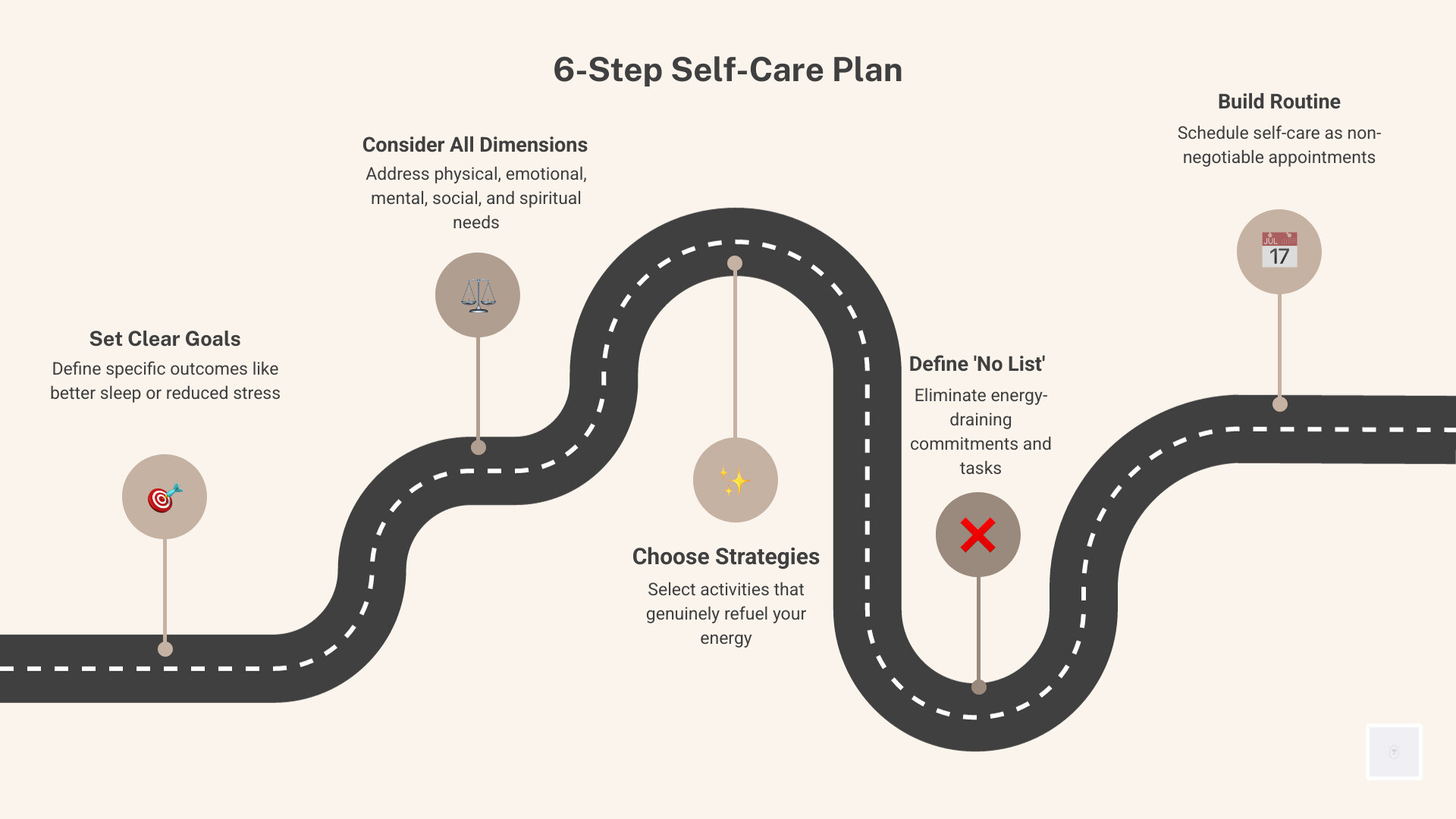
A practical 6-step self-care plan involves:
- Setting clear goals: What do you hope to achieve (e.g., better sleep, reduced stress)?
- Considering all wellness dimensions: Ensure your plan addresses physical, emotional, mental, social, and spiritual needs.
- Choosing specific strategies: Select activities that genuinely refuel you.
- Defining a “no list”: Identify and eliminate energy-draining commitments.
- Building a routine: Schedule your self-care activities and treat them as non-negotiable appointments.
- Encouraging others: Share your journey and inspire those around you.
Social support systems are integral to maintaining these routines. Friends, family, and even support groups can provide accountability and encouragement, making self-care a shared journey rather than a solitary effort.
Frequently Asked Questions about Personal Well-Being
What is the primary difference between self-care and self-indulgence?
Self-care is an intentional, consistent practice of nourishing your physical, emotional, and psychological needs for long-term well-being and resilience. It’s often about proactive maintenance. Self-indulgence, conversely, typically refers to temporary pleasures or treats that provide momentary gratification but don’t necessarily contribute to sustained health or growth. While enjoyable, indulgence lacks the intentional, consistent, and nourishing qualities of true self-care.
How long does it take to see the physical and mental benefits of a new self-care routine?
The timeline for experiencing benefits can vary. Mood improvements, such as reduced anxiety or increased calm, can often be felt within a single session of practices like meditation or exercise. More noticeable physical changes, like improved energy levels or better sleep quality, typically emerge within 2-4 weeks of consistent practice. Deeper, more profound changes in resilience and overall well-being, however, often take several months to develop as new habits become ingrained and positive feedback loops are established.
Can self-care practices replace professional mental health treatment?
No, self-care practices are a vital complement to professional mental health treatment, but they are generally not a replacement. Self-care is excellent for prevention, maintenance, and enhancing overall well-being. However, for diagnosed mental illnesses, severe symptoms, or chronic distress that significantly impairs daily functioning, professional intervention from therapists, counselors, or psychiatrists is essential. Self-care can support recovery and improve treatment outcomes, but it should be integrated alongside, not instead of, expert clinical guidance when needed.
Conclusion
As we navigate the complexities of April 2026, the concept of personal well-being has evolved beyond mere absence of illness to embrace a holistic, proactive approach. We’ve seen that self-care is not a selfish act but a fundamental necessity, empowering us to build resilience, prevent chronic diseases, and lead more fulfilling lives. From the evidence-based lifestyle habits championed by Harvard Health to the comprehensive eight dimensions of wellness, every facet of our lives contributes to our overall health.
Integrating nature and mindfulness, understanding the gut-brain axis, and avoiding common pitfalls like perfectionism are all crucial steps in this journey. Moreover, recognizing the vital role of professional support, whether through Employee Assistance Programs or specialized therapy, ensures that we have the resources to thrive even in high-stress environments. Adapting our wellness strategies across different life stages and building sustainable, identity-based routines are key to long-term success.
The future of wellness in 2026 is one where self-care is increasingly recognized as a public health imperative, supported by scientific research and integrated into daily life. By taking intentional action, embracing low-maintenance practices, and nurturing our physical, mental, and emotional selves, we empower ourselves to navigate life’s challenges with strength and grace. Your well-being is your most valuable asset—invest in it wisely, and watch as you transform into your most resilient and vibrant self.