Creative Activities That Spark Curiosity and Growth in Early Learners

Curiosity is the starting point for discovery, especially in early childhood. Children learn best when they explore through play, hands-on experiences, and creative engagement. Parents and educators who prioritize innovative activities plant seeds for future success—helping children build critical thinking, resilience, and emotional intelligence. Integrating a toddler school approach or home-based enrichment can transform everyday learning.
Fostering creativity isn’t just about giving children something fun to do; it’s about preparing them for a world that values flexibility and imagination. Through carefully chosen activities, families and teachers can help kids develop connections, ask questions, and find joy in learning. Practical experiences, combined with a nurturing environment, ensure that these early years are filled with wonder and discovery.
Sensory Bins for Exploration
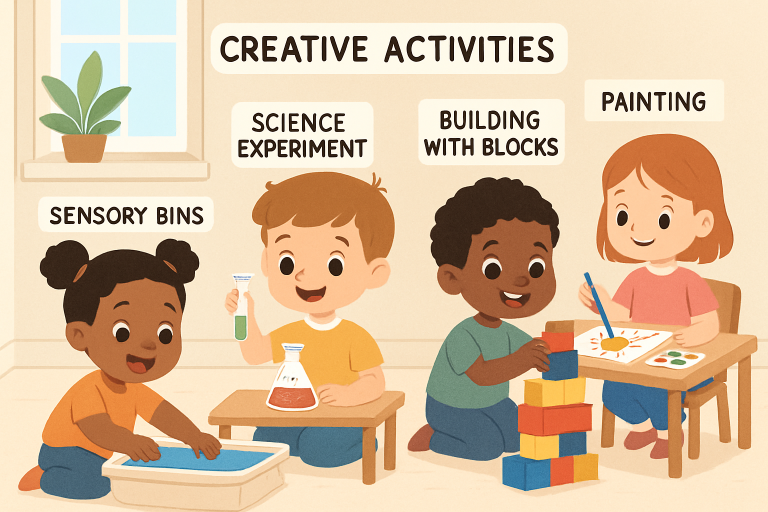
Using sensory bins is an effective way to nurture a child’s natural curiosity. By creating containers filled with safe, everyday items such as pasta, rice, textured fabric, or sand, children are invited to use their senses, touch, sight, and sometimes sound. Hiding small toys, nature objects, or even colored ice cubes inside the bins provides opportunities for children to dig, sift, and discover, promoting tactile learning and developing fine motor coordination. For parents looking to complement this kind of hands-on learning, exploring pre K programs near me can provide structured environments where children continue to develop sensory, social, and cognitive skills with guidance from experienced educators. These activities also help children build focus and patience as they explore at their own pace. Over time, the skills developed through sensory play can give them a strong foundation for future learning and classroom readiness.
Kitchen Science Experiments
The kitchen is a natural laboratory packed with learning experiences. Easy experiments—such as mixing baking soda and vinegar to watch bubbles erupt, or making “dancing” raisins—help children grasp basic scientific concepts. These hands-on projects introduce cause and effect, basic chemistry, and encourage children to form hypotheses (“What happens if I add more vinegar?”). Not only do kitchen science experiments ignite excitement about how things work, but they also foster a sense of accomplishment when children discover new outcomes, paving the way for future problem solvers.
Nature Scavenger Hunts
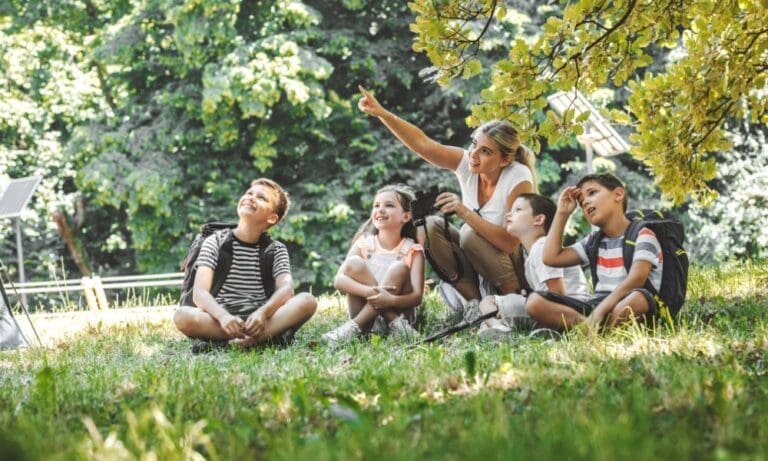
Organizing outdoor scavenger hunts in a backyard, park, or garden connects children with their environment while sharpening observation skills. Create lists of items to find or phenomena to observe—such as different leaf shapes, types of birds, or rock textures—to foster both curiosity and an appreciation for biodiversity. Discussing finds together encourages children to ask questions and make connections, laying the groundwork for understanding natural systems. This type of hands-on exploration also supports a lifelong respect for nature and sustainable living.
Building Block Challenges
Blocks and construction toys are timeless tools that develop spatial reasoning, creativity, and team-building skills. According to Forbes, large blocks designed for toddlers can enhance fine motor skills while providing a safe, engaging way for young children to explore building and construction. Challenge a child to build the tallest tower, replicate a household object, or create a bridge that can withstand small weights. These playful problem-solving tasks encourage trial-and-error, patience, and perseverance. Children often work collaboratively, negotiating roles and sharing ideas, which are important early social skills. Engaging with building blocks introduces engineering principles and the basics of design thinking.
Art and Craft Projects
Creative arts give children countless ways to explore and communicate ideas. From painting and drawing to making collages with recycled materials, art offers opportunities for self-expression while strengthening fine motor skills and hand-eye coordination. Offering open-ended craft activities—where there are no rules, just materials—inspires confidence and innovation. Fostering creativity through art in early childhood supports all areas of development, including problem-solving, literacy, and emotional regulation.
Music and Movement
Music and dance bring emotional and intellectual benefits to young learners. Singing familiar songs, exploring instruments, or following rhythmic dance routines build memory, pattern recognition, and gross motor skills. Group activities like “freeze dance” or circle games promote socialization, cooperation, and listening abilities, while exposure to new sounds introduces children to world cultures. Integrating music into daily life makes learning joyful and memorable.
Storytelling and Role-Playing
Storytelling, puppetry, and role-playing empower children to invent stories, act out favorite characters, and make sense of the world. These activities build vocabulary, narrative skills, and empathy by encouraging children to see life through someone else’s eyes. Story-based play helps children process emotions and experiences, and supports literacy and communication skills crucial for school readiness and beyond.
Simple Coding Activities
Introducing basic coding concepts through platforms designed for children—such as Scratch or simple unplugged coding games—lays the groundwork for computational thinking. Drag-and-drop coding tools enable early learners to design animations, create simple games, or animate stories, all while practicing planning and logical reasoning. These experiences encourage persistence and a growth mindset, preparing kids for a digital future where technology skills are essential.
Supporting early learners with thoughtfully chosen activities at home or in an educational setting is essential for raising curious, capable children. Regular exposure to creative, hands-on experiences fosters a love for exploration and a willingness to tackle new challenges, setting the stage for lifelong growth and achievement.