Comprehensive Approaches to Personal Health and Recovery

At its core, recovery is a process of change. It helps individuals improve their health and wellness. It lets them live self-directed lives. They strive to reach their full potential. The Substance Abuse and Mental Health Services Administration (SAMHSA) emphasizes this holistic wellness approach. It focuses on several key areas. Understanding these areas is vital for anyone on a recovery path.
This extensive guide will explore various aspects of health and recovery. We will look at professional support systems. We will examine innovative technologies. We will also discuss community-based resources. Our goal is to provide a comprehensive overview. It will cover the diverse pathways to sustained well-being. We believe that optimizing health and recovery is possible for everyone. We aim to shed light on how individuals, families, and communities can thrive.
Defining the Dimensions of Health and Recovery

Recovery, as defined by SAMHSA, is a transformative process. It allows individuals to enhance their health and wellness, lead self-directed lives, and work towards their fullest potential. This definition marks a significant shift in expectations, moving towards positive outcomes for those facing mental health and substance use conditions. It’s not merely about symptom management but about a holistic journey towards a meaningful existence.
SAMHSA outlines ten guiding principles that underpin this recovery approach: hope, person-driven, many pathways, holistic, peer support, relational, culture, address trauma, strengths/responsibility, and respect. These principles emphasize that recovery is deeply personal and unique to each individual. It involves person-centered care, where individuals are empowered to make choices about their own lives and recovery paths. Hope is a cornerstone, fostering belief in one’s capacity to overcome challenges. The approach also acknowledges the diverse routes to recovery, from clinical treatment to spiritual practices, and integrates all aspects of an individual’s life—mind, body, spirit, and community. We recognize that relational support, cultural sensitivity, and trauma-informed care are crucial components of effective recovery models, shaping the wellness trends we see in 2026.
The Role of Hope and Resilience
At the heart of any recovery journey lies hope and resilience. Individuals drawing on their lived experience often find empowerment in sharing their stories and navigating their paths with a strengths-based approach. This perspective focuses on an individual’s inherent capabilities and resources rather than solely on their deficits. Mental health recovery, in particular, highlights that recovery is not necessarily a cure, but rather the process of creating a meaningful and satisfying life, even with ongoing challenges. It’s about learning to live well, understanding one’s strengths and weaknesses, and building a life that feels authentic and fulfilling. For a deeper understanding of these foundational concepts, SAMHSA provides extensive resources on About Recovery.
Peer Support as a Pillar of Health and Recovery
Peer support is a powerful and increasingly recognized component in the health and recovery landscape. It operates on the principles of mutual empowerment, shared understanding, and respect. Individuals with lived experience, serving as peer support workers, can profoundly impact others’ recovery journeys. They foster engagement in treatment and recovery activities, and through their unique insights, help reduce the likelihood of relapse. This is because they can relate to challenges on a personal level, offering empathy and practical guidance that formal clinicians might not.
A prime example of the effectiveness of peer-led interventions is the Health and Recovery Peer (HARP) Program. This initiative focuses on improving medical self-management for individuals with serious mental illness. Studies have demonstrated significant outcomes: HARP program participants showed a 7.7% relative improvement in patient activation compared to a 5.7% decline in usual care, indicating a greater ability to manage their own health. Furthermore, the intervention group had significantly higher rates of one or more primary care visits (68.4% vs. 51.9%, p=0.046), suggesting better engagement with the healthcare system. The HARP intervention was also associated with an additional 40 minutes per week of moderate/vigorous exercise (191 vs. 151 minutes/week), showcasing its positive impact on physical activity. These results underscore how peer support can be instrumental in enhancing various recovery outcomes. SAMHSA further champions the role of peer support, offering valuable insights and resources on Recovery and Support – SAMHSA.
Specialized Support for Health Professionals and Families
Recovery is not just for the general public; specific programs exist to support unique populations, such as healthcare professionals and families. The Health Professional Recovery Program (HPRP) is a critical initiative designed for licensed health professionals. Established by the Michigan Legislature in 1993 as part of a disciplinary reform effort, HPRP offers confidential, non-disciplinary support for those struggling with substance use or mental health problems. Its unique angle is to help these professionals recover without facing immediate punitive actions, provided they comply with treatment and monitoring. This program recognizes the immense pressure and unique challenges faced by healthcare providers, offering a pathway to healing that protects both the professional and public safety.
Another vital organization, the Institute for Health and Recovery (IHR), specializes in assisting families, particularly pregnant and parenting individuals, navigating substance use and mental health challenges. With over 35 years of dedicated service, IHR helps more than 3,000 families each year to foster resilience and support recovery. Their services are rooted in compassion and lived expertise, emphasizing family-centered, trauma-informed care. The Women and Family Referral Center at IHR is a key resource, connecting pregnant and parenting individuals with essential treatment and recovery supports. IHR’s comprehensive approach addresses intersecting challenges such as trauma, homelessness, mental illness, and involvement with child welfare and justice systems, highlighting the complex needs of the populations they serve. You can learn more about their family-centered approach at the Institute for Health and Recovery.
Overcoming Barriers to Health and Recovery
Despite the availability of specialized programs, significant barriers can impede the recovery journey for both health professionals and individuals with serious mental illness. For health professionals, the fear of stigma and potential repercussions on their professional licenses can be a major deterrent to seeking help. HPRP directly addresses this by offering a confidential and non-disciplinary pathway, removing a critical barrier. For individuals with serious mental illness, barriers often include societal stigma, lack of access to comprehensive care, and systemic issues like homelessness and trauma.
Programs like IHR tackle these systemic issues head-on, providing not just clinical treatment but also support for housing instability and navigating complex social systems. The emphasis on trauma-informed care across many programs acknowledges that past experiences significantly impact an individual’s ability to engage in and sustain recovery. Addressing these barriers requires a holistic approach that considers social equality and systemic change, as explored in discussions around Recovery in Canada: Toward social equality – PMC, which highlights the importance of broader societal support for recovery.
Clinical Excellence in Recovery Medicine
Clinical excellence is paramount in the treatment of substance use disorders, particularly when addressing complex conditions like opioid and alcohol dependence. Trinity Health Medical Group, Recovery Medicine, exemplifies this commitment by providing specialized outpatient care. Their approach involves assessments by board-certified addiction specialists who are certified to prescribe medication-assisted therapies (MAT) when clinically indicated. MAT, which combines medication with counseling and behavioral therapies, has proven highly effective in supporting long-term recovery from opioid and alcohol dependence.
Trinity Health’s comprehensive assessment covers a wide range of substances, from alcohol and cannabis to designer drugs and kratom, ensuring a thorough understanding of each patient’s needs. They work closely with primary care providers and specialists to create patient-centered treatment plans, integrating care across various health domains. This collaborative model ensures that individuals receive not only targeted addiction treatment but also coordinated care for their overall health. For those seeking dedicated support for substance use challenges, understanding the options available for Addiction Health and Recovery is a crucial step toward wellness.
Technological Innovations in Chronic Care and Rehabilitation
The landscape of health and recovery is continually evolving, with technological innovations playing an increasingly vital role. Remote Patient Monitoring (RPM) and Chronic Care Management (CCM) solutions, such as those provided by Health Recovery Solutions (HRS), are transforming how care is delivered, particularly for chronic conditions and post-acute recovery. These platforms allow healthcare providers to continuously monitor patients’ vital signs, symptoms, and medication adherence from a distance, facilitating proactive interventions and personalized care.
The benefits of RPM are substantial and evidence-backed. Pilot studies and annual reports consistently demonstrate its effectiveness:
- A remarkable 75% reduction in 30-day readmission for high-risk patients has been observed with RPM.
- For patients with Congestive Heart Failure (CHF), there has been a 71% decrease in hospital readmissions.
- Similarly, heart failure patients experienced a 53% decrease in 30-day readmission rates.
- Beyond clinical outcomes, RPM also delivers significant economic advantages, with reports of 96% patient satisfaction and $2.3 million in savings within 12 months for healthcare organizations.
These systems leverage predictive analytics to identify at-risk patients, allowing clinicians to intervene before a crisis occurs. They also streamline workflows, integrate with Electronic Health Records (EHR), and enhance patient engagement through tailored educational content and real-time communication tools. This blend of technology and personalized care is proving to be a game-changer in fostering sustained recovery and reducing the burden on traditional healthcare systems.
Cardiac Rehabilitation and Physical Healing
For individuals recovering from events like a heart attack, comprehensive cardiac rehabilitation is indispensable. This medically supervised program is designed to improve cardiovascular health, reduce the risk of future cardiac events, and enhance overall quality of life. Typically, a standard cardiac rehabilitation program involves 36 supervised sessions over 12 weeks, often covered by Medicare and most insurance plans, making it accessible to many.
The program integrates several key components: exercise training tailored to individual needs, education on heart-healthy living (including adopting a Mediterranean diet rich in plant-based foods and healthy fats), and counseling to manage stress and anxiety. Lifestyle changes are paramount, encompassing smoking cessation, weight management, regular physical activity, and strict adherence to prescribed medications like ACE inhibitors, beta-blockers, and statins. These combined efforts are crucial for preventing another heart attack and ensuring a robust recovery. For more detailed guidance on post-heart attack recovery, resources from the National Heart, Lung, and Blood Institute provide valuable information on Heart Attack – Recovery | NHLBI, NIH, while the NHS offers practical advice on Recovering from a heart attack – NHS.
Medical Self-Management Outcomes
The ability of individuals to effectively manage their own health conditions is a cornerstone of long-term recovery, particularly for those with chronic illnesses or serious mental health conditions. The HARP program, mentioned earlier for its peer-led interventions, has shown significant success in this area. Beyond improving patient activation and primary care visits, the HARP intervention demonstrated a tangible impact on physical health behaviors. Participants in the HARP program engaged in an additional 40 minutes per week of moderate/vigorous exercise (191 vs. 151 minutes/week) compared to those receiving usual care. This increase in physical activity is a crucial aspect of medical self-management, contributing to overall well-being and reducing the risk of comorbidities.
Such outcomes highlight the power of structured programs, especially those incorporating peer support, in empowering individuals to take greater control over their health. The comprehensive nature of rehabilitation, whether physical or mental, often involves a multidisciplinary team including specialist doctors, physiotherapists, and occupational therapists, all working to help individuals regain strength, relearn skills, and adapt to new ways of living. Understanding the full scope of rehabilitation services can be beneficial, as outlined by Healthdirect Free Australian health advice you can count on..
Navigating Resources for Long-Term Wellness
Navigating the complex landscape of health and recovery resources can be challenging, but numerous government-backed initiatives and online platforms aim to simplify this process. For individuals seeking treatment for substance use or mental health conditions, SAMHSA provides a centralized hub of information and support. FindTreatment.gov is an invaluable online tool that allows users to locate licensed treatment facilities across the United States. This resource is essential for connecting individuals with the appropriate level of care, whether it’s inpatient, outpatient, or medication-assisted treatment.
In times of crisis, immediate help is available through the 988 Suicide & Crisis Lifeline, offering 24/7 confidential support for individuals in distress. SAMHSA also operates a National Helpline, providing information and referrals to treatment services. Furthermore, understanding how to finance treatment is crucial, and resources detailing state-specific Medicaid or Children’s Health Insurance Program (CHIP) benefits can guide individuals to affordable care options. These platforms and helplines are vital for ensuring that everyone has access to the support they need for long-term wellness and recovery. For more information on finding treatment and support, visit FindTreatment.gov: Home or explore general mental health recovery resources at Recovery and mental health | healthdirect.
Frequently Asked Questions about Health and Recovery
What is the Health Professional Recovery Program (HPRP) and who is it for?
The Health Professional Recovery Program (HPRP) is a confidential, non-disciplinary program established in Michigan in 1993. It is specifically designed for licensed health professionals, including doctors, nurses, and other practitioners, who are struggling with substance use disorders or mental health conditions. The program’s aim is to help these professionals recover and return to practice safely, without facing standard disciplinary actions, provided they comply with their individualized treatment and monitoring plans.
How does Remote Patient Monitoring (RPM) support recovery?
Remote Patient Monitoring (RPM) significantly supports recovery by allowing healthcare providers to collect vital health data from patients remotely. This continuous oversight enables early detection of potential issues, proactive intervention, and personalized care adjustments. For instance, RPM has demonstrated a 75% reduction in 30-day readmissions for high-risk patients and a 71% decrease in hospital readmissions for CHF patients. Beyond these clinical benefits, RPM also leads to substantial cost savings for health systems, with one reported example showing $2.3 million in savings over 12 months alongside 96% patient satisfaction. It enhances patient engagement and empowers individuals to take a more active role in their own recovery process.
What are the four dimensions of recovery defined by SAMHSA?
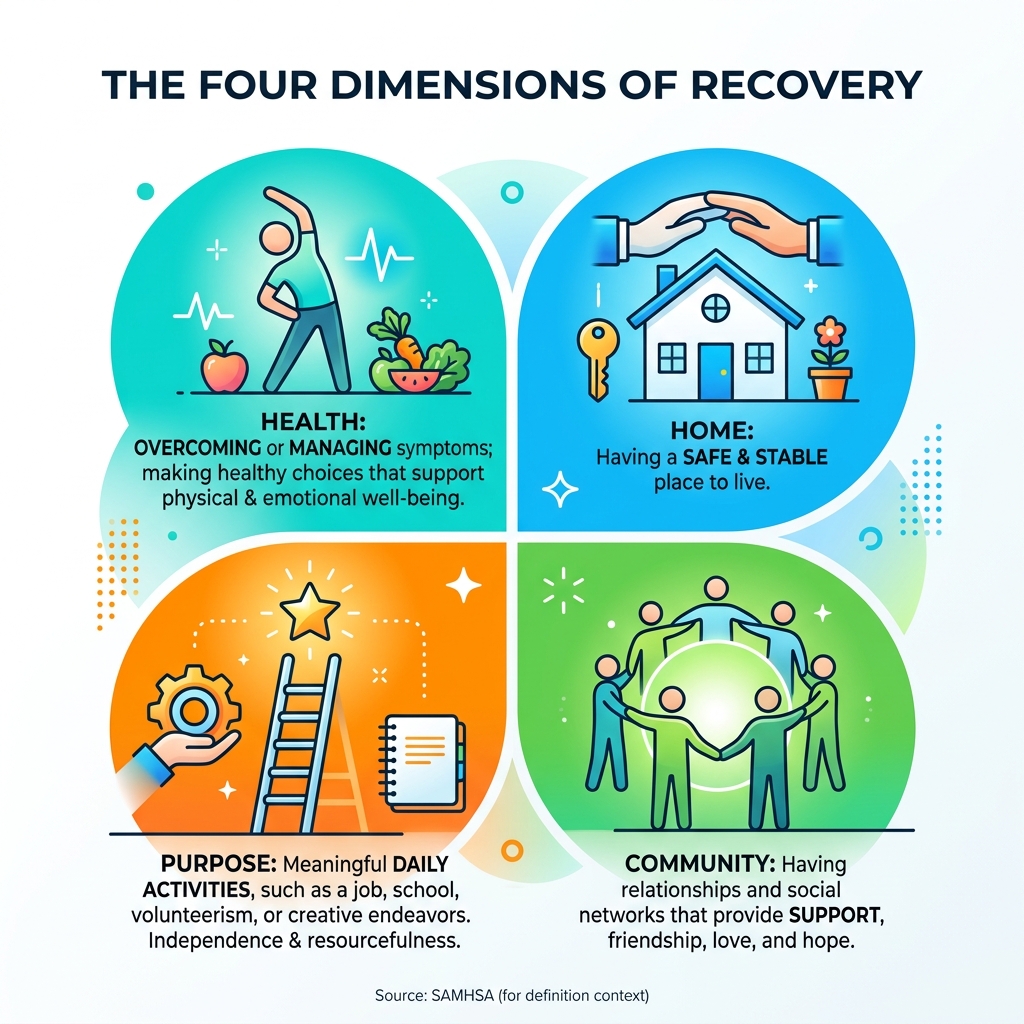
SAMHSA identifies four major dimensions that are fundamental to supporting a life in recovery:
- Health: This involves making informed, healthy choices that support physical and emotional well-being, and managing health conditions effectively.
- Home: Having a stable and safe place to live is crucial for a secure foundation in recovery.
- Purpose: Engaging in meaningful daily activities, such as work, school, volunteering, family caretaking, or creative endeavors, and possessing the independence, income, and resources to participate in society.
- Community: Having relationships and social networks that provide support, friendship, love, and hope, fostering a sense of belonging and reducing isolation.
Conclusion
As we look to April 2026 and beyond, the journey of health and recovery continues to evolve, shaped by a deeper understanding of human resilience, innovative technologies, and compassionate support systems. The insights gleaned from programs like HPRP, IHR, and the advancements in RPM underscore a collective commitment to fostering holistic well-being. From the crucial role of peer support in medical self-management to the clinical excellence in addressing substance use disorders, we see a multifaceted approach to empowering individuals and families.
The goal remains the same: to ensure that every individual has the opportunity to achieve long-term success in their recovery, living a self-directed and fulfilling life. This requires integrated care that addresses physical, mental, and social needs, supported by robust community-based resources and a continuous drive for innovation. The emphasis on hope, person-centered care, and addressing systemic barriers will continue to define our recovery outlook. For broader perspectives on recovery and its societal implications, resources such as those from the Recovery – Mental Health Commission of Canada offer valuable insights into global efforts towards inclusive and supportive recovery environments.