Bullet Dome or Turret Which Security Camera Shape Works Where
Camera shape is not decorative. Two units can share similar resolution and night vision, then diverge once one sits under an eave and the other on a garage wall. The housing sets lens aim, how obvious the camera looks as a deterrent, bump and tamper risk, and whether you need a ladder to tweak aim. The first question is rarely 2K versus 4K; it is which surface the camera sits on and which line of sight it needs to keep every day.
Whether you mount on a driveway corner, a porch soffit, or a hallway ceiling, you need a different body before you compare sensors; rain, glare, and cable routing all work against the wrong housing. This guide walks through bullet, dome, turret, and PTZ shapes by placement, so you pick a housing that fits the wall before you chase the next sensor upgrade.
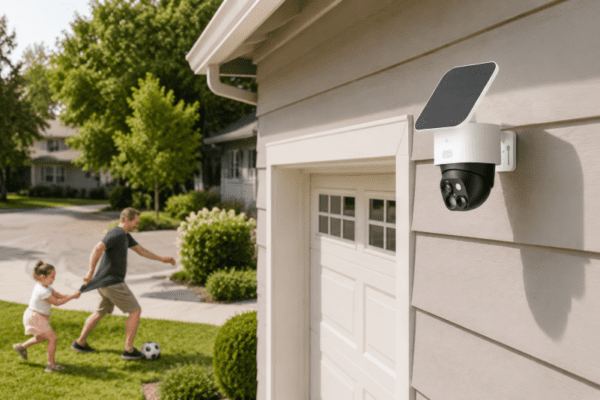
Table of Contents
• Start with the location before the camera specs
• Bullet cameras for driveways and fence lines
• Dome cameras for ceilings and exposed indoor corners
• Turret cameras for mixed indoor and outdoor coverage
• PTZ cameras and when movement matters
• Match the camera shape to the mounting spot
• Conclusion
Start with the location before the camera specs
The shape decision usually starts at the mounting surface. A camera under a porch ceiling has less room to protrude. One on a garage wall can point more openly down a driveway. A camera in a hallway, shop, or apartment lobby may need to watch the space without making every visitor feel stared down.
People read meaning into the shape, too. A bullet camera looks directional from a distance. A dome camera makes the lens angle harder to guess. A turret camera sits somewhere between those two impressions, visible enough to look like a real camera but not as long or protruding as a bullet body.
Specs still matter, of course. Field of view, resolution, night vision, power type, and weather rating can change the final choice. They are easier to judge once the camera body is no longer fighting the place where it has to live.
Bullet cameras for driveways and fence lines
The bullet vs dome security camera question usually starts with visibility. Bullet cameras are easy to recognize because the body points toward the scene they record. That visible aim can be helpful in a driveway, gate, side yard, or loading area where deterrence matters as much as footage.
Straight-line coverage is where the shape feels natural. Put one on a garage wall, and it can watch the approach toward the door. Mount one along a fence, and it can cover a narrow side path without pretending to see the whole yard. The longer body may also leave room for larger lens assemblies or more obvious weather housing, though that depends on the model rather than the shape alone.
The weak point is exposure. A bullet camera sticks out farther from the surface, so it is easier to see and, in a bad location, easier to bump or twist. That does not make it the wrong choice. It means the install has to do some work. Height, cable protection, and the angle of the bracket matter more than they would on a tucked-away ceiling camera.
A bullet camera mounted too low on an exterior wall can send the right message, but it also invites contact. Direction is its strength. Discretion is not.
Dome cameras for ceilings and exposed indoor corners
Dome cameras are the shape many people have seen in offices, retail spaces, apartment corridors, and elevators without thinking much about them. The rounded housing sits close to the ceiling or wall, and the lens often sits behind a clear or tinted cover. From the floor, the exact direction can be hard to read.
That matters in places where people pass close to the camera. The rounded housing gives fewer edges to grab, which is one reason dome designs show up in entry vestibules, cash desk areas, elevators, and public indoor corners. They can feel less pointed than a bullet camera while still making the space visibly monitored.
The cover is also where dome cameras can get fussy. Dust, scratches, reflected light, or moisture on the housing can soften the image. Outdoors, a dome that was fine in shade may struggle when low sun hits the cover at the wrong angle. Lens adjustment can be slower too, since some models require opening the housing instead of simply moving an exposed lens body.
Dome cameras make the most sense when appearance, indoor coverage, and tamper resistance matter more than quick repositioning. They are not the easiest shape to live with if frequent angle changes are part of the plan.
Turret cameras for mixed indoor and outdoor coverage
Turret cameras, sometimes called eyeball cameras, solve a small but common annoyance: aiming the lens without dealing with a dome cover. The lens sits in a ball-like body inside a base, so it can be adjusted more directly than many dome designs. At the same time, it does not project as far from the wall or ceiling as most bullet cameras.
That middle ground is useful in messy, real-world installations. Under a porch eave, on a garage soffit, near a side door, or inside a covered commercial entry, a turret camera can cover a broad area without looking as long as a bullet camera. The exposed lens also avoids some glare problems caused by dome covers.
The shape by itself does not make a camera outdoor-ready. The weather rating still decides that. Check the actual IP rating, mounting guidance, and cable path before assuming a turret belongs under open sky.
Turret cameras are often the safer middle choice when the location is not quite indoor, not quite exposed, and not suited to a long camera body. That middle ground is the point.
PTZ cameras and when movement matters
PTZ cameras add pan, tilt, and zoom movement, which sounds like the answer to every blind spot until the camera is actually in use. Movement helps when the job is to follow activity across a wider area, check a gate and then a parking space, or zoom into a subject after motion begins.
The catch is simple. A moving camera is still looking somewhere. Unless the model has separate fixed and moving lenses, it may be zoomed toward the driveway while the porch is quiet on screen, or it may track one person while activity at the edge of the yard goes soft or disappears.
For homes and small properties, PTZ usually works better as a supplement than as the whole plan. Fixed bullet, dome, or turret cameras hold views that cannot be missed. PTZ is for follow-up details.
Match the camera shape to the mounting spot
The fastest way to choose between security camera styles is to map the camera shape to the surface and the behavior you expect there. The table below is not a rulebook, but it keeps the first decision from turning into a spec hunt.
| Mounting spot | Shape that usually fits | Why it fits |
| Driveway wall or side fence | Bullet | Clear direction and visible deterrence |
| Indoor ceiling or retail corner | Dome | Compact look and harder-to-read lens direction |
| Porch eave or garage soffit | Turret | Easy aiming with a cleaner profile |
| Wide yard or parking area | PTZ or hybrid | Movement and zoom help after motion starts |
| Low reachable wall | Dome or protected turret | Less easy to grab than a long bullet body |
The matrix is only a starting point. Power, network path, local storage, light level, and weather exposure can still change the answer. A great camera shape in the wrong mounting condition still produces a weak installation, especially when the cable has to bend awkwardly, or the lens faces direct glare every afternoon.
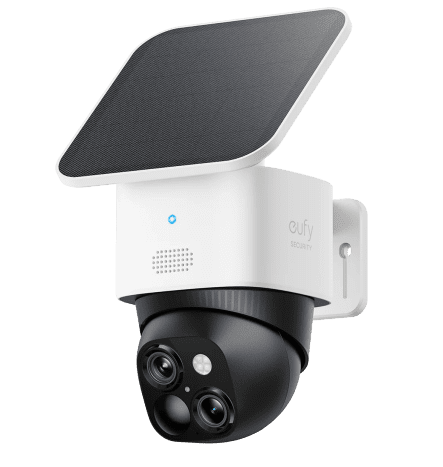
If the table points you to the “wide yard or parking area” row, the eufy SoloCam S340 is a practical pan-and-tilt option: a wire-free dual-camera setup—a 3K wide view plus a 2K telephoto stack with up to 8× hybrid zoom so you can keep the yard in frame and still punch in on plates or faces—plus pan-and-tilt motion instead of a single fixed cone of view. A removable solar panel ships in the box, so outdoor installs can rely on daylight rather than constant indoor charging. Treat it as a supplement to fixed bullet, dome, or turret cameras that cover the sightlines you cannot afford to lose. Confirm mounting height, sun exposure, and the exact bundle on the product page before you buy.
Conclusion
Understanding camera shape makes the spec sheet easier to read. Bullet, dome, turret, and PTZ are some of the most common security camera shapes people compare before buying, but the names only help when they are tied to a real mounting spot. Bullet cameras suit direction and visible deterrence. Dome cameras fit ceilings, public indoor corners, and areas where the lens direction should be less obvious. Turret cameras handle many eave, soffit, and mixed indoor-outdoor placements without the long profile of a bullet body. PTZ adds movement, but it should not replace constant fixed coverage where that view matters.Before comparing resolution, AI detection, or night vision, decide where the camera will sit and what you need the housing to do there. If the first location is wrong, better specs only help so much. If you are still building the shortlist, the eufy security camera collection can help you compare camera bodies, outdoor ratings, power options, and coverage styles in one place.