Achieving Natural Results in Plastic and Reconstructive Surgery

Achieving ideal facial balance can significantly boost self-confidence. For many, a chin implant offers a permanent solution to enhance their profile. However, a common first question is often: “How much does it cost?”
Understanding the financial side of chin implant surgery is crucial. It helps you plan wisely and make the best choices for your aesthetic goals. This comprehensive guide is designed to clarify the various elements that contribute to the overall price.
We will delve into average costs and the many factors that influence them. These include surgeon’s fees, facility costs, and the type of implant chosen. We will also examine how these Plastic and reconstructive chin implant expenses compare to temporary solutions.
Our aim is to provide you with all the information needed to navigate your chin augmentation journey with confidence.
The field of plastic and reconstructive surgery has undergone remarkable transformations, moving beyond mere aesthetic enhancement to focus on holistic facial balance and structural integrity. Modern techniques prioritize subtle, natural-looking results, often employing minimally invasive approaches to achieve significant improvements with less downtime. The goal is no longer to drastically alter appearance but to refine and harmonize existing features, ensuring that any changes complement the individual’s unique facial anatomy.
This evolution is driven by advancements in surgical tools, materials, and a deeper understanding of facial aesthetics. Surgeons today utilize sophisticated imaging and planning tools to meticulously design procedures, ensuring precision and predictable outcomes. Patient safety remains paramount, with accredited facilities and highly trained medical teams overseeing every step of the surgical journey. The emphasis on natural contours means that a successful procedure often goes unnoticed, simply enhancing the patient’s inherent beauty.

Defining Success in Modern Procedures
In modern plastic and reconstructive surgery, success is measured not just by the technical execution of a procedure, but by the achievement of natural contours and subtle enhancement that integrate seamlessly with the patient’s overall appearance. This requires a surgeon with a keen artistic eye, extensive experience, and board-certified expertise. They must understand the intricate relationship between different facial features, ensuring that an enhancement in one area, such as the chin, contributes positively to the entire facial structure.
Patient safety is at the core of this definition. This includes rigorous pre-operative assessments, adherence to strict surgical protocols, and comprehensive post-operative care. A successful outcome also means minimizing complications and ensuring a smooth recovery. The true measure of success lies in the patient’s satisfaction with results that feel authentic and enhance their self-perception, rather than creating an artificial or “operated” look.
Psychological Benefits of Aesthetic Alignment
The impact of aesthetic alignment extends far beyond physical appearance, deeply influencing a patient’s psychological well-being. Individuals who feel their facial features are out of harmony, such as those with a weak or recessed chin, often experience diminished self-confidence. Correcting these perceived imbalances through procedures like chin augmentation can lead to a significant boost in self-esteem and an improved quality of life.
Patients frequently report feeling more comfortable and confident in social and professional settings, as their external appearance now better reflects their internal self-image. This newfound confidence can translate into enhanced personal wellness and a more positive outlook on life. The subtle yet impactful changes achieved through careful aesthetic alignment can empower individuals, allowing them to engage with the world more fully and without self-consciousness.
Structural Enhancement Through Chin Augmentation
Chin augmentation, medically known as mentoplasty, is a highly effective procedure for improving facial harmony and defining the jawline. It addresses concerns such as a receding or underdeveloped chin, which can make the nose appear larger or create an unbalanced profile. By enhancing the chin’s projection, we can achieve a more proportionate and aesthetically pleasing facial structure. This procedure is often a cornerstone of micro-genioplasty, focusing on precise, subtle adjustments to create a balanced profile.
The goal is to bring the chin into better alignment with other facial features, such as the nose and forehead, contributing to overall facial balance. This can also help to sharpen the jawline and reduce the appearance of jowls, leading to a more youthful and defined lower face. The choice of technique and implant is highly personalized, tailored to each patient’s unique anatomy and aesthetic goals.
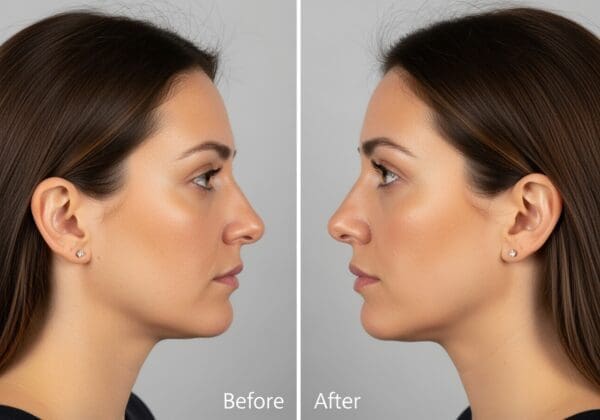
Comparing Implants and Sliding Genioplasty
When considering chin augmentation, two primary surgical approaches are available: chin implants and sliding genioplasty. While both aim to enhance chin projection, they differ significantly in technique, invasiveness, and the types of concerns they address.
Chin implants involve placing a biocompatible material, such as silicone, over the existing chin bone. This is a less invasive procedure, typically taking about an hour, and is ideal for individuals seeking increased projection or width. The implant is carefully selected and often custom-carved to fit the patient’s unique anatomy, secured in a pocket over the bone.
Sliding genioplasty, on the other hand, is a more complex bone repositioning surgery. It involves making an osteotomy, or cut, in the chin bone itself, allowing a segment of the bone to be moved forward, backward, or even sideways. This procedure is often recommended for more severe structural deficiencies, significant asymmetry, or when vertical changes to the chin are desired. While more extensive, it offers greater flexibility in reshaping the chin and can be particularly beneficial for patients with bite issues or significant jaw discrepancies.
The choice between an implant and genioplasty depends on the individual’s specific needs, the extent of augmentation required, and the surgeon’s assessment of their facial structure.
The evolution of chin augmentation has been significantly shaped by innovations in implant materials. Today, patients have access to a range of options, each with distinct properties that influence their feel, integration with tissue, and overall cost.
- Biocompatible Silicone: This is the most common and often least expensive material. Silicone implants are solid, flexible, and come in various shapes and sizes. They are known for their ease of implantation and, if necessary, removal. Many surgeons favor silicone for its natural feel and reliable results.
- Gore-Tex (ePTFE): This material is microporous, allowing the body’s tissues to grow into its pores. This integration provides a very secure implant, reducing the risk of shifting. However, this tissue integration can make Gore-Tex implants more challenging to remove if revision is ever needed.
- Medpor (High-Density Polyethylene): Medpor is another porous material that allows for tissue ingrowth, similar to Gore-Tex, providing excellent stability. It is firmer than silicone and can be custom-carved by the surgeon during the procedure for a precise fit. While less expensive than some custom options, it can be harder to remove due to tissue integration.
- Custom-Carved Implants: For highly individualized needs, some surgeons create custom implants, often using 3D printing technology based on the patient’s CT scans. These implants offer the most precise fit and tailored aesthetic outcome but are typically the most expensive option due to the customization process.
Each material offers unique advantages, and the choice is made in consultation with the surgeon, considering the desired outcome, individual anatomy, and budget.
Financial Planning for Facial Procedures
Understanding the financial aspects of chin implant surgery is a critical step in your journey. The total cost is not just a single figure; it’s a composite of several components, including surgeon fees, anesthesia costs, and facility charges. For those considering enhancements, it’s important to recognize that these Plastic and reconstructive chin implant expenses can vary widely based on numerous factors, from the complexity of the procedure to the geographic location of the clinic.
We encourage patients to engage in thorough discussions with their surgical team to obtain a detailed, itemized estimate. This transparency ensures you are fully aware of all potential costs upfront, allowing for effective financial planning. Exploring financing options and understanding what is included in the quoted price will empower you to make informed decisions without unexpected financial burdens.
Understanding Plastic and Reconstructive Surgery Costs
The cost of chin implant surgery can fluctuate significantly, primarily influenced by geographic location, the surgeon’s expertise, and the specific details of the procedure. In Canada, for instance, the average cost for a chin implant can range broadly from $3,500 to $10,000, with some clinics in major cities like Toronto reporting prices between $6,000 and $7,000 plus HST. Other estimates, such as from Dr. McInnes, suggest a fee of around $5,600 for a chin implant.
Several factors contribute to this variability:
- Surgeon’s Fees: Highly experienced and reputable board-certified surgeons often command higher fees, reflecting their skill and demand.
- Anesthesia Costs: The type of anesthesia (local with IV sedation vs. general) and the credentials of the anesthesia provider (CRNA vs. anesthesiologist) will impact the price.
- Facility Fees: These cover the use of the operating room, equipment, and nursing staff. Accredited surgical facilities typically have associated costs.
- Implant Type: As discussed, different materials like silicone, Gore-Tex, or custom implants have varying price points.
- Complexity of Procedure: A more intricate surgery or one combined with other procedures will naturally incur higher costs.
- Geographic Variation: Costs tend to be higher in major metropolitan areas with a higher cost of living.
- Consultation Fees: Initial consultations typically range from $150 to $300, with some clinics applying this fee towards the procedure cost if you proceed.
- Post-Operative Care: This can include prescribed medications (antibiotics, pain relievers), follow-up appointments, and specialized garments (e.g., chin support garment, around $25).
- Medical Tests: Pre-operative lab work and imaging contribute to the overall expenses.
When evaluating costs, it’s crucial to obtain a detailed quote that itemizes all these components. This comprehensive understanding ensures there are no surprises and allows for a clearer financial picture.
Long-Term Value Versus Temporary Solutions
When considering chin augmentation, patients often weigh the upfront cost of a permanent solution like a chin implant against the seemingly lower initial cost of temporary options such as dermal fillers. While chin fillers, averaging around $1,272 per treatment, offer a non-surgical way to enhance chin projection, their results typically last between six months and two years. This means that to maintain the desired aesthetic, repeated treatments are necessary.
Over time, these recurring costs can quickly accumulate, making a chin implant a more cost-effective solution in the long run. An implant, once placed, is designed to be permanent, with a high satisfaction rate (around 97.8%) and no need for repeated injections. While the initial investment for an implant is higher, ranging from $3,500 to $10,000 in Canada, it eliminates the ongoing expenses associated with fillers.
Furthermore, implants offer a more significant and predictable structural change that temporary fillers cannot always replicate. For those seeking a lasting improvement in facial balance and jawline definition, the long-term value and permanence of a chin implant often outweigh the cumulative costs and temporary nature of fillers. This perspective is vital for patients planning their aesthetic journey, ensuring they choose a solution that aligns with both their aesthetic goals and financial prudence.
Surgical Precision and Patient Safety
Surgical precision and patient safety are paramount in chin augmentation. The procedure involves meticulous planning and execution to ensure optimal aesthetic outcomes while minimizing risks. Surgeons employ various techniques for implant placement, most commonly through intraoral incisions (inside the mouth) or submental placement (a small incision under the chin). Both approaches are designed to result in discreet scarring.
Protecting vital structures, such as nerves, is a critical aspect of surgical precision. The mental nerve, which provides sensation to the lower lip and chin, must be carefully avoided during implant placement to prevent nerve damage. Infection protocols are strictly adhered to, including sterile surgical environments, prophylactic antibiotics, and diligent post-operative wound care, to reduce the lifetime infection rate, which is reported to be around 3% for chin implants.
Advanced Imaging and Pre-Operative Planning
Modern chin augmentation relies heavily on advanced imaging and pre-operative planning to achieve precise and natural-looking results. Technologies like 3D modeling and Vectra imaging allow surgeons to create a detailed, three-dimensional representation of the patient’s face. This enables a comprehensive anatomical assessment, where the surgeon can analyze the chin’s current projection, its relationship to other facial features, and how various implant sizes and shapes would impact the overall balance.
During this planning phase, patients can often visualize potential changes, helping them to set realistic expectations and communicate their aesthetic goals more effectively. The surgeon can use this data to select or even custom-design an implant, creating personalized templates that guide the surgical procedure. This meticulous planning ensures that the chosen implant provides the ideal enhancement, contributing to facial harmony and avoiding an artificial appearance. It’s a crucial step that enhances both the safety and the aesthetic success of the surgery.
Navigating Plastic and Reconstructive Surgery Insurance
For most patients, chin implant surgery is considered an elective cosmetic procedure, and as such, it is generally not covered by health insurance. This means patients are typically responsible for the full cost of the surgery, including surgeon’s fees, anesthesia, and facility charges.
However, there are specific circumstances where insurance might provide coverage. If chin augmentation is deemed medically necessary for reconstructive purposes, such as correcting deformities resulting from facial trauma, congenital defects, or reconstructive surgery after cancer treatment, a portion or all of the procedure might be covered. In such cases, thorough documentation of medical necessity from a qualified physician is crucial. This usually involves submitting detailed medical records, photographs, and a referral to the insurance provider for pre-authorization. Patients considering this route should carefully review their health insurance policy and consult with their provider to understand the specific criteria for coverage and the necessary steps for approval.
Recovery and Maintaining Natural Outcomes
The recovery period following chin augmentation is a crucial phase for ensuring optimal results and maintaining the natural outcome of the surgery. Patients can expect some degree of swelling, bruising, and discomfort in the chin and lower lip area. The initial healing timeline typically involves about one to two weeks for the most noticeable swelling and bruising to subside, with most individuals returning to light activities within 10 days. However, major swelling can persist for four to six weeks, and it may take up to three months for the final results to become fully apparent as all residual swelling resolves.
Post-operative care instructions are vital. Activity restrictions usually include avoiding strenuous exercise and heavy lifting for four to six weeks to prevent complications and ensure proper healing. A soft food diet may be recommended for the first few days or weeks, especially if intraoral incisions were used, to minimize discomfort and protect the surgical site. Numbness or altered sensation in the chin and lower lip is common and can take several months, or even up to a year, to fully resolve as nerve tissues recover.
The First Forty-Eight Hours
The initial 48 hours following chin implant surgery are critical for managing discomfort and minimizing swelling. Patients are typically advised to keep their head elevated, even while sleeping, for at least a week. This can be achieved by using extra pillows or sleeping in a recliner. Head elevation helps to reduce fluid accumulation in the surgical area, decreasing swelling and bruising.
Cold compresses applied to the chin and jawline can also significantly help with swelling and discomfort during this period. These should be used intermittently, typically for 15-20 minutes at a time, several times a day. Pain management usually involves prescribed pain medication or over-the-counter pain relievers, as directed by the surgeon. Patients should prioritize rest and avoid any strenuous activities. Wound care, as instructed by the surgical team, is essential to keep the incision sites clean and prevent infection. A soft diet is often recommended to avoid excessive chewing, particularly if incisions were made inside the mouth.
Long-Term Implant Integrity
The long-term integrity of a chin implant is a testament to the quality of the materials used and the precision of the surgical technique. Modern chin implants are made from biocompatible materials, meaning they are well-tolerated by the body and designed to last indefinitely. Materials like medical-grade silicone, Gore-Tex, and Medpor do not degrade over time, making them a permanent solution for chin augmentation.
While implants are designed for lifetime durability, factors such as severe facial trauma or significant changes in facial bone structure due to aging could potentially affect their position or the surrounding tissues. However, the risk of displacement is relatively low, especially when the implant is securely placed in a tight pocket over the bone, sometimes even fixed with sutures. Patients should continue to protect their chin from direct impact. Regular follow-up appointments with the surgeon can help monitor the implant’s stability and address any concerns. The goal is for the implant to remain a stable and integral part of the facial structure, providing lasting aesthetic enhancement.
Frequently Asked Questions about Chin Augmentation
What is the average recovery time for a chin implant?
The initial recovery period, where most swelling and bruising subside, typically lasts about one to two weeks. Most patients can return to light activities within 10 days. However, it can take four to six weeks for major swelling to resolve, and up to three months for the final results to be fully visible as all residual swelling disappears. Full sensation in the chin area may take up to a year to return.
How do silicone implants compare to porous materials like Gore-Tex?
Silicone implants are solid, flexible, and are generally easier to insert and, if necessary, remove. They are often the least expensive option and feel natural. Porous materials like Gore-Tex (ePTFE) and Medpor (high-density polyethylene) allow the body’s tissues to grow into their structure, providing a very secure and stable implant with a lower risk of shifting. However, this tissue integration can make them more challenging to remove if revision is ever needed. The choice depends on surgeon preference, patient anatomy, and desired long-term characteristics.
Can a chin implant be combined with other facial procedures?
Yes, chin implants are frequently combined with other facial procedures to achieve comprehensive facial harmony. Common combinations include rhinoplasty (nose surgery) to create a more balanced profile, neck liposuction or a neck lift to further define the jawline and reduce jowls, and even facelift surgery. Combining procedures can sometimes offer financial advantages, as facility and anesthesia fees might be consolidated, and it allows for a single recovery period. Your surgeon will assess your overall facial aesthetics to recommend the most beneficial combination of procedures for your goals.
Conclusion
Navigating the journey of chin augmentation, from initial consideration to achieving the final results, involves understanding numerous factors beyond just the aesthetic outcome. We’ve explored the evolution of plastic surgery, emphasizing natural results and patient-centered care. We’ve delved into the specifics of chin implants versus genioplasty, and the innovative materials that make these procedures possible.
Crucially, we’ve dissected the financial landscape, highlighting the various components that contribute to the overall cost and comparing the long-term value of permanent implants against temporary solutions. We also underscored the importance of surgical precision, advanced planning, and understanding insurance considerations. Finally, we’ve provided insights into the recovery process and maintaining the integrity of your results.
Making an informed decision about chin augmentation means considering all these elements. By choosing surgical excellence and engaging in open communication with your board-certified surgeon, you can confidently pursue your aesthetic goals, leading to lasting confidence and enhanced facial harmony.