7 Commercial Roof Warning Signs That Can Close Your Business
Ignoring commercial roof warning signs can lead to catastrophic failures that result in temporary closures, destroy inventory, and create dangerous conditions for employees and customers.
Last year, 23% of small businesses experienced unexpected closures due to roof failures. These 7 early warning signs could save your business from costly shutdowns and thousands in emergency repairs.
The Importance of Regular Roof Inspections for Businesses
Regular roof inspections can prevent minor issues from becoming major business disruptions. Commercial roofing specialists understand that business owners often overlook subtle warning signs that could lead to costly emergency repairs.
L&L Roofing Systems emphasizes that proactive maintenance costs significantly less than emergency roof replacement during peak business seasons. Understanding these warning signs helps business owners make informed decisions about their property investments and operational continuity.
Interior Signs That Indicate Roof Problems
Water Damage and Leaks
The most visible commercial roof warning signs often appear inside your building first. Ceiling and wall stains showing brown or yellow discoloration, bubbling paint, or visible water marks are classic indicators of roof leaks. While they start small, they can be a sign of big underlying problems.
Active drips or puddles during or after rain are one of those signs requiring urgent attention. Additionally, persistent musty smells or visible mold growth often result from hidden leaks that haven’t yet manifested as visible water damage.
Temperature Fluctuations and Humidity
Unusual indoor temperatures, such as hot or cold spots throughout your building, may be a sign of compromised insulation from roof damage. Your roof can no longer maintain a consistent indoor climate, forcing your HVAC system to work harder and significantly increasing energy costs.
Poor roof insulation can also lead to high humidity levels, which can affect both employee comfort and sensitive equipment.
Exterior Red Flags Every Business Owner Should Monitor
Pooling or Ponding Water
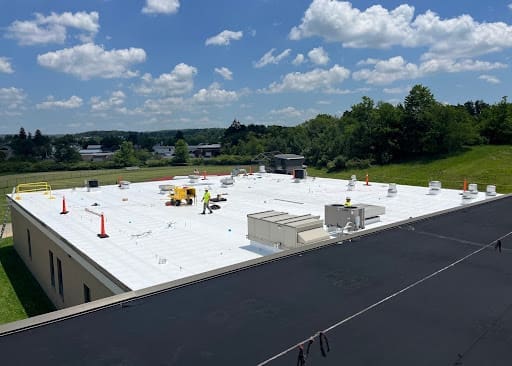
Water that remains on flat roofs more than 48 hours after rain represents one of the most serious commercial roof warning signs. This ponding water leads to membrane breakdown, accelerated deterioration, and inevitable leaks. Over time, the constant weight can cause roof sagging and structural damage.
Membrane and Material Damage
Cracks, blisters, or bubbles in your roofing material indicate trapped moisture, aging, or UV damage that requires immediate attention. These visible defects represent vulnerable points where water can penetrate your building’s protective envelope. Similarly, tears or splits create direct openings that allow water infiltration during even light rainfall.
Business owners should watch for blistered patches or split seams on flat roofs, as these typically worsen rapidly once they begin. What starts as a small bubble can quickly become a major breach during the next storm.
Flashing and Seam Issues
Damaged or lifting flashing around roof edges, HVAC units, vents, and other penetrations creates easy entry points for water. Flashing serves as the seal between different roofing materials and structures, so any compromise in these areas can lead to significant water infiltration.
Gaps at seams are also a major issue, as they allow water to penetrate under the roofing material. Consider commercial roofing Detroit as a solution.
Drainage System Problems
Clogged gutters or drains prevent proper water runoff, indicating immediate drainage problems that require prompt attention. Debris buildup from leaves, branches, or animal nests can block critical drainage paths, resulting in water pooling.
“When drainage systems fail, even minor rainfall can overwhelm your roof’s capacity to shed water effectively. That’s why it’s important to perform regular drains and gutter cleaning yourself, if possible, or call pros that have the best reviews for a high quality roofing company like:
Roofing Technologies Unlimited
25140 Kingsland Blvd, Katy, TX 77494
Phone: (832) 866-9595
https://roofingtechnologiesunlimitedtx.com/
They can help ensure your roof stays protected and functions properly during heavy weather.”
Sagging or Structural Deformation
Visible sagging in your roof structure means your roof’s structure is damaged. It’s probably the most serious roofing problem that requires immediate attention, as it can potentially lead to partial or complete roof collapse, which could injure occupants and cause significant damage to your property.
This commercial roof warning sign can be a result of excessive weight loads, considerable water damage, or age-related deterioration. Sagging areas often accompany other warning signs, such as pooling water and membrane damage.
Seasonal Inspection Checklist for Commercial Properties
Implementing a systematic inspection schedule is the best way to prevent these seven critical commercial roof warning signs.
Professional roof inspections should include visual checks of the roof surface for visible damage, punctures, cracks, or blisters. When done right, they provide expert evaluation of flashing, seams, and drainage systems.
These scheduled assessments cost far less than emergency repairs and help extend your roof’s lifespan significantly.
Fall Inspections: Getting Your Roof Ready for the Winter
Before winter arrives, inspect for vulnerabilities that could lead to ice dams or problems from snow buildup. Reinforcing insulation prevents heat loss and ice formation that can damage roofing materials. Adding extra insulation or roof barriers before winter helps prevent structural stress from snow loads.
Spring Inspections: Identifying Roof Damages
After winter and major storms, schedule inspections to identify roof damage, new cracks, leaks, or membrane splits. Even when no leaks are immediately visible, storm damage assessment helps prevent future problems from developing into major issues that could shut down operations.
Emergency Response Plan When Roof Problems Threaten Operations
Immediate Actions
When any of these seven warning signs indicate immediate danger, rapid response becomes critical.
Contact professionals for emergency roof repairs within hours, not days. Use tarps, polyethylene sheeting, or temporary barriers to prevent further water intrusion while waiting for permanent repairs to be made. This helps prevent thousands of dollars in additional damage to inventory, equipment, and building contents.
Professional Assessment and Documentation
Professional assessment using moisture meters, thermal imaging, and drone technology provides a thorough evaluation of roof damage. Create detailed reports and photographs for insurance claims, ensuring proper documentation of all damage for maximum coverage and faster processing of claims.
Stabilization and Repair
Temporary stabilization through structural shoring, water extraction, and dehumidification prevents mold growth and additional damage. Industrial dehumidifiers can help protect inventory and avoid secondary damage that could extend business closure periods.
Although this isn’t a permanent solution for your roofing problem, it serves well while you schedule a commercial roof replacement or repair. Ensure you plan the roof restoration timing to minimize business disruption.
Commercial Roof Warning Signs: FAQs
What are the most common roof warning signs?
Commercial roof warning signs include water stains, interior leaks, ponding water, damaged flashing, cracks, blisters, clogged drains, and structural sagging. These seven indicators represent the most critical threats to business operations.
How often should a commercial roof be inspected?
Schedule professional inspections at least twice a year, during the spring and fall, and conduct additional assessments after major storms or severe weather events. Regular inspections help identify problems before they become emergencies.
How can I prevent costly roof repairs or replacements?
Regular roof inspections, prompt repairs, and proactive maintenance are the most effective strategies for extending its life and preventing major disruptions. Early intervention costs significantly less than emergency repairs.
Conclusion
Recognizing these seven commercial roof warning signs early and responding promptly protects your business from unexpected shutdowns, costly emergency repairs, and safety hazards.
Schedule bi-annual inspections, address problems immediately, and maintain your roof properly throughout the year. Regular roof checks combined with immediate action help you avoid joining the businesses that experience unexpected closures due to roof failures.