
Why Turf Around Pools Is Becoming a Must-Have for Family Gardens
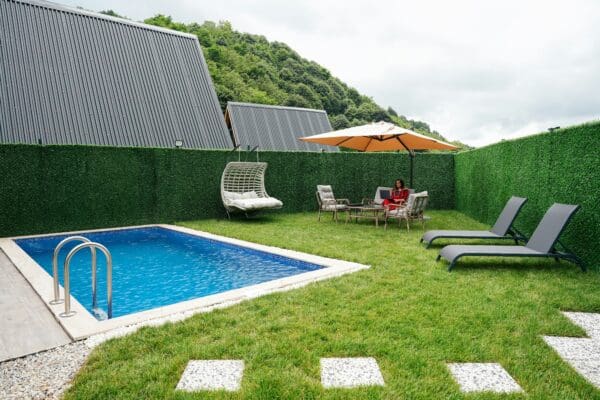
If you have kids and a backyard pool, you already know the stress of wet feet on slippery surfaces, muddy grass tracked indoors, and a lawn that never quite recovers from a summer of heavy use. For families across Connecticut and beyond, the area around the pool used to be an afterthought — now it’s becoming one of the most talked-about upgrades in family garden design.
Artificial turf is leading that conversation. Here’s why so many families are making the switch — and what it actually looks like to live with it day to day.
1. Safer Around the Pool
For families with young children, the surface around a pool matters most when it’s wet. Natural grass becomes slippery and muddy quickly. Concrete and stone can be unforgiving if someone slips and falls. Timber decking, while attractive, can turn into a skating rink when wet.
Modern artificial turf is engineered with drainage and texture in mind. It sheds water quickly, stays grippy underfoot, and doesn’t turn into a mud patch after a few splashy hours in the pool. According to the American Academy of Pediatrics, slip-and-fall injuries are among the most common causes of non-fatal pool-related incidents in children — and surface choice plays a significant role.
2. Natural Grass Struggles Around Water
Most homeowners don’t realize how much punishment the grass around a pool takes each summer. Constant foot traffic, chemical splash from the pool water, and compacted soil from wet feet add up quickly. Within a season or two, the grass closest to the pool is often patchy, yellowed, and bare in places.
Reseeding doesn’t fix the root problem — the conditions around a pool are simply too harsh for natural grass to thrive consistently. That’s what makes artificial turf such a practical fit for this specific area of the garden.
3. It Looks Better All Year Round
One of the most straightforward appeals of artificial turf is that it stays green and lush regardless of what the weather does. Natural grass looks great in late spring, then struggles through the heat of July and August — exactly when the pool gets the most use.
If you’re considering a poolside upgrade, researching how to plan turf around a pool area is a good starting point — understanding drainage, infill types, and edge finishing makes the difference between an installation that looks great for years and one that shifts or wrinkles within a season. ForeverLawn offers detailed local guidance for homeowners navigating these decisions for the first time.
4. Less Maintenance Required
Pool season is supposed to be a break — not a second gardening job. With natural grass, you’re mowing, fertilising, and patching bare spots throughout the summer. Artificial turf removes almost all of that.
Typical maintenance for artificial turf around a pool:
• Rinse off chlorine splashback after heavy use
• Brush up the fibres once a month to keep them upright
• Clear leaves and debris with a leaf blower
That’s genuinely it. No mowing, no watering, no autumn reseeding. For busy families, that’s a meaningful reduction in the mental load that comes with maintaining a garden.
5. Built for Heavy Use
A pool area sees more concentrated foot traffic than almost any other part of the garden. Kids run, jump, and play in the same narrow corridor repeatedly. Natural grass simply can’t handle that level of use without deteriorating.
Quality artificial turf is designed for exactly this kind of pressure. The fibres are engineered to bounce back, the backing holds its shape, and the overall surface resists the wear patterns that natural grass would show within weeks of regular use.
6. A More Sustainable Option
Artificial turf has come in for environmental criticism over the years, and some of it is fair. But the picture is more nuanced than it used to be. A pool-side lawn that relies on regular watering, fertilising, and weed control chemicals has its own environmental footprint.
Modern artificial turf products increasingly use recycled materials in their backing and infill. Some manufacturers now offer end-of-life recycling programmes for old turf. It’s not a perfect solution — but for a high-traffic, chemically exposed zone like a poolside, it’s a genuinely competitive option.
The Conclusion
Poolside turf used to feel like a luxury add-on. For families who’ve lived with it through a full summer, it quickly starts to feel essential. Safer underfoot, better looking, and dramatically easier to maintain — it solves problems that natural grass simply can’t in this particular environment.
If your pool area has been a source of frustration every summer, this might be the upgrade worth planning for before the next season begins.