Why Leadership Is Becoming More Psychological in Today’s Workplace
As workplaces evolve, psychologists highlight the rising importance of emotional resilience and human understanding in leadership roles.
The idea of leadership is changing. While it was once associated mainly with decision-making and authority, many experts now describe it as a more human-centered role, one that requires emotional awareness, adaptability, and an understanding of how people think and behave.
This shift is being discussed across business schools, coaching institutions, and professional development programs worldwide. Increasingly, leadership is being linked with psychology – not just strategy.
Prof. Dr Stoyana Natseva, a Bulgaria-based psychologist, educator, and founder of Happy Life Academy (one of Eastern Europe’s largest coaching and transformational platforms), has witnessed this shift firsthand. With programs that have reached over 100,000 students globally, she describes modern leadership as moving “from a purely managerial function into a developmental role.”
The Rise of Psychological Leadership
Over the past decade, leadership frameworks have started to incorporate concepts such as emotional intelligence, self-awareness, and cognitive flexibility. These ideas, once limited to academic psychology, are now part of mainstream leadership training.
According to Natseva, this reflects a deeper change in expectations.
“In contemporary society, emotional resilience is increasingly recognized as a core psychological competence,” she noted. “Individuals who develop self-awareness and emotional regulation are better able to manage uncertainty and maintain long-term effectiveness.”
Her comments align with broader research trends suggesting that workplace performance is closely tied to emotional and psychological factors, especially in high-pressure environments.
Coaching and the Demand for Practical Skills
Alongside this shift, coaching and personal development education have grown significantly across Europe, Asia, and other regions. These programs often focus on practical skills, communication, decision-making, and emotional management, rather than purely theoretical learning.
Natseva attributes this to a change in what individuals are looking for.
“There is a growing demand for structured frameworks that help people improve not only professionally, but also personally,” she said. “Coaching provides tools that can be applied in everyday situations.”
This demand is not limited to corporate leaders. Professionals across industries are increasingly turning to coaching-based learning to better navigate complex work environments and personal challenges.
Education, Programs, and International Activity
Institutions working in this space have expanded their activities in response to this demand. Natseva’s educational work includes programs focused on applied psychology, leadership development, and coaching methodologies.
In recent years, such programs have been delivered through international seminars, training initiatives, and retreats bringing together participants from multiple countries.
One example is an international retreat held in Dubai in early 2026, where participants attended sessions on psychology, leadership, and personal development. Similar initiatives are planned in Portugal and across several cities in Bulgaria as part of an ongoing seminar series.
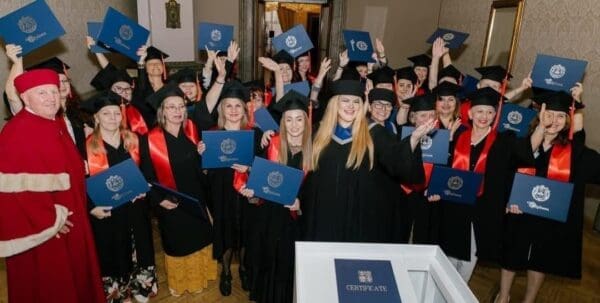
In addition, graduation ceremonies for advanced programs such as MBA and DBA-level courses are held periodically in Prague, attracting participants from different regions.
A Broader Shift in Learning
Beyond specific institutions or programs, the growing interest in psychology-based leadership reflects a wider change in how people approach learning and development.
Rather than focusing only on technical skills, many professionals are now investing in understanding behaviour, communication, and long-term personal effectiveness.
As Natseva put it:
“People are not only asking how to succeed professionally. They are also asking how to understand themselves better and make more conscious decisions.”
That shift from performance alone to awareness and adaptability, continues to shape how leadership, education, and psychology intersect in today’s world.