The Role of Emergency Crews in Storm Restoration Efforts

Emergency crews are vital in restoring stability and safety during disasters, especially climate change-driven events. They face challenging conditions, clear debris, restore power, and ensure public safety. Their continuous presence and hard work bring hope to affected residents and accelerate the return to normalcy. They collaborate with utility providers, government agencies, first responders, and community organizations to prevent further harm and save lives. To learn more about comprehensive recovery efforts and the role of specialized teams, visit https://divergentalliance.com/storm-recovery/. The community’s gratitude for these unsung heroes is immense, as their commitment helps towns and regions recover in the aftermath of disasters. Their efforts often include working around the clock to restore critical infrastructure under dangerous conditions. In many cases, they are the first to arrive and the last to leave, ensuring no area is left behind. Their resilience and coordination make them a cornerstone of successful storm recovery initiatives.
Immediate Response and Hazard Mitigation
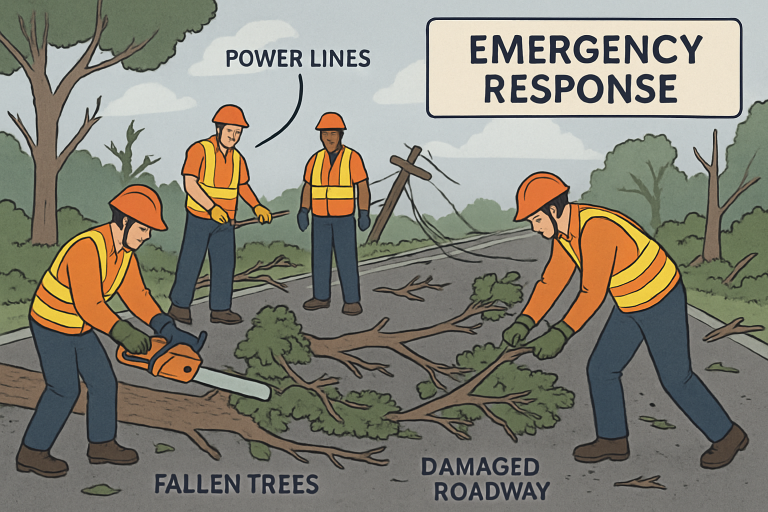
Emergency crews are crucial in assessing and neutralizing urgent hazards following a severe storm, such as downed power lines, toppled trees, collapsed structures, compromised bridges, and floodwaters. These hazards can pose risks to lives and impede response efforts. The ability of these crews to clear dangerous debris and open access routes is essential for saving lives and ensuring the efficient operation of emergency services. Recent real-world events, such as Hurricane Helene in Lanier County, Georgia, demonstrate the importance of these efforts. Road and utility crews mobilized quickly, removing felled trees, repairing live wires, building makeshift access points, and guiding motorists away from impassable routes, ensuring that neighborhoods were no longer cut off from urgent help and medical services could reach the injured. The actions of these teams were highlighted by Lanier County News for enabling a faster and safer recovery for all residents. This phase of storm response is often a race against time, where lives depend on the rapid clearance and stabilization of affected areas.
Restoring Essential Services
Emergency crews are tasked with restoring vital utilities and services for daily living and public health after addressing immediate hazards. They work with specialized teams from electrical, water, gas, and telecommunications companies, sometimes traveling from other regions to provide support. The logistics involved in repairing infrastructure like snapped power poles, inundated substations, and fractured water mains can be overwhelming. For example, during Hurricane Helene in West Virginia, utility companies like National Grid dispatched hundreds of specialists and support personnel to replace broken components, reroute power to hospitals, and restore vital connections for thousands of families and businesses. Quick restoration is essential for running medical facilities, maintaining food safety, allowing emergency shelters to operate, and enabling communication for responders and the public.
Coordination Among Agencies
Storm restoration is a complex task that requires the collaboration of various organizations, including local municipalities, emergency medical teams, utility companies, disaster relief groups, state police, and military units. This collaborative approach ensures timely and efficient problem-solving. The recent deployment of 450 soldiers and airmen from the Tennessee National Guard after Hurricane Helene demonstrates the effectiveness of this approach. These teams played a crucial role in high-risk rescues and delivering essential aid, such as food, water, and medical supplies. Coordinated mutual aid agreements also facilitate sharing specialized equipment or skilled personnel.
Community Involvement and Preparedness
The recovery process relies heavily on professional responders, but the involvement of residents, businesses, and local organizations is crucial. Proactive preparation for storm events, such as drills, emergency kits, property security, and staying informed, can significantly reduce injuries, fatalities, and property loss. Community preparedness allows emergency crews to focus on urgent cases and infrastructure repairs, rather than being overwhelmed by preventable incidents. Residents should stay tuned to local emergency broadcasts, create detailed evacuation plans, and take responsibility for checking in on neighbors, older people, and people with disabilities. Community-wide preparedness campaigns and neighborhood response teams provide additional resilience, creating informed, agile, and responsive communities that protect themselves and directly assist professional crews by reducing avoidable emergencies and aiding with logistics and supplies.
Conclusion
Emergency crews are the backbone of storm restoration efforts, providing critical services that restore safety, stability, and essential infrastructure during natural disasters. Their work spans every recovery phase from hazard mitigation and utility restoration to agency coordination and community collaboration. Their actions are technical, tactical, and deeply humanitarian, offering support and reassurance to those affected. As severe weather events become more common due to climate change, the need for well-prepared, well-coordinated emergency responses becomes increasingly urgent. Ongoing investment in training, equipment, and community preparedness will ensure that emergency crews can continue to meet these challenges head-on. Their efforts, bolstered by public support and interagency cooperation, make full-scale recovery possible and strengthen a community’s resilience for the future. These dedicated professionals remain a powerful symbol of hope and restoration in every storm’s aftermath.