Peter Thiel, Argentina, and the rise of the billionaire ‘Plan B’
As the world’s wealthiest pursue “sovereign diversification”, CS Global Partners CEO Micha-Rose Emmett explains why a second home is not the same as a second citizenship.
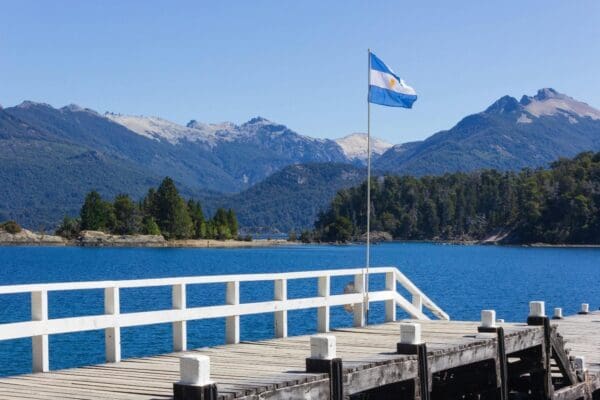
Peter Thiel, the billionaire co-founder of PayPal and Palantir, is reportedly spending more time in Argentina, adding to a growing trend among wealthy Americans looking for a backup plan outside the United States.
He has reportedly bought a home in one of Buenos Aires’ most affluent neighbourhoods and enrolled his children in school there.
No permanent move has been announced, but the pattern reflects a wider shift among the very wealthy: the search for what many now openly call a “Plan B”.
A trend that goes beyond second homes
The movement isn’t about holiday property. Increasingly, wealthy families are pursuing a strategy of “sovereign diversification”, securing more than one citizenship, building ties across several jurisdictions, and keeping at least one alternative place to live held in reserve.
Tax is one driver. Proposed levies on the net worth of resident billionaires in California, and a new tax targeting expensive second homes in New York, have sharpened minds.
Beyond tax, political uncertainty, geopolitical risk and deeper anxieties around artificial intelligence are all pushing the wealthy to want options held open elsewhere.
For Micha-Rose Emmett, CEO of CS Global Partners, demand has rarely been stronger. “We are seeing record interest from individuals and families who want certainty in an uncertain world,” she says.
“What was once a niche conversation is now a central part of how serious wealth is managed.”
Why a second home is not a second citizenship
The headlines around figures like Thiel, Emmett argues, capture only half the picture.
“Citizenship by investment is a relatively modern industry, but the instinct behind it is one of the oldest in the world,” she says.
“The desire to hold more than one home, and more than one citizenship, has existed for as long as borders have. What has changed is that there is now a credible, regulated route to securing it.”
The crucial distinction, she adds, is between lifestyle and security, and it is the one most often missed.
“A second home gives you somewhere to go. A second citizenship gives you the right to stay, to work, and to move freely, regardless of what any single government decides next. That difference is everything. Property can be bought and sold; it does not confer rights. A second citizenship does.”
The doors that are quietly closing
Part of what is fuelling demand, Emmett notes, is that the traditional gateways are narrowing at precisely the moment interest is rising.
The United Kingdom, long a default destination for global wealth, has steadily withdrawn the routes that once made it accessible, closing its investor visa programme and tightening thresholds across the board.
Doors that were open a decade ago are now shut. In Europe, routes that once offered residency in exchange for investment have become defined by delay, with applicants left waiting years for an outcome.
“We are watching established gateways narrow exactly as demand accelerates,” Emmett says.
“Certainty has become the rarest commodity in this market. When people weigh their options, they are no longer only asking what a programme offers. They are asking whether it will actually deliver, and how long it will take.”
Why alternative nationalities matter
It is in that context, Emmett says, that destinations chosen in haste, including Argentina, with its history of inflation, currency instability and shifting regulation, should be read for what they are.
“An unstable destination chosen in a hurry is not a Plan B; it is simply a different kind of risk,” she says. “A second citizenship, secured through a credible and well-regulated programme, is the one option that holds its value whatever happens next.”
Caribbean citizenship-by-investment programmes, pioneered by St Kitts and Nevis in 1984 and now offered by a select group of established nations, including Dominica, were built precisely for this purpose.
They are efficient, rigorous in their due diligence, and designed to provide a genuine alternative nationality rather than a temporary address.
For the very wealthy, an “exit” plan is no longer a contingency at the edge of a portfolio; it is becoming a core part of long-term wealth strategy.
The real question, Emmett suggests, is not whether to diversify, but what is being diversified.
“Diversifying your lifestyle and diversifying your security are not the same thing,” she says. “A home is a place. A second citizenship is a guarantee. In an uncertain world, only one of those is a true Plan B.”