How to Know Who Is Liable in a Rear-End Collision
You’re standing on the shoulder of the road.
Traffic moves past in slow waves. Your hands are still slightly shaking. The other driver keeps repeating, “You hit me.”
And maybe you did.
But here’s the part no one explains in that moment: rear-end collision liability isn’t decided on the roadside. It’s decided later — quietly — by statutes, documentation, percentages, and the words you choose before you’ve even had time to think.
Most drivers assume they already know who is at fault in a rear-end collision.
The rear car hits the front car—end of story.
It feels simple.
It rarely is.
If you want to protect yourself — financially and legally — you need to understand how rear-end accident fault rules actually work.
The Legal Starting Point — And Why It Favors the Front Driver
There’s a reason insurers usually start by blaming the rear vehicle.
California Vehicle Code §21703 requires drivers to avoid following another vehicle “more closely than is reasonable and prudent.”
That statute anchors rear-end collision liability in California analysis.
When your vehicle strikes another from behind, the working presumption is that you failed to maintain adequate stopping distance. Rear-end crash fault determination often begins with that assumption.
Insurance companies examine the impact alignment, damage consistency, skid marks, and the rear-end accident police report fault notation.
From a structural standpoint, the rear driver controls distance. Distance controls reaction time. Reaction time controls outcome.
That logic is powerful.
But it isn’t absolute.
The Assumption That Quietly Breaks Under Pressure
People rarely ask this out loud:
Can the front driver be at fault in a rear-end collision?
Yes — under specific circumstances.
Rear-end crash liability exceptions exist, even if they don’t make headlines. Consider situations like:
- Brake-checking in heavy traffic
- Malfunctioning brake lights
- Reversing unexpectedly
- Merging abruptly with almost no clearance
The National Highway Traffic Safety Administration’s 100-Car Naturalistic Driving Study found that abrupt stops and inattention frequently contribute to rear-impact crashes.
Rear-end accident shared-fault cases arise when both drivers contributed to the sequence of events.
Imagine someone merges into your lane with barely a car-length gap, then slams on the brakes to avoid missing a turn.
You collide.
Who is liable in a rear-end car accident, then?
Rear-end collision legal responsibility becomes layered — and layered means negotiable.
When Fault Stops Being Emotional and Becomes Mathematical
California follows pure comparative negligence.
Rear-end collision comparative negligence doesn’t operate on yes-or-no answers. It operates on percentages.
If you are 20% responsible, your recovery decreases by 20%.
If you are 60% responsible, you can still recover 40%.
Rear-end collision compensation rules are built on allocation.
Imagine this scenario:
You’re stopped at a red light. Another driver hits you from behind. Clear rear-end collision liability, right?
But your brake lights hadn’t been working for weeks.
A court might decide you contributed to the crash. Not equally. But partially.
Rear-end crash settlement liability shifts. Insurance negotiations change tone.
Fault becomes math, not emotion.
And once percentages enter the picture, the stakes rise.
Injuries Change the Energy of the Entire Case
Property damage claims move quickly.
Injury claims don’t.
Rear-end accident injury claim cases immediately alter the tone. Rear-impact crashes are among the most common types of collisions nationwide, according to NHTSA crash data.
Whiplash and spinal disc injuries often surface days later.
Here’s where many drivers hesitate: you don’t want to “overreact.” You don’t want to escalate a small issue.
But medical documentation anchors credibility. Without it, discussions about rear-end collision claims become more difficult.
Insurance companies know that medical exposure raises financial stakes. When the stakes rise, scrutiny increases.
Rear-end collision insurance liability becomes more carefully evaluated.
What began as a direct exchange can quietly become a contested negotiation.
The Insurance Layer: Where Words Carry Weight
Insurance adjusters investigate damage.
They also investigate wording.
Picture the phone call two days later.
The adjuster asks, “What happened?”
You reply casually, “I didn’t see them stop.”
Weeks later, that phrase appears in writing — interpreted as inattention.
Rear-end accident fault rules don’t respond to tone. They respond to recorded statements.
Civil liability and insurance liability overlap, but they aren’t identical. Policy language, investigative interpretation, and comparative allocation interact in subtle ways.
Before giving detailed recorded statements, you must check your liability with a car crash attorney so you understand how early language could influence rear-end crash fault determination.
That step isn’t about escalating conflict.
It’s about preventing silent risk escalation.
Because once a narrative is documented, reshaping it becomes difficult.
How to Protect Yourself After a Rear-End Collision
You don’t need to panic. You need structure.
Here’s a practical guide that keeps you grounded:
1. Document Before Discussion
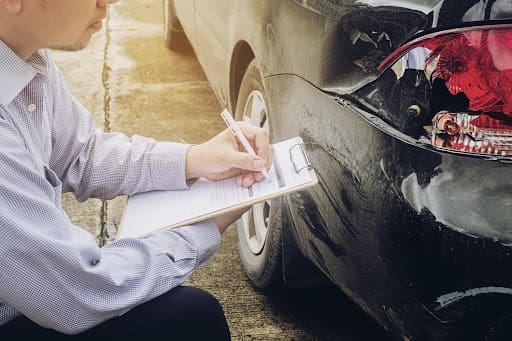
Take photos of vehicle positioning, damage angles, traffic signals, road conditions, skid marks, and the rear-end accident police report.
Fault references often rely heavily on physical evidence.
Documentation strengthens your credibility.
2. Seek Medical Evaluation Even If Symptoms Feel Mild
Delayed onset injuries are common in rear-end crashes.
Medical records support your rear-end accident injury claim timeline and reinforce rear-end collision compensation rules discussions.
Skipping evaluation can weaken future leverage.
3. Avoid Speculation
Answer factual questions.
Avoid interpretive statements like “It was probably my fault” or “I guess I was too close.”
If you’re unsure how fault is determined in rear-end accidents in your case, pause before self-assigning blame.
4. Consider Comparative Exposure Early
Ask yourself honestly:
- Were your brake lights operational?
- Did you change lanes shortly before impact?
- Was traffic unpredictable?
Preparing for shared-fault arguments allows you to respond calmly rather than react defensively.
5. Separate Emotion from Documentation
Frustration is natural.
Rear-end collision legal responsibility, however, is evidence-driven — not emotion-driven.
A Real-World Example of Misplaced Confidence
A driver rear-ended another vehicle during heavy traffic.
He apologized immediately. Told the insurer, “It was probably my fault.”
Later investigation revealed the front driver had merged aggressively and braked suddenly without signaling.
Shared fault applied.
But early admissions complicated negotiation leverage.
Rear-end accident lawyer cases often begin with unwinding early assumptions — not escalating conflict.
Confidence at the scene doesn’t equal accuracy under legal review.
The Final Takeaway: Liability Is a Framework, Not a Feeling
You may feel certain about what happened.
Rear-end crash liability exceptions, shared-fault percentages, statutory duties, and injury documentation all shape the outcome.
Rear-end collision liability is built on traffic law, comparative allocation, crash data, recorded statements, and medical timelines.
Understanding the framework gives you leverage.
Ignoring it gives someone else leverage.
You don’t need to assume responsibility unthinkingly.
You need to understand how responsibility will be calculated — and where it can shift.
Because once you recognize that liability is engineered, not emotional, you stop reacting to the accident.
You start managing it.
And that difference often determines who absorbs the long-term cost.