How Mothers Can Start Rebuilding Life After Addiction and Burnout

Motherhood has a way of making women believe they need to keep pushing no matter how exhausted they feel. Many moms juggle jobs, caregiving, relationships, finances, school pickups, emotional labor, and household responsibilities all at once. When stress builds for years without relief, some women turn to alcohol, prescription medication, or other substances just to get through the day. What starts as a coping mechanism can slowly become something much harder to control.
Recovery is not about becoming perfect overnight. It is about creating stability, learning healthier ways to manage pain and stress, and giving yourself the same care you give everyone else. Mothers often delay treatment because they feel guilty stepping away from their families, but getting help can be one of the most responsible choices a woman makes for herself and her children.
Recognizing The Signs
Addiction does not always look dramatic or obvious. Many mothers continue working, parenting, volunteering, and managing daily responsibilities while struggling internally. That is one reason so many women stay silent for years. They convince themselves things are “not bad enough” yet, even when they feel emotionally drained every day.
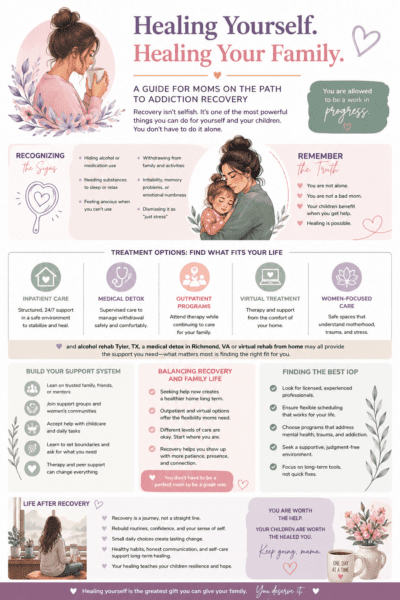
Some common warning signs include hiding alcohol or medication use, needing substances to sleep or relax, feeling anxious when you cannot use, withdrawing from family activities, or becoming increasingly isolated. Irritability, memory problems, and emotional numbness also show up frequently. Women often dismiss these symptoms as stress or burnout, especially during demanding parenting years.
There is also a major emotional component. Mothers tend to carry deep shame when they realize they need help. They worry they will be judged or viewed as selfish. In reality, seeking treatment often improves the entire family dynamic because children benefit when their parents become healthier and more emotionally present.
Treatment Options
There is no single recovery path that works for every woman. Some mothers need inpatient treatment and medical supervision, while others succeed with outpatient therapy or virtual programs that allow them to stay home with their children. Flexibility matters because women have different health histories, financial situations, and family obligations.
Modern treatment options are far more adaptable than many people realize. Some women benefit from trauma therapy combined with addiction treatment. Others need mental health support for anxiety, depression, or chronic stress alongside recovery care. Many mothers also prefer women-focused environments where they feel safer discussing parenting struggles, relationships, and emotional exhaustion.
Today, treatment can look very different depending on what someone needs. An alcohol rehab Tyler, TX, a medical detox in Richmond, VA or virtual rehab from home may all provide appropriate care depending on the severity of the addiction and the level of medical support required. The important thing is finding a program that addresses both physical and emotional healing rather than focusing only on stopping substance use.
Support Systems
Recovery becomes harder when women try to handle everything alone. Many mothers spend years acting as the emotional backbone for everyone around them, but healing requires support from other people too. That may include therapy, peer support groups, trusted family members, childcare assistance, or recovery communities built specifically for women.
One of the hardest parts of recovery is learning how to ask for help without feeling weak. A mother may feel uncomfortable admitting she cannot manage every responsibility by herself anymore. Still, sustainable recovery often depends on building healthier boundaries and reducing the pressure to constantly perform for others.
For many women, choosing the right rehab also means finding a place where they feel emotionally understood instead of judged. Programs that recognize the realities of motherhood, trauma, financial stress, and caregiving responsibilities can make treatment feel far less intimidating. Women are more likely to stay engaged when they feel respected and safe enough to speak honestly.
Balancing Family Life
Many mothers avoid treatment because they fear stepping away from their children, even temporarily. That fear is understandable, but untreated addiction often creates instability that affects the whole household over time. Children notice emotional withdrawal, unpredictability, and tension even when adults believe they are hiding it well.
Recovery does not require becoming a flawless parent. It means becoming a healthier and more emotionally available one. Some women begin by attending outpatient counseling several days a week while maintaining their home routines. Others temporarily enter residential care because they need a more structured environment before returning home.
There is also no shame in needing different levels of support at different times. Some women start with detox and later transition into therapy and outpatient care. Others rely heavily on virtual treatment because transportation, work schedules, or childcare make traditional rehab difficult. When it comes to finding the best IOP, mothers should look for programs with flexible scheduling, licensed therapists, mental health support, and realistic approaches to long-term recovery. A good program should fit into real life instead of expecting women to abandon every responsibility overnight.
Life After Recovery
One of the biggest misconceptions about addiction recovery is that life suddenly becomes easy afterward. In reality, recovery often involves rebuilding routines, relationships, confidence, and emotional stability over time. Some days feel empowering, while others feel frustrating and emotionally raw.
Mothers in recovery frequently discover that they spent years neglecting themselves completely. Part of healing involves reconnecting with hobbies, friendships, rest, exercise, nutrition, and personal identity outside of caregiving. That process can feel uncomfortable at first because many women have been conditioned to place themselves last for years.
Small habits matter more than dramatic transformations. Consistent therapy appointments, healthier sleep patterns, honest communication, and stress management skills often create the strongest long-term results. Recovery also teaches many women that perfection is not required to be a good parent. Stability, honesty, and emotional presence matter far more.
Moving Forward
Addiction recovery is rarely linear, especially for mothers balancing family responsibilities with personal healing. Some women need multiple attempts before lasting change takes hold. That does not mean treatment failed. It means recovery is a process that requires patience, support, and persistence. The most important step is deciding you deserve help in the first place.