Advancements in MRI Technology for Diagnosing Cranio-Cervical Instability
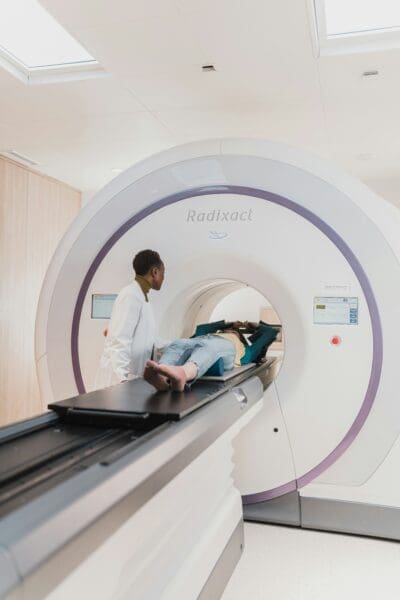
Cranio-cervical instability (CCI) is a complex neurological condition that involves excessive or abnormal movement between the skull and the cervical vertebrae. This instability can cause a wide range of symptoms, including headaches, neck pain, dizziness, and even neurological deficits. Improved imaging techniques are crucial for both diagnosis and monitoring of patients with suspected CCI. In recent years, magnetic resonance imaging (MRI) technology has advanced considerably, enabling more accurate identification and assessment of this challenging condition. Early and accurate diagnosis is key for managing CCI and preventing long-term complications or irreversible neurological damage.
Traditional imaging modalities have been limited by patient positioning and image quality, factors that can mask crucial features of CCI. Today’s enhanced MRI tools, integrated with artificial intelligence (AI) and new system architectures, offer hope for both clinicians and patients. As larger research and medical centers adopt these innovations, the impact is becoming noticeable in earlier diagnosis and targeted treatment of complex cervical spine conditions.
One major reason for growing interest in CCI MRI is that timely detection directly influences treatment success. Given the subtlety of some instability patterns, especially in connective tissue disorders, the evolution of MRI technology has become essential. These imaging advancements are enabling practitioners to better evaluate soft tissue structures, detect dynamic instability, and build a nuanced clinical picture that informs individualized care.
Across the spectrum of cranio-cervical disorders, the most significant leap has come from blending advanced imaging with digital intelligence. These technological improvements benefit not only patients but also multidisciplinary teams working to craft meaningful, long-lasting solutions.
AI-Enhanced MRI for Improved Diagnosis
The adoption of artificial intelligence in MRI diagnostics marks a pivotal change in the evaluation of neurological and spinal conditions. AI-driven models and algorithms now analyze imaging data with remarkable precision, reducing the likelihood of oversight and flagging subtleties that clinicians might miss, particularly in early or ambiguous cases of CCI. For example, researchers at the University of California, San Francisco, have developed machine learning algorithms to enhance MRI images, improving the detection of brain disorders. These improvements help identify abnormal motion, tissue inflammation, and subtle anatomical changes that can indicate instability, ultimately speeding the path to an accurate diagnosis.
Early integration of AI into MRI interpretation enables more reliable follow-up and longitudinal patient monitoring. By providing sharper, more consistent images, these systems reduce variability between radiologists and different imaging centers. The technology streamlines image-review workflows, empowers clinicians with decision-support, and may help flag patients who require further neurological or orthopedic evaluation. The end result is greater confidence in both clinical decision-making and patient education about their diagnosis and prognosis.
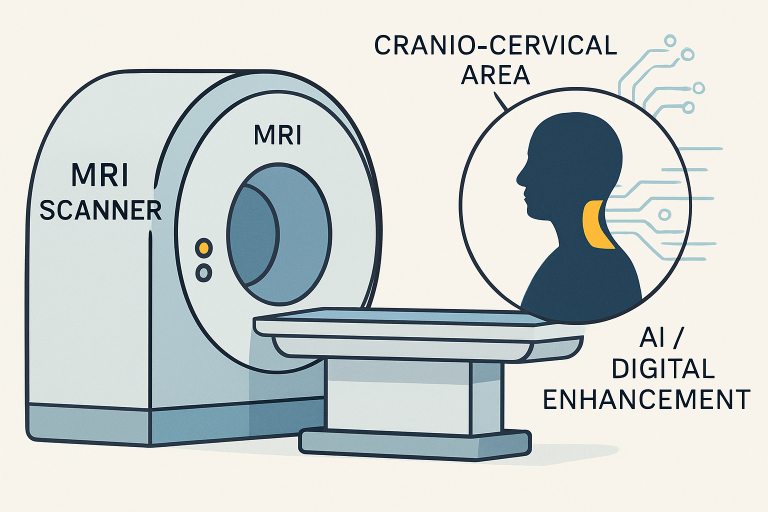
Upright MRI Systems: A Game Changer
Conventional MRI scanners require patients to lie flat. However, this position may not adequately reveal abnormalities caused or aggravated by weight-bearing, posture, or dynamic movement. Upright MRI systems address this limitation by allowing patients to be scanned while sitting or standing. This capability is vital in assessing conditions like CCI, where instability can manifest or intensify only under physiological loads. An upright viewpoint enables clinicians to observe the cervical spine in real-world conditions, uncovering previously hidden anatomical relationships.
Particularly for individuals with hypermobility syndromes, such as Ehlers-Danlos Syndrome (EDS), upright MRI has emerged as an invaluable resource. Traditional MRIs often underserve these populations, missing clinically meaningful signs of instability. With upright systems, radiologists can capture images during flexion, extension, or rotation, offering a full-spectrum, dynamic evaluation. A scoping review published in the National Library of Medicine highlights the clinical utility and emerging applications of weight-bearing MRI in assessing cervical spine conditions.
Radiomics and Machine Learning in CCI Detection
Radiomics is an emerging field that extracts a wide range of quantitative data from standard medical images. When paired with machine learning, these digital features become powerful predictors of cranio-cervical instability. Machine learning models can evaluate shape, texture, and intensity parameters that human eyes cannot quantify at scale; these are then correlated with clinical and surgical outcomes to refine diagnostics and prognosis.
Recent studies, such as those published in the European Spine Journal, support the utility of radiomics in distinguishing patients with instability from those with non-structural symptoms. This predictive capability offers several key advantages: earlier detection, targeted intervention, and the potential to monitor responses to therapy across time. With automated approaches, resource-limited clinics can also achieve high-quality, reproducible diagnostics that were previously reserved for major academic centers, closing gaps in specialist access and care.
Applications in Early Prediction and Patient Monitoring
The integration of radiomics and machine learning is not limited to diagnosis. These tools are also contributing to predictive models of disease progression, risk stratification, and research into new therapies. As databases of imaging features and patient outcomes grow, algorithmic models are expected to become even more accurate and individualized. This advancement sets a new standard for how cervical instability and other complex spinal disorders are managed in clinical practice.
Final Thoughts
The convergence of AI, upright MRI architectures, and radiomics is reshaping the landscape of cranio-cervical instability diagnosis. For clinicians and patients alike, these technological advances deliver more sensitive, context-aware, and actionable insights. The result is not just earlier and more precise diagnosis, but also the hope of more personalized care and improved long-term outcomes for those affected by CCI. Ongoing research, growing clinical adoption, and international collaboration will continue propelling this field forward, ensuring that patients with CCI benefit from the very best in modern imaging and data science.